
Updated by Faith Barbara N Ruhinda at 1711 EAT on Tuesday 10 March 2026
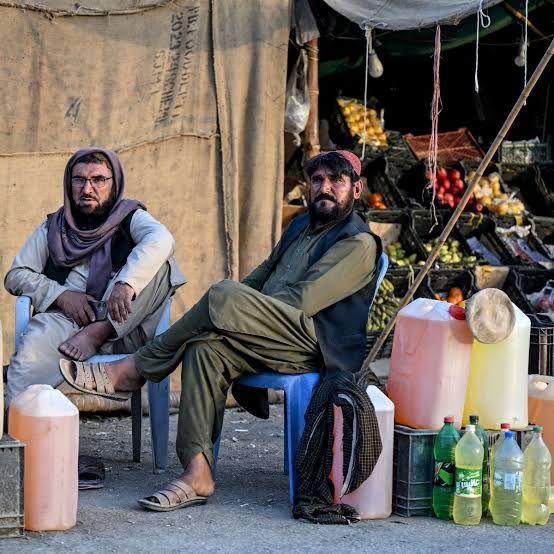
Pakistan has ordered sweeping emergency austerity and fuel-conservation measures following disruptions to global oil and gas supplies triggered by the United States-Israel war with Iran and the escalating conflict in the Middle East.
Prime Minister Shehbaz Sharif announced the measures in a televised address to the nation on Monday night, warning that disruptions to maritime traffic in the Strait of Hormuz — a vital global shipping route for oil — have placed Pakistan’s economy under direct threat.

“The entire region is now effectively in a state of war,” said Shehbaz Sharif as he outlined a series of emergency measures, including the introduction of a four-day workweek for government employees and the closure of schools for spring holidays from March 16 until the end of the month.
Sharif added that 50 percent of government staff would work from home on a rotating basis. He also recommended similar arrangements for the private sector, while granting exemptions to key industries such as banking.
Schools will remain closed for two weeks starting Monday, although scheduled examinations will proceed as planned. Universities and other higher education institutions have been directed to shift to online learning in a bid to conserve fuel.
The austerity measures also require federal and provincial cabinet members to forgo their salaries and allowances for the next two months, while salaries of members of federal and provincial legislatures will be cut by 25 percent during the same period.

Under the new guidelines, ministers, parliamentarians and government officials will be allowed to undertake foreign travel only for essential purposes and must fly in economy class.
All in-person meetings across federal and provincial government institutions have been suspended and must instead be conducted online. Fuel allowances for government offices have also been reduced as part of the conservation measures.
Authorities have also urged the public to limit social gatherings, with weddings and parties capped at 200 guests and restricted to a single main dish.
Pakistan relies on imports for more than 80 percent of its oil needs. Between July 2025 and February 2026, the country imported oil worth $10.71bn, while total imports for the 2024 calendar year exceeded $15bn.

The latest energy crisis has triggered the largest fuel price increase in Pakistan’s history. On Tuesday, petrol was selling at $1.15 per litre and diesel at $1.20 per litre a roughly 20 percent increase since last week.
Energy analyst Amer Zafar Durrani, a former World Bank official and chief executive of advisory firm Reenergia, said the government’s austerity measures may offer short-term relief but fail to address the primary driver of fuel demand.
“Transport dominates petroleum consumption,” Durrani told Al Jazeera.
“Roughly 80 percent of petroleum products are used in transport, meaning the country’s oil dependence is fundamentally a mobility problem.”
He said measures such as salary cuts or procurement freezes largely affect public finances and have limited impact on reducing national fuel consumption.
Instead, he suggested improving freight logistics by shifting more cargo from road to rail transport.
Durrani also warned that Pakistan could be particularly vulnerable to rising oil prices due to the weakness of its currency in global markets.
“The biggest risk does not come from oil prices alone. The real macroeconomic trigger is currency depreciation, which amplifies the impact of higher oil prices on domestic inflation,” he said.
He added that a long-term solution lies in expanding the use of electric power in transport, reducing industries’ reliance on diesel, and accelerating investment in renewable energy.

“Without these structural changes, every global energy shock will continue to threaten Pakistan’s economy,” Durrani said.
Pakistan’s vulnerability also extends to natural gas. The country has been importing liquefied natural gas (LNG) since 2015 after domestic reserves declined. LNG now accounts for nearly a quarter of Pakistan’s electricity supply, with the power sector as its largest consumer.
Qatar is Pakistan’s main LNG supplier, and its shipments pass through the Strait of Hormuz. Iran’s retaliatory attacks have targeted energy infrastructure across the Middle East, including shipping routes used for transporting oil through the strategic waterway.
The fuel crisis in Pakistan has unfolded in the final days of Ramadan, a period when families are preparing for Eid al-Fitr, the most important festival in the Muslim calendar.
Rising petrol prices have already driven up transport fares and the cost of groceries, placing additional strain on household budgets at a time when spending typically increases.
Muhammad Zubair, a plumber based in Islamabad whose family lives in Muzaffarabad in Pakistan-administered Kashmir, said the fuel crisis has directly affected his livelihood.
“I remain mobile for work on my motorbike, but with fuel getting so expensive, it just eats into my savings,” he told Al Jazeera. Zubair added that his plans to return home a week before Eid may no longer be possible as he might have to remain in the city to cut costs.
Sohail Ahmed, a 27-year-old delivery rider who supports a family of seven, said the government’s austerity measures matter less to him than the rising price of fuel.
“There is no benefit to me if they [government employees] work three days or five days a week,” he said. “For me, the main concern is the fuel price because that increases the cost of every little thing. With this situation not ending any time soon, I don’t have much to think about Eid.”
-Aljazeera
Invest or Donate towards HICGI New Agency Global Media Establishment – Watch video here
Email: editorial@hicginewsagency.com TalkBusiness@hicginewsagency.com WhatsApp +256713137566
Follow us on all social media, type “HICGI News Agency” .
 HICGI News Agency