
Updated by Faith Barbara N Ruhinda at 1255 EAT on Wednesday 1 April 2026
US President Donald Trump has indicated that military action in Iran could wrap up within “two to three weeks,” though details remain unclear on how the conflict might conclude or what comes next.
China has stepped into the diplomatic effort alongside Pakistan, an unexpected mediator in the US–Israel war against Iran.
Officials in Beijing and Islamabad have outlined a five-point plan aimed at achieving a ceasefire and reopening the strategically critical Strait of Hormuz.
Pakistan, historically a US ally, appears to have gained Trump’s trust to help mediate the crisis.


China’s entry, however, signals a growing challenge to Washington, coming ahead of high-stakes trade talks between President Xi Jinping and Trump next month.
“China’s support in this matter is extremely significant,” said Zhu Yongbiao, Middle East expert and director of the Centre for Afghanistan Studies at Lanzhou University.
“China is offering comprehensive moral, political, and diplomatic backing, hoping that Pakistan can assume a more prominent role.”
The development represents a shift for Beijing, which had maintained a largely muted stance on the conflict until now. So what is prompting China to act at this stage?
The peace plan was drafted after Pakistan’s foreign minister traveled to Beijing to seek Chinese support for Islamabad’s efforts to negotiate an end to the conflict.
His efforts appear to have borne fruit. China’s Foreign Ministry said the two countries were making “new efforts towards advocating for peace.” The joint statement emphasized that dialogue and diplomacy are “the only viable option to resolve conflicts” and called for the protection of key waterways, including the blockaded Strait of Hormuz.
While the plan addresses broader regional stability, oil remains a key concern. As the world’s largest crude importer, China has stockpiles sufficient to meet its needs over the coming months.
Beijing is likely stepping into the peacemaker role because the war in Iran threatens something Xi Jinping highly values: stability. China’s economy depends on a stable global market, as it relies heavily on exporting goods while trying to revive a slowing domestic economy.
“If the rest of the world begins to slow down economically because of an energy shock, that’s going to be tough for China’s factories and exporters,” said Matt Pottinger, chairman of the Foundation for Defense of Democracies’ China Program.
“That’s why I think when China’s foreign minister recently urged Iran to find a way to end this war, there was genuine concern. Beijing is clearly wary of where a prolonged energy crisis could lead.”
As a result, China’s exports to the Middle East grew nearly twice as fast as its exports to the rest of the world last year.
The region has emerged as the fastest-growing market for electric vehicles, and China is also the largest investor in desalination projects, addressing the Middle East’s critical water scarcity.
The Power Construction Corporation of China operates projects across Saudi Arabia, the United Arab Emirates, Oman, and Iraq.
These economic ties have allowed China to cultivate relationships with a wide range of actors in the region, from US allies such as Saudi Arabia to longstanding rivals like Iran.
China and Tehran have maintained a partnership for decades. China is Iran’s top trading partner and purchases around 80% of the country’s oil exports.
The Chinese government has acted as a peacemaker in the Middle East before, with mixed results.
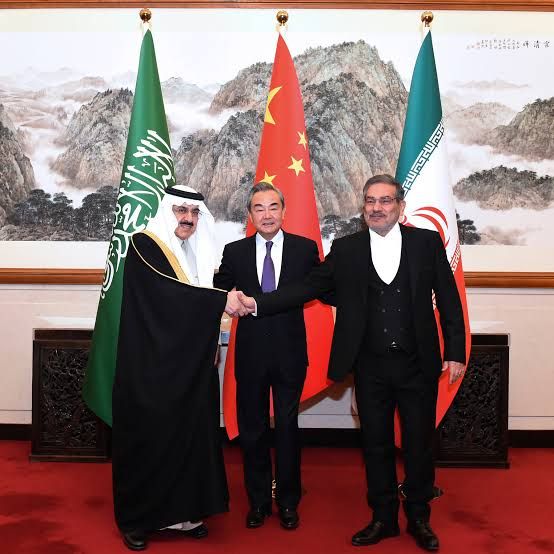
In 2023, Beijing brokered a deal between longtime rivals Saudi Arabia and Iran, who have stood on opposing sides of multiple proxy wars. The two countries severed diplomatic ties in 2016 after Saudi Arabia executed a prominent Shia Muslim cleric, triggering protests in Iran and attacks on the Saudi embassy in Tehran.
After China stepped in as mediator, the rivals agreed to restore diplomatic relations. The move aligned with Beijing’s interests, as improved Saudi-Iran relations were expected to reduce regional tensions.
A year later, China hosted leaders from 14 Palestinian factions, including Fatah and Hamas, in talks that led to the formation of a national unity government for the occupied West Bank and Gaza.

While the resulting declaration was more an expression of intent than a comprehensive agreement, it underscored China’s growing diplomatic role in the region and its strategic interest in maintaining stability across the Middle East.
Regarding the latest peace plan, neither the US nor Iran has formally responded. Yet advancing the initiative allows Xi Jinping to position China as a neutral broker and peacemaker—offering a sharp contrast to the approach of the other major superpower, the United States.
However, Beijing’s credibility as a pragmatic international actor comes with significant caveats. Its close alignment with Russia raises persistent questions about its neutrality. Meanwhile, China’s tightening grip on Hong Kong and repeated threats to forcibly take Taiwan remain major concerns.
China’s authoritarian leadership also avoids discussions of human rights and rarely condemns other regimes for rights violations or abuses of power, making Xi an unlikely champion of a rules-based global order.
-BBC
Invest or Donate towards HICGI New Agency Global Media Establishment – Watch video here
Email: editorial@hicginewsagency.com TalkBusiness@hicginewsagency.com WhatsApp +256713137566
Follow us on all social media, type “HICGI News Agency” .
 HICGI News Agency