
Updated by Faith Barbara N Ruhinda at 1522 EAT On Tuesday 7 April 2026
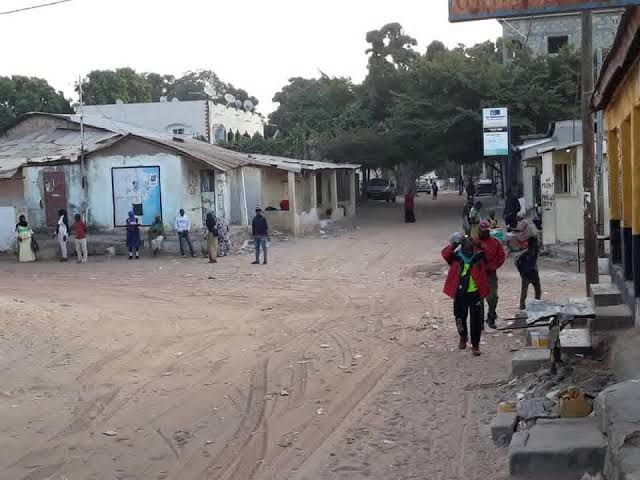
At dawn in Ghana Town, a small fishing village on The Gambia’s Atlantic coast, Marie Mensah begins her day tending to her family amidst the challenges of life without official documentation. She dresses her children, prepares breakfast, and checks their schoolbags before setting out on the walk to the roadside.
Three of her four children, aged six months to 10 years, attend a fee-paying private school—not out of preference, but necessity. Lacking national identity documents, they are effectively barred from enrolling in tuition-free public schools.
From a distance, Ghana Town—about 35km (22 miles) from the capital, Banjul—looks like any other village along Gambia’s Atlantic coast, with fishermen untangling nets and loading wooden boats for the day’s catch. But for most residents, each morning begins with uncertainty: the question of whether they legally belong to the only country they have ever known.


According to the Village Development Committee (VDC), which oversees community affairs, around 850 of the town’s 900 residents lack citizenship, passports, or even national identification.
Ghana Town was founded in the late 1950s by 10 Ghanaian fishermen who sailed from what was then the Gold Coast (now Ghana) to settle along Gambia’s coastline.
Over the decades, their families grew, and new generations were born and raised in the village, learning local languages and forming a close-knit community. Yet despite calling Ghana Town their only home, most descendants of the original settlers remain trapped in a legal grey zone, stateless and without official recognition.
Under Gambian law, anyone born to non-Gambian parents is not automatically recognised as a citizen, even if born in the country. Those with at least one Gambian parent have been able to obtain official documents, but for others, the process has been a long series of failed applications.
After seeing her older children off to school, Marie Mensah takes her six-month-old to the nearest immigration office, about 15km (9 miles) away in Kanifing, to attempt once again to apply for a national identity card—a process she first tried at age 18.
“I know they may reject me,” she told Al Jazeera. “But I still have to try.”
After hours of waiting and paying 500 dalasi ($7) for the application form, which she completes with supporting documents, officials turn her away, citing her birth certificate—which classifies her as non-Gambian—as grounds for disqualification.
Other residents told Al Jazeera that their applications have been rejected for similar reasons.
“If I cannot get an ID where I was born,” Mensah said, visibly emotional, “where else will accept me?”
Under Section 9 of The Gambia’s 1997 Constitution, citizenship by birth is determined by descent. Simply being born in the country does not confer nationality; at least one parent must be Gambian.
For many families in Ghana Town—who hold neither Gambian nor Ghanaian citizenship—the law has shaped and constrained their lives for generations.
Amina Issaka, 64, traces her family’s presence in Ghana Town back nearly seven decades. Her grandparents were among the earliest settlers. Today, she, her six adult children, 11 grandchildren, and four great-grandchildren remain undocumented.
“We are all stateless,” she said. “If we cannot get Gambian citizenship, where else would we go?”
From a small roadside stall selling cooking ingredients and children’s items, Issaka earns just enough to survive. But building a legitimate business is impossible without identity documents.
“I cannot even register my shop,” she said. “Without papers, you cannot grow.”
To formally register a business or open a bank account, individuals are typically required to present a valid national ID or passport, along with a Tax Identification Number. In Ghana Town, the widespread lack of documentation means most business activity operates entirely within the informal sector.


For those employed without bank accounts, informal arrangements based on trust are common. Some receive their salaries through a friend’s account, while daily wage earners are paid in cash at the end of each workday.
“You can work and even receive a cheque. But without ID, the bank will not recognise you,” said Emmanuel Dadson, a 36-year-old teacher and secretary of the Village Development Committee (VDC), who is also undocumented.
Dadson told Al Jazeera that the Gambia Commission for Refugees had promised to regularise their status in February.
However, the month passed without officials visiting Ghana Town.
Madi Jobarteh, a human rights expert, told Al Jazeera that Gambian law provides citizenship by birth, descent, registration, or naturalisation—but gaps in the system leave many at risk of statelessness.
Without a national ID or birth certificate, individuals are excluded from education, formal employment, healthcare, property ownership, and even legal protection.
“The residents of Ghana Town have lived here for decades, fully integrated, and contributed to the country. There is absolutely no reason why they should still be treated as noncitizens,” he said.
Jobarteh recommended reforms including guaranteed nationality for children who would otherwise be stateless, stronger birth registration, simplified ID processes, and adherence to international conventions on statelessness.
Al Jazeera reached out to the Ministry of Interior, which oversees citizenship matters, and the Gambia Immigration Department, but neither responded.
Meanwhile, the Ministry of Justice reiterated that anyone born to non-Gambian parents is not recognised as a citizen, even if born in The Gambia.
For the residents of Ghana Town, decades of living, working, and raising families in the community have done little to secure official recognition. Statelessness continues to shape every aspect of their lives—from schooling and healthcare to employment and business opportunities.
As Marie Mensah, Amina Issaka, and countless others navigate a daily struggle for documentation, the future remains uncertain. Without meaningful legal reforms, generations may remain trapped in the same legal limbo, denied the rights and protections afforded to the citizens of the only country they have ever called home.
-Aljazeera
Invest or Donate towards HICGI New Agency Global Media Establishment – Watch video here
Email: editorial@hicginewsagency.com TalkBusiness@hicginewsagency.com WhatsApp +256713137566
Follow us on all social media, type “HICGI News Agency” .
 HICGI News Agency