
Updated by Faith Barbara N Ruhinda at 1331 EAT on Wednesday 8 April 2026
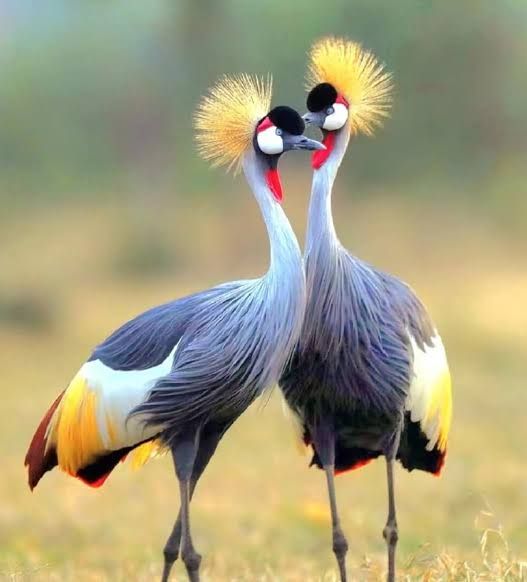
With its distinctive golden crown, red throat pouch, and slender black legs, the crested crane is a beloved symbol in Uganda, featured prominently
the nation’s flag and coat of arms.
The iconic bird also lends its name to all of the country’s national sports teams. Yet in recent years, its population has declined sharply, and conservationists warn it could face extinction without stronger protection measures.
The crested crane is legally protected, with penalties including a life sentence and/or a fine of 20 billion Ugandan shillings ($5 million; £4 million) for those found guilty of killing one. For centuries, local Buganda cultural beliefs also safeguarded the species. The bird was considered a symbol of wealth, good fortune, and longevity.
According to tradition, anyone who killed a crested crane would be haunted: its kith and kin were believed to flock to the killer’s home, hold vigil, and collectively honk until the person went mad — or even died.


“Such stories instilled fear, and cranes were respected and revered, not killed,” said Jimmy Muheebwa, a senior conservationist at Nature Uganda crops. We are worried about food security in this area,” said Tom Mucunguzi, a maize farmer from a village near Mbarara.
Another farmer in the same region, Fausita Aritua, said she spends entire days chasing the cranes from her maize fields. “If I cannot get there myself, I try to get someone else to stand guard,” she added.
One of the biggest threats to crested cranes comes from poisoning by farmers, who see the birds as major crop pests. “These birds are causing a lot of damage to crops,” said Gilbert Tayebwa, a conservation officer at the International Crane Foundation, speaking to the BBC.
Tayebwa said he has been working with farmers to adopt non-lethal deterrents, such as scarecrows, to protect their crops. Farmers like Philip Ntare in Lwengo district noted that cranes are sometimes accidentally poisoned after eating crops treated with agro-chemicals and pesticides.
“I just chase them away, because I grew up knowing the crested crane is not supposed to be killed. But the government should consider compensating farmers for crop damage,” he told the BBC.
However, John Makombo, director of conservation at the Uganda Wildlife Authority, said compensation is not possible. “It is one of those precious species that has the freedom to go anywhere. Unfortunately, the government is not liable for any damage done by the cranes,” he explained.


Sarah Kugonza, another ICF conservationist, said the cranes face multiple threats beyond farmers. Without the protective cover of wetlands, chicks are more vulnerable to predation by eagles. “Sometimes breeding areas are flooded, and nowadays some cranes are killed by electricity lines while flying,” she told the BBC.
Their striking beauty has also made them targets for capture as pets, according to Adalbert Ainomucunguzi. Crested cranes, which can live just over two decades, rarely breed in captivity due to their famously faithful mating habits, making their survival in the wild all the more critical.
“The crested crane is highly monogamous, pairing for life,” said Jimmy Muheebwa. “This means that if one bird is killed or captured, the chances of finding a new mate are almost zero.”
The birds attract partners through elaborate displays, including dancing, bowing, and jumping, and are often seen moving in pairs or family groups. Each pair establishes its own territory, which it can aggressively defend from intruders.
Scientifically known as Balearica regulorum gibbericeps, crested cranes also exhibit unique nesting habits. They typically return to the same site each year, laying between two and five eggs, which are incubated by both parents for 28 to 31 days.
Any destruction of nesting areas disrupts the crested crane’s delicate breeding patterns. The species’ lifelong monogamy has also drawn the attention of local traditional healers, who claim that parts of the bird can bring faithfulness from a partner or attract good fortune.
“Some people have been caught hunting cranes to take body parts to witch doctors, believing it will make them rich, or, for women, ensure their husbands never leave them,” said Gilbert Tayebwa of the International Crane Foundation and environmental groups are engaging local communities to restore wetlands.
The fate of Uganda’s iconic crested crane hangs in the balance. Threatened by habitat loss, crop conflicts, traditional beliefs, and poaching, the species faces pressures that extend far beyond its immediate environment. Yet through a combination of legal protection, community engagement, wetland restoration, and vigilant monitoring, conservationists and government authorities are striving to ensure the cranes not only survive but thrive. The challenge is immense, but safeguarding the crested crane is about more than preserving a bird—it is about protecting a symbol of Uganda’s natural heritage for generations to come.
-Observer
Invest or Donate towards HICGI New Agency Global Media Establishment – Watch video here
Email: editorial@hicginewsagency.com TalkBusiness@hicginewsagency.com WhatsApp +256713137566
Follow us on all social media, type “HICGI News Agency” .
 HICGI News Agency