
Updated by Faith Barbara N Ruhinda at 1139 EAT on Thursday 9 April 2026
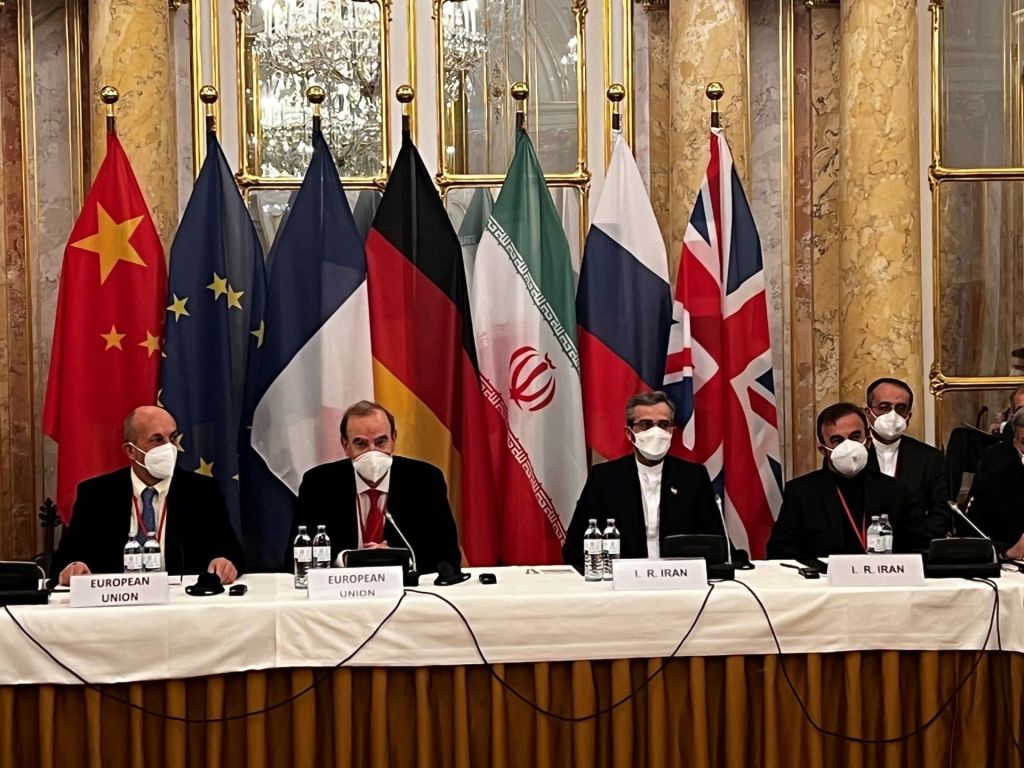
Pakistan is expected to host US and Iranian negotiators in Islamabad for talks that could begin as early as Friday, as efforts intensify to salvage a fragile diplomatic process.
However, significant differences remain unresolved — starting with the basic framework for negotiations.
In a post on Truth Social, President Donald Trump said Washington had received a 10-point proposal from Tehran, which he described as “a workable basis” for talks.
Iran’s Foreign Minister, Abbas Araghchi, has also referenced a separate 15-point proposal put forward by US negotiators, which they say could form the basis of a broader agreement to end the conflict.


Neither proposal has been formally released. But details reported in leaked versions suggest the two sides remain far apart on key issues, underscoring the scale of the challenge facing mediators.
Confusion has been compounded by the White House’s sharp rejection of reports that the Iranian proposal circulating in the media reflects the “working framework” under discussion.
“There is still a lack of clarity on many of the details,” Anwar Gargash, senior diplomatic adviser to the UAE president, told the BBC.
“We are hearing differing accounts from Iran, Washington and the Pakistani mediator,” he added. “The priority now is to align these positions and determine a clear path forward.”
The allegation that Iran was racing to develop a nuclear weapon has long been cited by Washington as the primary justification for military action — a claim Tehran has consistently denied.
Publicly, US officials now appear to believe that the combined impact of last year’s 12-day war and ongoing US-Israeli strikes has significantly set back Iran’s nuclear capabilities, potentially delaying any attempt to rebuild a threatening programme.
However, key questions remain unresolved, particularly over the fate of an estimated 440kg (970lbs) of highly enriched uranium still believed to be in Iran’s possession.
The material — which President Donald Trump has repeatedly dismissed as “dust” — is thought to be buried beneath the rubble of Iran’s Nuclear Technology and Research Centre in Isfahan, following extensive damage to the site during last year’s attacks
“Their dust is deeply buried and monitored around the clock,” US Defence Secretary Pete Hegseth told reporters on Wednesday.
“There will be no Iranian nuclear weapons. Period. Full stop.”
Tehran, however, insists that any future agreement must recognise its right to enrich uranium for civilian purposes, in line with the Nuclear Non-Proliferation Treaty (NPT).


Oman, which acted as a mediator between the two sides before the outbreak of hostilities, said a viable deal was on the table.
The key question remains: will the United States accept any form of uranium enrichment?
President Trump’s reported 15-point plan includes several strict requirements, including the dismantling of all major nuclear facilities, a complete halt to uranium enrichment on Iranian soil, the transfer of existing enriched stockpiles out of the country, and acceptance of intrusive international inspections.
The 15-point plan is equally uncompromising on Iran’s missile and military programs. It calls for Tehran to suspend ballistic missile development, halt production of long-range missiles, and end the transfer of drones and other military equipment to allies and proxies across the Middle East.
Part of Washington’s justification for military action has been that Iran’s advanced missile programme provided a protective “umbrella” under which its nuclear ambitions could continue.
The Pentagon now says much of that umbrella has been dismantled.
Gen. Dan Caine, Chairman of the US Joint Chiefs of Staff, stated that roughly 80% of Iran’s missile facilities have been destroyed, alongside 80% of its air defence systems and 90% of its weapons factories.
In sum, the US-Iran standoff remains tense and deeply unresolved. While Washington touts the destruction of key Iranian military and nuclear infrastructure as evidence of its leverage, Tehran continues to insist on its sovereign rights under international law, including civilian uranium enrichment.
With rival proposals on the table, disputed reports circulating in the media, and regional allies pressing for a lasting solution, negotiators face a formidable challenge in bridging the gap between uncompromising demands and pragmatic diplomacy.
As mediators in Islamabad prepare to host the next round of talks, the world watches closely, acutely aware that the outcome could determine not only the future of the region but the stability of global energy routes and security in the months and years ahead.
-BBC
Invest or Donate towards HICGI New Agency Global Media Establishment – Watch video here
Email: editorial@hicginewsagency.com TalkBusiness@hicginewsagency.com WhatsApp +256713137566
Follow us on all social media, type “HICGI News Agency” .
 HICGI News Agency