
By Lisa Samuels & Dr. Kivumbi Earnest Benjamin, L. H. D (Hon.) Updated at 1544 EAT on Saturday 11th April 2026
NEW YORK — When Pope Leo XIV sets foot on Algerian soil, he isn’t merely arriving for an apostolic journey; he is arriving at a homecoming of sorts for the global Church. In the wake of his visit, a profound shift is occurring in the halls of American academia, driven by a vision that transcends borders and bridges continents.
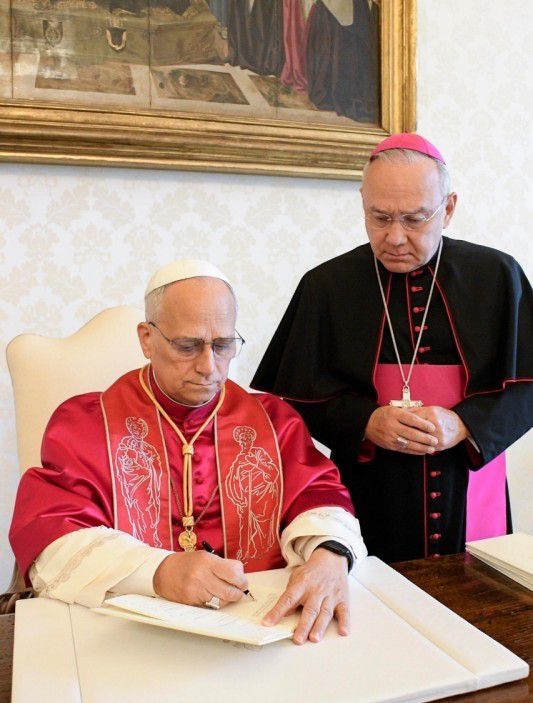
At the heart of this movement is a bold campaign spearheaded by Mr. Mooney, a veteran advocate whose lifelong dedication to the intersection of faith and social justice has long been recognized at the highest levels of the Vatican. Mr. Mooney, who has been personally received by three Popes, is now leveraging his deep institutional relationships to launch a transformative initiative: a widespread pledge from American Catholic higher education institutions to provide dedicated academic scholarships to the bright, deserving youth of Algeria, Cameroon, Angola, and Equatorial Guinea.
Mr. Mooney is no stranger to ambitious, history-making projects. In 2019, he co-coordinated the second-largest commemoration of 400 Years of African American History in the United States. That event, which honored the heroic legacy of the Venerable Augustus Tolton and celebrated the leadership of Cardinal Wilton Gregory, remains a benchmark for how historical memory can drive future action. With the support of figures like the late Congressman John Lewis and H.E. Cardinal Christophe Pierre, Apostolic Nuncio to the United States, that commemoration proved that faith-based initiatives could command a national stage.
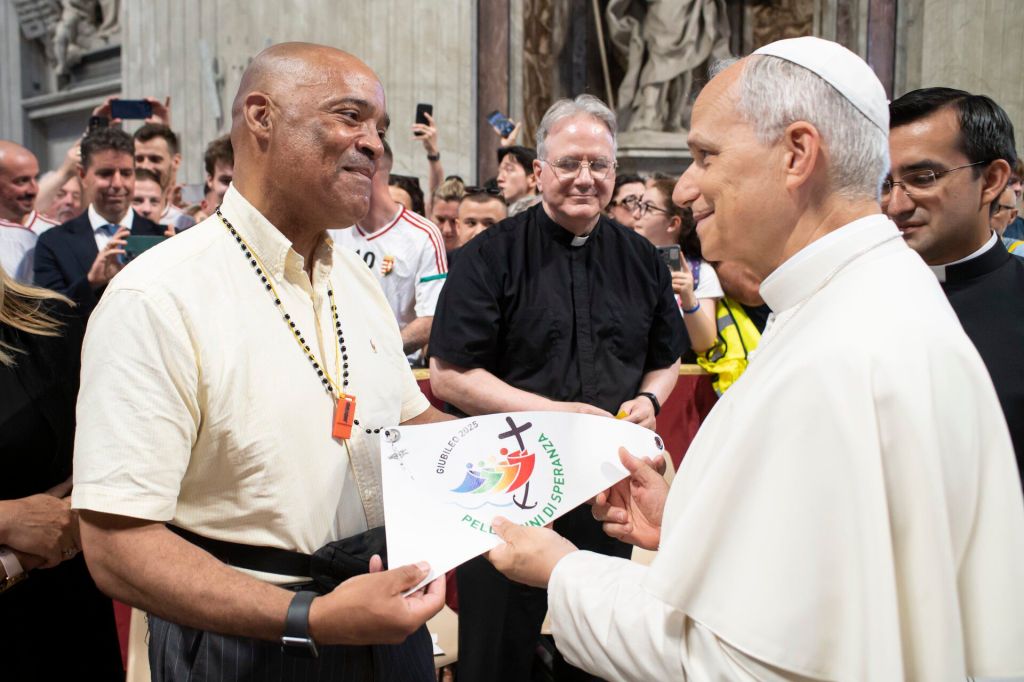
“These experiences have taught me that faith, education, and service are inseparable threads,” Mooney reflects. “When we weave them together, the tapestry we create is not only beautiful—it becomes a living testament to the Gospel.”
A key architect of this model was Fordham University. Under the leadership of President Emeritus Joseph M. McShane, S.J., Fordham served as the title sponsor for the 2019 commemoration, setting a gold standard for how universities can amplify the Church’s mission. By bridging the gap between ivory tower resources and grassroots necessity, institutions like Fordham are proving that the university is not just a place of study, but a vital organ of the Church’s global body.

The current campaign aims to replicate that synergy on a continental scale. By inviting two hundred institutions to open their doors to students from Algeria, Cameroon, Angola, and Equatorial Guinea, Mooney is creating what many are calling “home court advantage” for the Pope’s vision—ensuring that the intellectual promise of the African continent is nurtured by the pedagogical excellence of the American Catholic tradition.
This initiative finds its theological anchor in Pope Leo XIV’s recent apostolic exhortation, Dilexi te (“I Have Loved You”). In this document, the Pope offers a stirring reflection on God’s agape—a self-sacrificial, unconditional love that demands tangible expression.
By investing in the youth of Africa, the American Catholic higher education community is moving beyond rhetoric. They are enacting Dilexi te, transforming the Pope’s words into a pipeline of opportunity. As universities answer Mooney’s call, they are not merely offering scholarships; they are participating in a global renewal, ensuring that the legacy of Pope Leo XIV’s visit is not just a memory of a journey, but the foundation of a generation of leaders empowered by faith and equipped for the world.
As the letters continue to arrive at university presidents’ desks across the United States, one thing is clear: the tapestry of the Church is being woven tighter than ever, colored by the ambition of Africa’s youth and the resources of America’s academic cathedrals.

 HICGI News Agency