
Updated by Faith Barbara N Ruhinda at 1551 EAT on Friday 8 August 2025
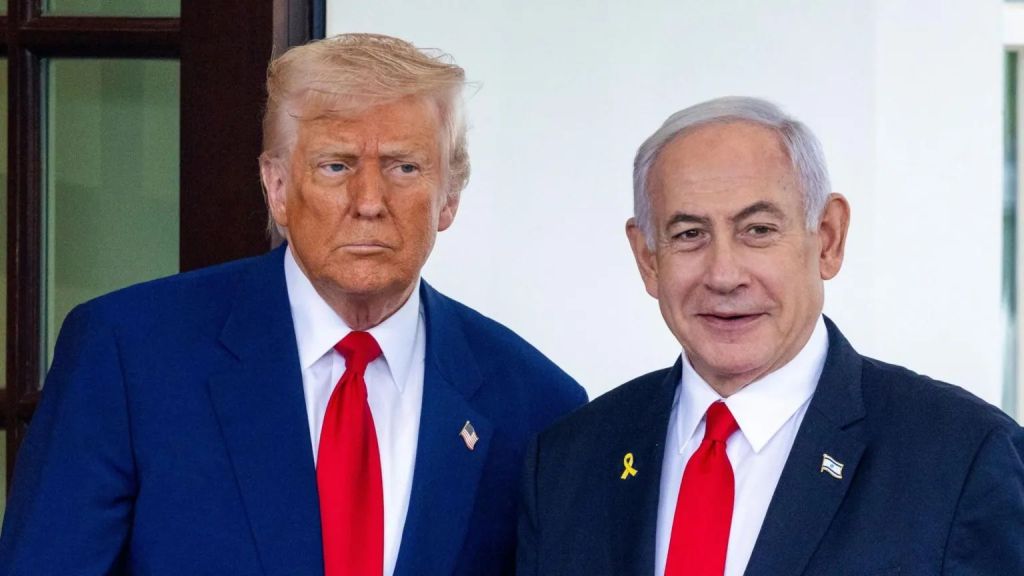
Israeli Prime Minister Benjamin Netanyahu’s declaration that Israel intends to assert full control over the Gaza Strip marks a sharp escalation in the conflict — one that has triggered international warnings but, so far, drawn little pushback from Washington.
The response from the U.S. government has been notably muted. On Tuesday, President Donald Trump said the decision to fully occupy Gaza was “pretty much up to Israel.” When pressed the following day on whether his administration was effectively giving Israel a “green light,” Trump pivoted to unrelated comments about U.S. military action against Iran earlier in the year.
Washington’s Ambassador to Israel, Mike Huckabee, was even more explicit in distancing the U.S. from the unfolding situation.
“It’s not our job to tell them what they should or should not do,” Huckabee said. “Certainly, if they ask for wisdom, counsel, advice, I’m sure the president would offer it. But ultimately, it’s the decision that the Israelis — and only the Israelis — can make.”

The administration’s hands-off approach contrasts sharply with growing international concern over the humanitarian and geopolitical consequences of a potential Israeli occupation of Gaza. European allies, as well as several Middle Eastern governments, have urged restraint and warned of the risks of further destabilization in the region.
Still, the U.S. appears content, for now, to step back — even as the situation on the ground intensifies.
Israeli Prime Minister Benjamin Netanyahu’s declaration that Israel intends to assert full control over the Gaza Strip marks a sharp escalation — one that has triggered international warnings but, so far, has drawn little resistance from Washington.
The response from the U.S. government has been notably muted. On Tuesday, President Donald Trump said it was “pretty much up to Israel” whether to fully occupy Gaza. When pressed the following day on whether he was effectively giving Israel a “green light,” Trump pivoted to unrelated comments about U.S. strikes on Iran earlier in the year.
Washington’s Ambassador to Israel, Mike Huckabee, was even more explicit in distancing the administration from the decision.
“It’s not our job to tell them what they should or should not do,” Huckabee said. “Certainly, if they ask for wisdom, counsel, advice, I’m sure the president would offer it. But ultimately, it’s the decision that the Israelis — and only the Israelis — can make.”
Netanyahu’s plan has not gone unchallenged within Israel. According to Israeli media reports, Chief of Staff Lt. Gen. Eyal Zamir has voiced opposition to a full-scale occupation of Gaza.
Following a meeting of Israel’s security cabinet, an official statement stopped short of confirming a full territorial takeover. Instead, it stated that the military would “prepare for taking control of Gaza City.” However, the announcement did list “Israeli security control in the Gaza Strip” as one of five guiding principles for ending the war — a phrasing that left room for broader interpretations.
Some analysts believe Netanyahu has long harbored ambitions to reassert control over the territory.

“Netanyahu had always planned to take over Gaza; he just was waiting for the right moment,” said Amin Saikal, emeritus professor of Middle Eastern, Central Asian and Islamic Studies at the Australian National University.
Netanyahu has publicly insisted that Israel does not intend to hold onto Gaza indefinitely and has floated the idea of eventually handing control over to unspecified “Arab forces.” However, he has yet to elaborate on who these forces might be or how such a transition would take place.
A Marked Shift in U.S. Policy
The Trump administration’s hands-off approach marks a significant departure from earlier policy stances. Trump has in the past been outspoken — and at times unpredictable — when commenting on the future of Gaza, sometimes surprising even Israeli officials with his statements.
As Netanyahu presses forward with controversial plans, the absence of a strong American response — even amid international criticism and domestic dissent within Israel — signals a recalibration of U.S. engagement in the region.
Whether this reflects a broader strategic shift or merely political expediency remains to be seen.
The Trump administration’s current detachment marks a notable shift from its earlier, more vocal involvement in Israeli-Palestinian affairs.
In February, just weeks into his second term, President Trump floated an ambitious — and highly controversial — vision for Gaza’s future. He suggested the U.S. could play a central role in reconstructing the territory as a global resort destination, even implying that Palestinians might need to be relocated outside the Strip to facilitate the plan.
The administration’s tone was markedly different again in June, during a brief but intense clash between Israel and Iran. While the U.S. joined Israel in striking Iranian nuclear facilities, Trump publicly and forcefully pushed for Israeli compliance with the ceasefire that ended the conflict.
And just last month, Washington signaled its frustration with Israel’s military actions in Syria. While the administration issued a public statement expressing disapproval, officials were reportedly even more critical behind closed doors.
“Bibi acted like a madman,” a White House official told Axios. “He bombs everything all the time.”
That earlier willingness to pressure Israel — even publicly — stands in stark contrast to the administration’s current silence on Netanyahu’s stated goal of taking control of Gaza.
Despite the escalation and growing international concern, the U.S. has offered no direct challenge to Israel’s shifting objectives. Instead, it has opted for a stance of strategic distance — one that appears to abandon its previous role as both a partner and occasional check on Israeli ambitions.
Invest or Donate towards HICGI New Agency Global Media Establishment – Watch video here
Email: editorial@hicginewsagency.com TalkBusiness@hicginewsagency.com WhatsApp +256713137566
Follow us on all social media, type “HICGI News Agency” .

