
Updated by Faith Barbara N Ruhinda at 1607 EAT on Tuesday 3 February 2026
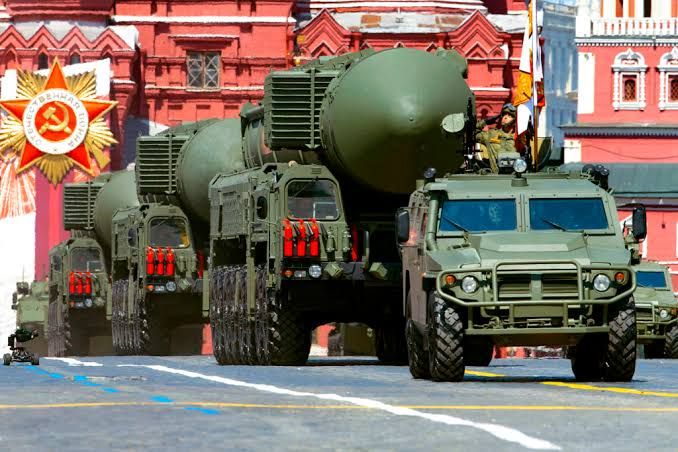
Moscow Ready to Take Action If U.S. Deploys Weapons in Greenland, Russian Official Warns
Moscow has signaled it is prepared to respond militarily if Washington proceeds with plans to place weapons on Greenland. Deputy Foreign Minister Sergey Ryabkov stated that Russia would take “appropriate military measures” should the U.S. move forward with proposals to deploy its Golden Dome missile defense system on the Arctic island.

“Ryabkov Warns of Military Response if U.S. Deploys Weapons in Greenland, TASS Reports”
Russian Deputy Foreign Minister Sergey Ryabkov made the remarks on Tuesday during a press briefing at the Russian embassy in China, as reported by the state news agency TASS. His comments came just two days before the expiration of the New START treaty, the last remaining nuclear arms control agreement between Washington and Moscow.
“If the United States chooses to deploy weapon systems or elements of their Golden Dome missile defense concept in Greenland, it would force us to take military and technical countermeasures,” Ryabkov said. “Our specialists are fully prepared to respond accordingly.”

“Ryabkov Responds to Trump’s Comments on Greenland and Golden Dome Missile Defense”
Russian Deputy Foreign Minister Sergey Ryabkov’s comments came after U.S. President Donald Trump’s remarks last month about ongoing discussions regarding the Golden Dome missile defense system — a proposed multilayered defense program expected to be completed by the end of Trump’s term in 2029, specifically in relation to Greenland.
Trump stated that he had secured a “framework for a future deal” concerning Greenland, a self-governing territory of Denmark, during talks with NATO Secretary-General Mark Rutte.

The U.S. president has consistently expressed interest in purchasing Greenland for strategic reasons, despite strong opposition from Denmark, Greenland, and several European allies.
Last month, U.S. President Donald Trump escalated tensions with European allies by threatening to impose tariffs on countries opposing his Greenland acquisition plans, plunging transatlantic relations into crisis. However, Trump later retracted the threat, claiming that a “framework” for a deal had been reached in talks with NATO Secretary-General Mark Rutte.
Ryabkov also addressed the looming expiration of the New START treaty, which is set to lapse on Thursday unless a last-minute agreement is reached. Moscow has put forward a proposal to extend the treaty’s limits for another year, but as of now, Washington has yet to respond.
“We have completed all necessary steps in a timely manner, and the U.S. had ample time to consider our proposal,” Ryabkov said. “Their lack of response is, in itself, a response.”

He emphasized that Moscow would not initiate further communications with Washington on the matter.
To restart the strategic security dialogue, Ryabkov asserted that the U.S. must drastically alter its foreign policy towards Russia. “Significant reforms are needed in the U.S. approach to its relations with us,” he said, although he made clear that Russia will not engage in a new arms race after the treaty expires.
Kremlin Warns of a ‘Dangerous’ Moment
Kremlin spokesperson Dmitry Peskov separately warned that the expiration of the treaty would mark a “dangerous” moment for global security. “In just a few days, the world will be in a more precarious position than ever before,” Peskov said. “The two largest nuclear powers will be left without a fundamental agreement to limit and control their arsenals.”

The New START treaty, signed by U.S. President Barack Obama and Russian President Dmitry Medvedev in 2010, limits the number of strategic nuclear warheads that both nations can deploy. It went into effect in February 2011 and was extended in 2021 for another five years under U.S. President Joe Biden.
Under the treaty, both countries are capped at 1,550 strategic nuclear warheads, with a maximum of 700 long-range missiles and bombers. The treaty also limits each side to 800 intercontinental ballistic missiles and allows up to 18 inspections of strategic nuclear weapons sites annually to ensure compliance with the treaty’s limits.
Credit: Aljazeera
Invest or Donate towards HICGI New Agency Global Media Establishment – Watch video here
Email: editorial@hicginewsagency.com TalkBusiness@hicginewsagency.com WhatsApp +256713137566
Follow us on all social media, type “HICGI News Agency” .
 HICGI News Agency