
By Dr. Kivumbi Earnest Benjamin, L. H. D. (Hon.)
Former Algerian President Liamine Zeroual has passed away at a military hospital in the capital, Algiers, the Algerian Presidency announced.
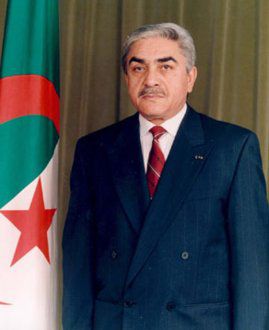
Born in 1941 in the eastern city of Batna, Zeroual was widely regarded as one of Algeria’s most prominent military and political figures. He joined the National Liberation Army and played an active role in the country’s war of independence between 1957 and 1962. Following independence, he held several senior positions within the Algerian army.
Throughout his military career, Zeroual commanded key institutions, including the military school in Batna and later the military academy in Cherchell. He eventually rose to become commander of the land forces within the army’s general staff.
On the political front, Zeroual was appointed Head of State on 31 January 1994 and later elected President of Algeria on 16 November 1995. His presidency came at a critical time in Algeria’s history, marked by internal challenges and shifting international dynamics.
In September 1998, Zeroual made a historic three-day official visit to Namibia, becoming the first—and so far only—Algerian Head of State to do so. During the visit, Namibia’s founding president, Sam Nujoma, commended Algeria for its significant contribution to Namibia’s liberation struggle, including political, diplomatic, financial, and military support.

Later that same month, Zeroual announced his decision to shorten his presidential term and called for early elections. His tenure officially ended on 27 April 1999, when he was succeeded by Abdelaziz Bouteflika.
Zeroual’s presidency was defined by an unwavering commitment to national sovereignty. He consistently rejected foreign interference and maintained that Algeria’s internal challenges should be resolved by Algerians themselves. Despite a difficult international environment, in which several countries distanced themselves from Algeria, he remained firm in defending the nation’s territorial integrity and independence.
Several key decisions underscored this stance. On 27 August 1994, Algeria closed its border with Morocco following accusations linked to an attack in Marrakech—claims that were later proven unfounded. The border has remained closed ever since, with successive Algerian leaders maintaining the position.

Later that year, on 24 December 1994, an Air France airliner was hijacked at Algiers International Airport by an armed group demanding the release of leaders from the dissolved Islamic Salvation Front. Zeroual firmly refused to negotiate, rejecting any form of coercion or terrorism. Despite pressure, including from France, Algeria maintained its position, emphasizing that it would not compromise its sovereignty or negotiate with those who targeted innocent civilians.
Another defining moment came on 22 October 1995, during the United Nations General Assembly in New York, when Zeroual declined a conditional meeting proposed by French President Jacques Chirac. The meeting was to be held informally and away from cameras—a condition Zeroual rejected, insisting on maintaining the dignity and sovereignty of Algeria on the international stage.

These decisions came to symbolize his leadership—firm, principled, and deeply rooted in national independence. His legacy remains that of a leader who placed sovereignty above all else.
The passing of Liamine Zeroual has stirred deep and sincere emotion across Algeria and beyond.
The Algerian Embassy in Uganda has opened its doors to the public to sign a book of condolences in his honor.

 HICGI News Agency