
Updated by Faith Barbara N Ruhinda at 1407 EAT on Monday 20 April 2026
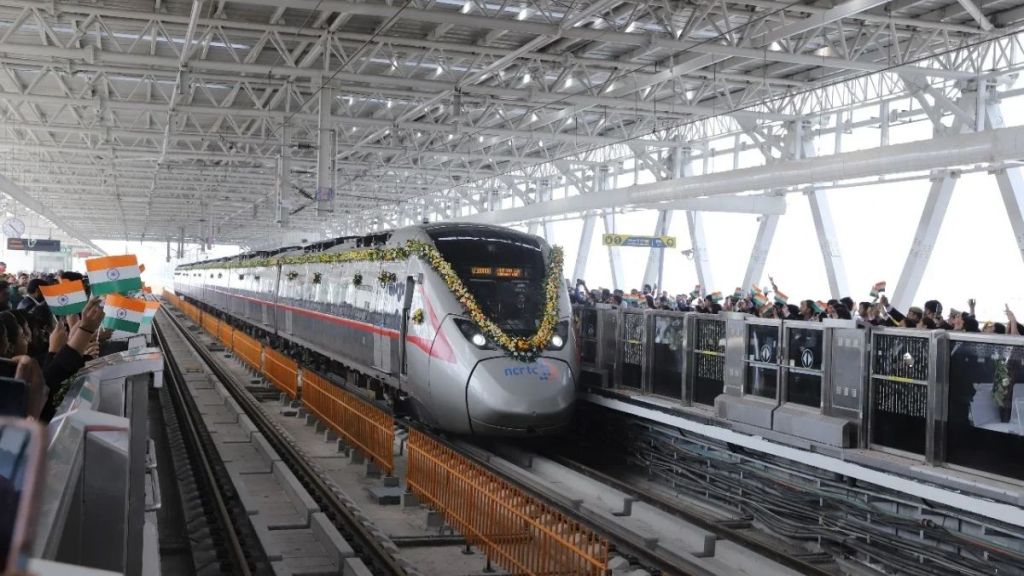
On de-boarding, the final station had the appearance of a desolate, Soviet-era structure rather than a bustling transport hub in a city where commuters typically jostle for space.
The Aqua Line, Mumbai’s new fully underground metro, connects the old business district of Cuffe Parade to newer commercial centres such as the Bandra-Kurla Complex (BKC) and the airport terminals in the northern suburbs. It opened last year.
The 33.5km (20.8-mile) corridor was designed to ease congestion in India’s financial capital and was projected to carry nearly 1.5 million passengers daily. However, current ridership is estimated to be roughly a tenth of that, according to various assessments.
“Not many people are using the line. It’s too expensive,” a ticketing executive told the BBC at Cuffe Parade station.


The weak passenger uptake on the corridor reflects a wider challenge facing India’s rapidly expanding metro network.
Since 2014, the government of Prime Minister Narendra Modi has spent more than $26bn expanding metro systems across nearly two dozen cities.
Over that period, India’s metro network has grown from under 300km to more than 1,000km by 2025. Average daily ridership has also increased sharply, rising from about three million to more than 11 million passengers over the past decade.
However, these headline figures mask deeper concerns about performance on the ground.
Experts say most metro systems in India have fallen far short of ridership projections made during the planning stage.
A 2023 study by the Indian Institute of Technology Delhi found that actual ridership across multiple corridors was only about 25–35% of projected levels. One of the study’s authors told the BBC that these figures are unlikely to have changed significantly in 2024 or 2025.
Other research points in a similar direction.
According to the Observer Research Foundation, ridership in some smaller tier-3 cities such as Kanpur in northern India has been as low as 2% of initial estimates, while in the southern city of Chennai, Phase 1 usage stood at around 37% of projections.
Data shared with the BBC by the Institute for Transportation and Development Policy (ITDP) shows that actual ridership in cities such as Pune and Nagpur in western India ranges between 20% and 50% of projected figures.
The national capital, Delhi, which has India’s most extensive metro network, is a notable exception, with usage slightly exceeding initial projections.
However, two transport experts — Aditya Rane of ITDP and Ashish Verma of the Sustainable Transportation Lab at the Indian Institute of Science — told the BBC that this apparent success is partly due to changes in how ridership is calculated. They said interchanges are now being counted as separate trips, which can inflate overall usage figures.


So why has metro travel struggled in a country where car ownership remains relatively low and other public transport systems are already overcrowded and overstretched?
Experts say the issue stems from a combination of factors, beginning with overly optimistic demand forecasts by consultants during the planning stage.
“It is a complex task [to project demand], and figures are sometimes exaggerated to show the project is economically viable,” said Ashish Verma of the Sustainable Transportation Lab at the Indian Institute of Science.
He added that projections are often based on “offered capacity” — including assumptions about train frequency and the number of coaches — which are frequently not achieved in practice.
In Bengaluru, for example, peak-hour frequency on the busiest line is five minutes or more, while on a newer line it can stretch to 25 minutes. Many trains also operate with just three to six coaches, whereas some of the world’s busiest metro systems run up to nine-coach trains at intervals as short as 90 seconds, according to the Sustainable Transportation Lab.
Affordability is another key constraint.
On Mumbai’s Aqua Line, fares range from 10 to 70 rupees ($0.10–$0.70; £0.08–£0.56) per journey. By comparison, a three-month unlimited pass on Mumbai’s suburban railway network costs 590 rupees, making it a significantly cheaper option for regular commuters.
“In Indian metro systems, the integrated cost of a journey can consume up to 20% of income for lower-income workers, compared with a global benchmark of around 10–15%,” said Aditya Rane of the Institute for Transportation and Development Policy (ITDP).
Ashish Verma of the Sustainable Transportation Lab at the Indian Institute of Science said there has been a growing tendency to reduce subsidies, a move he argues may be counterproductive in a price-sensitive market like India.
This sentiment was reflected in public backlash after metro fare hikes in Bengaluru last year, when ridership reportedly fell by around 13%, according to data compiled by Greenpeace.
“Even the London Tube is heavily subsidised to this day, because there is a purpose — you are trying to provide sustainable mobility and decongest the city,” Verma said. Despite subsidies, London’s Underground remains among the most expensive public transport systems globally.
Beyond cost, structural issues such as weak network design and poor last-mile connectivity continue to suppress demand.
“People will switch to public transport only when waiting times are as low as possible,” said Nandan Dawda, a fellow at the Urban Studies programme of the Observer Research Foundation.
He noted that a major challenge in India is the shortage of feeder buses linking metro stations to surrounding neighbourhoods. Transit between lines can also be slow and inconvenient. At Hauz Khas station in Delhi, for instance, passengers may take 15–20 minutes to transfer between lines.
Dawda also pointed to “institutional disaggregation” as a key barrier, where different metro lines and bus systems within the same city are managed by separate operators that often function in isolation rather than as a unified network.
-BBC
Invest or Donate towards HICGI New Agency Global Media Establishment – Watch video here
Email: editorial@hicginewsagency.com TalkBusiness@hicginewsagency.com WhatsApp +256713137566
Follow us on all social media, type “HICGI News Agency” .

