
Updated by Faith Barbara N Ruhinda at 1319 EAT on Monday 25 May 2026
US Secretary of State Marco Rubio has said negotiators have a “pretty solid thing on the table,” suggesting that an agreement to end the conflict involving Iran could be reached as early as Monday, during a visit to India.
Speaking in New Delhi, Rubio said discussions were progressing but remained incomplete. “We’re still a work in progress. As I said, we thought we might have some news last night. Maybe today,” he noted.
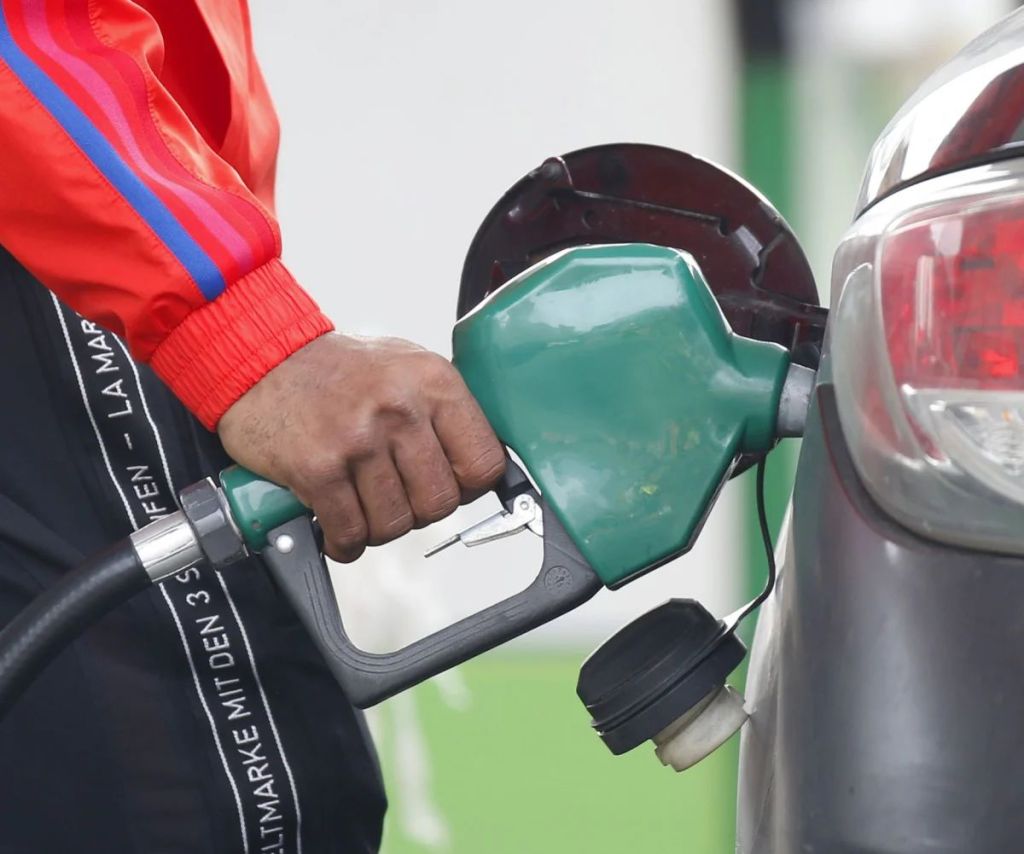
On Monday morning, global oil markets reacted sharply to the developments. Brent crude, the international benchmark, fell 5.5% to $97.90 per barrel, while US West Texas Intermediate (WTI) dropped 5.9% to $90.93.
US President Donald Trump had earlier indicated that any potential deal would involve the reopening of the strategic Strait of Hormuz, a critical shipping route for global energy supplies, though he provided no further details.


Iranian officials said the positions of the two sides had been “converging” over the past week, raising expectations of a possible breakthrough.
The Strait of Hormuz, through which roughly one-fifth of the world’s oil and liquefied natural gas (LNG) passes, has been effectively disrupted since the conflict began on 28 February.
The comments came after Donald Trump said negotiators should “not rush into a deal,” despite earlier signalling that an agreement was near.
In a post on Saturday, Trump said he had spoken with leaders of Saudi Arabia, the UAE, Qatar and others about a “Memorandum of Understanding pertaining to PEACE,” adding that a deal had been “largely negotiated” but still required finalisation with Iran and other parties.
He also said he held a “very good” call with Israeli Prime Minister Benjamin Netanyahu.
While insisting any agreement would prevent Iran from obtaining a nuclear weapon, Trump later urged caution on Sunday, saying: “Both sides must take their time and get it right.”
Iranian Foreign Ministry spokesman Esmaeil Baqaei said the two sides had been converging, but warned that major differences remained and criticised what he called “contradictory statements” from the US.
Global energy markets have experienced sharp volatility since early March after Iran threatened to target vessels attempting to transit the Strait of Hormuz, in response to US and Israeli strikes on the country.
Although crude oil prices have fallen from recent peaks, they remain well above pre-war levels. Ahead of the conflict, Brent crude was trading at around $70 per barrel.
A ceasefire was reached in early April, after which Washington and Tehran began talks aimed at securing a longer-term peace agreement.
“There is now some light at the end of the tunnel, which will bring some near term oil price relief,” said Saul Kavonic, head of energy research at MST Financial.
However, he cautioned that even in an optimistic scenario, global oil markets are likely to remain tight through 2027 due to the time required to restore normal shipping flows through the Strait of Hormuz, repair damaged oil infrastructure, and rebuild global inventories that have been significantly depleted since the conflict began.


Lars Jensen, chief executive of Vespucci Maritime and former Maersk director, said that even if a deal were announced on Monday, the shipping industry would remain “very cautious and hesitant.”
“You are likely going to see shipping lines that have vessels stuck in the Persian Gulf try to get them out, but they will be a lot more hesitant to put ships back into the Persian Gulf in case the thing turns south again,” he told BBC Radio 4’s Today programme.
Jensen noted that concerns such as potential sea mines in and around the Strait mean that, even in a best-case scenario, it could take months before global supply chains return to normal.
On Monday, Japan’s Nikkei 225 rose above 65,000 for the first time, gaining 3% on optimism that the Strait could soon reopen.
Japan, along with South Korea, has been particularly exposed to the disruption due to its heavy reliance on energy imports from the Gulf region.
-BBC
Invest or Donate towards HICGI New Agency Global Media Establishment – Watch video here
Email: editorial@hicginewsagency.com TalkBusiness@hicginewsagency.com WhatsApp +256713137566
Follow us on all social media, type “HICGI News Agency” .

