
Updated by Beatrice Walyamboka at 1313 EAT on Friday 29 May 2026
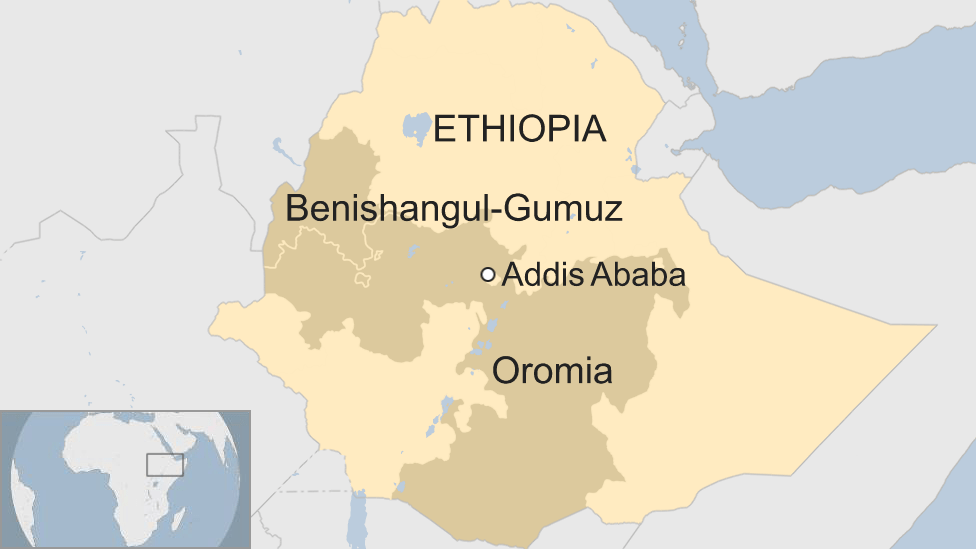
Ethiopia is set to head to the polls on June 1 in what will be the country’s first nationwide election since the formal end of the Tigray war, a devastating two-year conflict fought between 2020 and 2022.
The war, which pitted the Ethiopian federal government against the Tigray People’s Liberation Front (TPLF), ended with a peace agreement that marked a significant turning point in the country’s political and security landscape.
With an estimated population of about 135 million people, Ethiopia is Africa’s second-most populous nation after Nigeria and ranks among the 10 most populous countries globally.

More than 50.5 million voters have registered to participate in the polls, which are held every five years, with all 547 parliamentary seats up for election.
Since 2018, Ethiopia has been led by Prime Minister Abiy Ahmed, whose Prosperity Party currently commands a dominant majority in parliament, holding 457 of the 547 seats.
The National Election Board of Ethiopia (NEBE) is expected to announce the official election results on June 11.
Ethiopia at a glance
Ethiopia is a landlocked nation located in the Horn of Africa, covering approximately 1.1 million square kilometres. It shares borders with Eritrea, Sudan, South Sudan, Kenya, Somalia and Djibouti.
The country has recorded notable economic growth over the past two decades, with the International Monetary Fund (IMF) projecting a 9.2 percent economic expansion in 2026 — the highest growth rate on the African continent. However, the country continues to face significant economic challenges, including high inflation, foreign exchange shortages, and the heavy financial burden of post-war reconstruction.
Ethiopia has five official languages: Afar, Amharic, Oromo, Somali and Tigrinya. Approximately two-thirds of the population identify as Christian, while about one-third are Muslim. The country is also home to smaller communities of Ethiopian Jews and followers of indigenous traditional faiths.
The Oromo are Oromo people, accounting for about 35 percent of the population and concentrated largely in the southern and central regions of Ethiopia.
The Amhara people are the second-largest ethnic group, representing roughly 24 percent of the population. They have historically played a dominant role in the country’s political and administrative structures.
Other significant ethnic groups include the Somali people, who make up about 7 percent of the population and are concentrated in the eastern regions; the Tigrayan people, accounting for roughly 6 percent and largely based in the northern Tigray region; and the Sidama people, who make up about 4 percent and are mainly found in the southern highlands. Several smaller ethnic groups collectively make up the remainder of the population.


This diversity is reflected in the country’s federal political structure. Ethiopia is divided into 12 regional states and two chartered cities — Addis Ababa and Dire Dawa — with most regions largely organised along ethnic lines. The arrangement was introduced in 1992 and later formalised under the 1994 constitution, aiming to accommodate the country’s ethnic diversity within a federal system.
The Ethiopia has seen significant security challenges across several regions, with the Amhara Region emerging as the most volatile area, accounting for more than half of the recorded incidents — 3,719 attacks in total.
In the Oromia Region, the country’s most populous region, 2,735 attacks were recorded, driven by an ongoing armed insurgency involving the Oromo Liberation Army (OLA), alongside instances of communal violence.
Other parts of the country have also experienced instability. The Tigray Region recorded 262 attacks, while the western Gambela Region registered 144 incidents.
The accompanying map illustrates a time series of reported attacks across the country over the past four years, highlighting the geographic spread and intensity of insecurity.
-Aljazeera
Invest or Donate towards HICGI New Agency Global Media Establishment – Watch video here
Email: editorial@hicginewsagency.com TalkBusiness@hicginewsagency.com WhatsApp +256713137566
Follow us on all social media, type “HICGI News Agency” .

