
By Dr. Beatrice Walyamboka
Kampala, Uganda – Whenever Ebola strikes, Uganda has repeatedly demonstrated an extraordinary ability to contain outbreaks faster and more effectively than many countries. While the headlines often focus on the disease itself, the real story lies in the dedicated scientists, researchers, clinicians, epidemiologists, and public health experts who work tirelessly behind the scenes.
Among the distinguished Ugandans whose expertise has strengthened the country’s Ebola response are Dr. Misaki Wayengera, Dr. Henry Kyobe Bosa, Prof. Bruce Kirenga, Prof. Pauline Byakika, Prof. Pontiano Kaleebu, Prof. Rhoda Wanyenze, Prof. Vinand Nantulya, Prof. Moses Joloba, and Prof. Nelson Sewankambo. Together with hundreds of other health workers and researchers, they form the backbone of Uganda’s disease surveillance and response system. Says Alan Kasujja, Director of Uganda Media Centre.
Uganda’s success has been built on years of investment in scientific research, laboratory capacity, emergency preparedness, contact tracing, and community engagement. The country has also leveraged lessons learned from previous outbreaks, including COVID-19, to strengthen rapid response systems, surveillance networks, and treatment protocols. Experts such as Dr. Henry Kyobe Bosa, Dr. Misaki Wayengera, and Prof. Bruce Kirenga have contributed significantly to national and international efforts to improve Ebola preparedness and response.

One of Uganda’s greatest strengths is its growing capacity for home-grown innovation. Ugandan scientists have been at the forefront of developing local diagnostic tools, advancing research into vaccines and therapeutics, and strengthening genomic surveillance. Dr. Misaki Wayengera, for example, is internationally recognized for pioneering rapid diagnostic technologies for filoviruses, including Ebola and Marburg.

The country’s response model emphasizes early detection, rapid laboratory confirmation, aggressive contact tracing, public awareness campaigns, and coordinated action between government, researchers, healthcare workers, and international partners. These measures have repeatedly enabled Uganda to contain outbreaks before they become large-scale national crises. Recent scientific assessments have highlighted Uganda’s swift and coordinated response mechanisms as key factors in controlling Ebola outbreaks.
Yet beyond the renowned experts are countless laboratory technicians, surveillance officers, nurses, clinicians, village health teams, ambulance crews, and community mobilizers whose names rarely appear in the media. Their dedication, often under difficult conditions, has saved countless lives and protected communities across the country.
Recently Ugandan pharmaceutical company Dei BioPharma has filed a patent application in the United States for a new Ebola vaccine platform designed to protect against multiple strains of the deadly virus, a development the company says could strengthen Africa’s ability to respond faster and more independently when outbreaks hit.
The filing, submitted to the U.S. Patent and Trademark Office, covers a next-generation mRNA vaccine developed by the company’s founder, Dr Matthias Magoola.
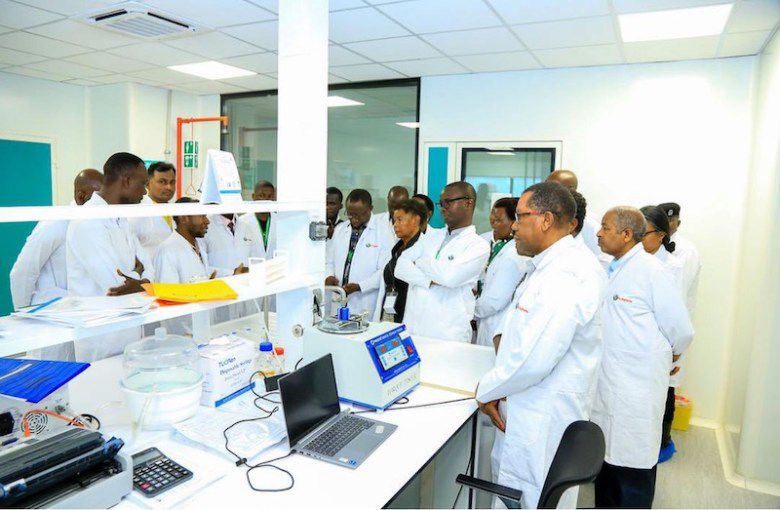
As Uganda continues to face emerging infectious disease threats, the nation owes a debt of gratitude to these patriots of science and public health. Their commitment, innovation, and sacrifice have made Uganda a global example of resilience in the fight against Ebola.
“Innovating on therapeutics each day, developing local diagnostics, strengthening surveillance, and protecting communities — these are the reasons Uganda continues to defeat Ebola. We honour you.”
Says Alan Kasujja.

 HICGI News Agency