
Updated By Faith Barbara N Ruhinda at 1319 EAT on Thursday 2 July 2026
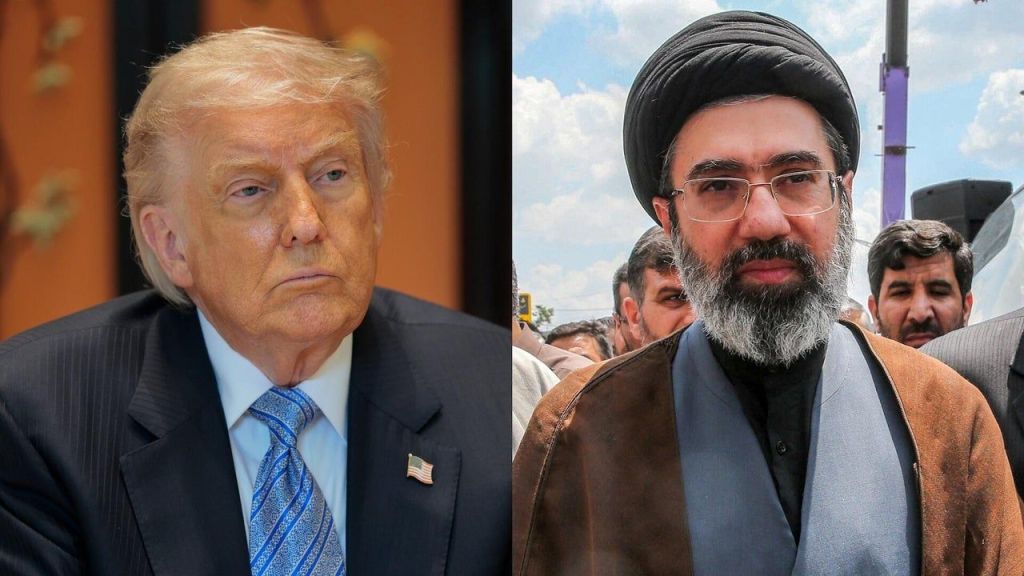
DOHA, Qatar — Iran and the United States concluded another round of indirect technical talks on Wednesday without any clear breakthrough toward a lasting peace agreement.
Instead of announcing new progress, negotiators focused on issues they said had already been resolved under the interim agreement reached two weeks ago, with discussions centered on implementing previously agreed commitments rather than advancing new proposals.
The indirect talks came after several days of tit-for-tat military strikes between the United States and Iran, triggered by escalating tensions over shipping routes through the Strait of Hormuz.


Who participated in the talks?
During Wednesday’s meeting in Doha, Qatari Emir Sheikh Tamim bin Hamad Al Thani met US Special Envoy Steve Witkoff and President Donald Trump’s son-in-law, Jared Kushner. The emir reaffirmed Qatar’s commitment, alongside Pakistan, to mediating efforts aimed at ending the conflict in the Middle East.
Iran’s delegation was led by Deputy Foreign Minister Kazem Gharibabadi, who headed the country’s technical negotiating team.
However, Iran’s senior negotiators, Foreign Minister Abbas Araghchi and Parliament Speaker Mohammad Bagher Ghalibaf, were absent from the talks.
What did the two sides agree on?
Neither Washington nor Tehran disclosed whether the discussions had narrowed their differences. However, Gharibabadi told Iranian media that the negotiations comprised two separate meetings.
According to Gharibabadi, the first session focused on what Iran described as US “violations of its obligations” under previous understandings. The two sides agreed to establish a communication channel to help address future disputes.
The second session centered on the release of $6 billion in frozen Iranian assets.
“During the meetings with Qatari officials, including representatives of the Central Bank, a number of issues related to the expenditure of part of the initial $6 billion were reviewed,” Gharibabadi said.
“It was agreed that, based on Iran’s stated needs, the required goods would be procured and delivered to the country,” Gharibabadi said.
What about the Strait of Hormuz and Iran’s nuclear programme?
US Vice President JD Vance said the Strait of Hormuz was among the key issues discussed during the talks. Sources familiar with the negotiations also said Iran’s nuclear programme, its frozen financial assets and the conflict in Lebanon featured prominently on the agenda.
Meanwhile, commercial shipping through the Strait of Hormuz appears to be recovering. Data from maritime analytics firm Kpler showed that vessel traffic through the strategic waterway increased by more than 50 percent during the week of June 22–28 compared with the previous week, suggesting easing concerns over disruptions to global trade.
On Thursday, Iranian Parliament Speaker Mohammad Bagher Ghalibaf dismissed reports that inspectors from the International Atomic Energy Agency (IAEA) had access to nuclear facilities damaged during last year’s 12-day war, including the Fordow, Natanz and Isfahan sites.


According to Iran’s state broadcaster IRIB, Ghalibaf said IAEA inspectors currently have access only to the Bushehr nuclear power plant and the Tehran Research Reactor.
“At present, inspectors only have access to two locations: the Bushehr power plant and the Tehran reactor,” he said.
Ghalibaf added that Iran’s parliament had passed legislation prohibiting IAEA access to the bombed nuclear facilities, a move that has also been endorsed by the Supreme National Security Council.
“Parliament passed the law, and the Supreme National Security Council has adopted a corresponding resolution,” he said.
His remarks came after IAEA Director General Rafael Grossi said the agency’s inspectors “will have to have access and inspect” Iran’s nuclear sites under the Iran-US memorandum of understanding (MoU).
Qatar said Iranian and US negotiators made “positive progress” during the latest round of indirect technical talks held in Doha.
In a post on X on Wednesday, Qatari Foreign Ministry spokesperson Majed Al-Ansari said mediators from Qatar and Pakistan had held separate meetings with delegations from both countries, resulting in progress on issues linked to the Islamabad Memorandum of Understanding and building on discussions held during the Lake Lucerne Summit.
“Qatari and Pakistani mediators concluded separate meetings with the US and Iranian negotiators in Doha today, with positive progress made on issues related to the Islamabad Memorandum of Understanding, building on the outcomes of the Lake Lucerne Summit,” Al-Ansari wrote.
He added that both sides had agreed to continue negotiations, with the next round of talks to be scheduled as soon as possible after the funeral ceremonies for Iran’s former Supreme Leader.
“The parties agreed to continue discussions over the coming period, with the next meeting to be scheduled as soon as possible after the conclusion of the funeral processions for the former Iranian Supreme Leader,” he said.
Pakistan’s Foreign Ministry issued an identical statement on Thursday, underscoring the two mediators’ coordinated efforts to facilitate dialogue between Washington and Tehran.
Meanwhile, six days of funeral processions for former Iranian Supreme Leader Ali Khamenei, who was killed in a US-Israeli strike on the opening day of the conflict, are set to begin on Saturday across Iran and Iraq. Pakistani Prime Minister Shehbaz Sharif is expected to travel to Tehran on Friday to pay his respects during the official mourning ceremonies.
-Aljazeera
Invest or Donate towards HICGI New Agency Global Media Establishment – Watch video here
Email: editorial@hicginewsagency.com TalkBusiness@hicginewsagency.com WhatsApp +256713137566
Follow us on all social media, type “HICGI News Agency” .
 HICGI News Agency