
Updated by Faith Brabara N Ruhinda at 1515 EAT on Thursday 9 July 2026
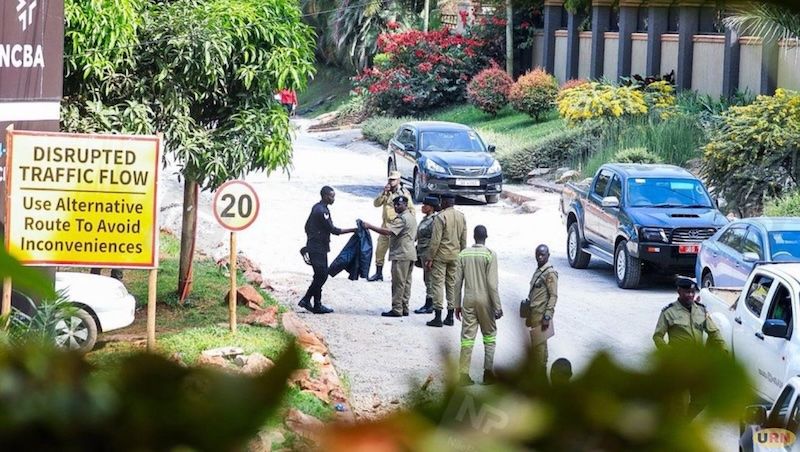
KAMPALA — Fifty-three days after security agencies launched a high-profile money laundering investigation into former Speaker of Parliament Anita Annet Among, security experts have raised concerns that fundamental procedural flaws may have significantly weakened the case, potentially exposing the government to costly legal challenges even if the matter proceeds to trial.
The experts contend that investigators departed from established legal procedures for handling money laundering cases by seizing assets before obtaining court orders to restrain them and before securing a conviction linking the property to proceeds of crime.
They argue that the approach could render critical evidence susceptible to legal challenge and leave the state vulnerable to compensation claims if the affected parties successfully sue over alleged violations of their constitutional rights.
The investigation was launched on May 16, 2026. Since then, detectives from the Criminal Investigations Directorate (CID), forensic experts and operatives from the Uganda People’s Defence Forces’ Directorate of Defence Intelligence and Security (DIS) have searched properties linked to Among in Nakasero, Kigo, Ntinda and Bukedea.


Investigators also impounded six luxury vehicles, including her Rolls-Royce.
A retired senior CID detective, who served during the tenure of former CID Director Grace Akullo, and private investigator Fred Egesa, both of whom specialise in money laundering and corruption investigations, told Uganda Radio Network (URN) that the investigation was characterised by serious procedural shortcomings.
The two experts warned that the manner in which the probe was conducted could expose the government to substantial civil claims should Among or members of her family challenge the legality of the investigation and the seizure of their property.
Speaking on condition of anonymity, the retired detective explained that money laundering investigations are derivative in nature, meaning they are built on an underlying or “predicate” offence such as theft, fraud, robbery or burglary.
According to the detective, investigators must first establish that the assets in question were acquired using proceeds of crime before initiating recovery proceedings.
“The proper procedure is to begin with asset tracing. Once ownership of a company, building or vehicle has been established, investigators should obtain a court restraining order to prevent the disposal of the identified assets. The money laundering case is then presented before court, and upon conviction, the asset recovery process follows,” he said.
According to the detective, investigators reversed this legally recognised sequence by moving to seize assets before obtaining the necessary court orders or establishing, through judicial proceedings, that the property constituted proceeds of crime.
Security and legal experts have raised concerns that investigators handling the money laundering case involving former Speaker of Parliament Annet Anita Among may have violated established procedures, potentially exposing the government to costly legal challenges.
A retired detective argued that authorities appeared to have reversed the standard process for handling financial crime investigations by moving to seize assets before completing key investigative and legal steps.
“All the required procedures were ignored. They did at the beginning what should have been done at the end. The standard money laundering investigation process is asset tracing, freezing, prosecution and recovery,” he said.
He said assets cannot legally be confiscated until a court has established that they are proceeds of crime.
“Given her position, I doubt she wants to be in conflict with government. But you cannot confiscate assets without a court conviction establishing that they are proceeds of crime. In this instance, however, the process began with confiscation,” he said.
The former detective warned that seizing property without a court determination could expose the state to lawsuits if the affected person successfully argues that their rights were violated.


“If you seize someone’s property without convincing court that it is proceeds of crime, you give them grounds to sue government. And if they win for violation of their rights, the financial hit to government can be huge,” he added.
He also questioned the decision to keep Among’s seized vehicles at the Naguru Police Forensic Services Unit, arguing that the facility may not have the specialised capacity required to preserve, assess or determine the value of high-end vehicles.
He said assets seized during investigations should instead be placed under the custody of an independent institution with the technical expertise to maintain and evaluate them while awaiting court decisions.
“What are they going to do with that vehicle? If the issue is identification of the type and specifications, the Ministry of Works should provide a chief government engineer, not forensic officers. They lack that expertise,” he said.
He questioned whether forensic officers had the capacity to establish the market value of luxury vehicles such as a Rolls-Royce, arguing that forensic departments are primarily equipped to handle evidence and documentation rather than specialised asset valuation.
According to him, transferring the vehicles to Naguru should have been limited to secure storage and not technical examination. He argued that police cannot simultaneously serve as investigators, custodians and expert witnesses in complex economic crime cases.
Political analyst Fred Egesa supported the concerns, saying the investigation appeared rushed and poorly structured, especially given Among’s position as a senior political figure.
“Where politics is involved, you must be conscious of public perception. You can’t just go after Among first. She is a political figure with a following,” Egesa said.
He argued that the manner in which the investigation began had created public perceptions that Among had been unfairly targeted.
“Right now she is almost vindicated of fraud, not because of innocence or guilt, but because of the high-handed and vindictive way the investigations began,” he said.
Egesa said investigators should have first followed the financial trail by examining officials directly responsible for managing parliamentary funds before moving to individuals suspected of benefiting from alleged proceeds of crime.
“What they have done now is the right thing. Audit and charge, and let those who had custody of the money lead you to the end user. Not charge and then audit,” he said.
“Anita was not the accounting officer, so there was no way she would be the first person to be targeted,” he added.
The comments come after seven parliamentary officials were arrested last week and charged before the Anti-Corruption Court over allegations linked to the mismanagement of Shs37 billion.
Those arrested include Parliament Director of Communications and Public Affairs Chris Obore Ariko; Director of Human Resource Daniel Adilo; Executive Secretary in the Office of the Speaker Leonard Okema; Principal Research Officer Rajab Kaaya Ssemalulu; Principal Protocol Officer Emmanuel Emuron Okwi; and Capacity Development Officer Vincent Otebata.
They were charged with offences including corruption, embezzlement, money laundering and causing financial loss, before being remanded to Luzira Prison.
The experts maintained that Uganda has investigators capable of conducting professional financial crime investigations but alleged that the handling of this particular case appeared influenced by political considerations rather than established investigative procedures.
-Observer
Invest or Donate towards HICGI New Agency Global Media Establishment – Watch video here
Email: editorial@hicginewsagency.com TalkBusiness@hicginewsagency.com WhatsApp +256713137566
Follow us on all social media, type “HICGI News Agency” .

