
Updated by Faith Barbara N Ruhinda at 1156 EAT on Wednesday 15 July 2026
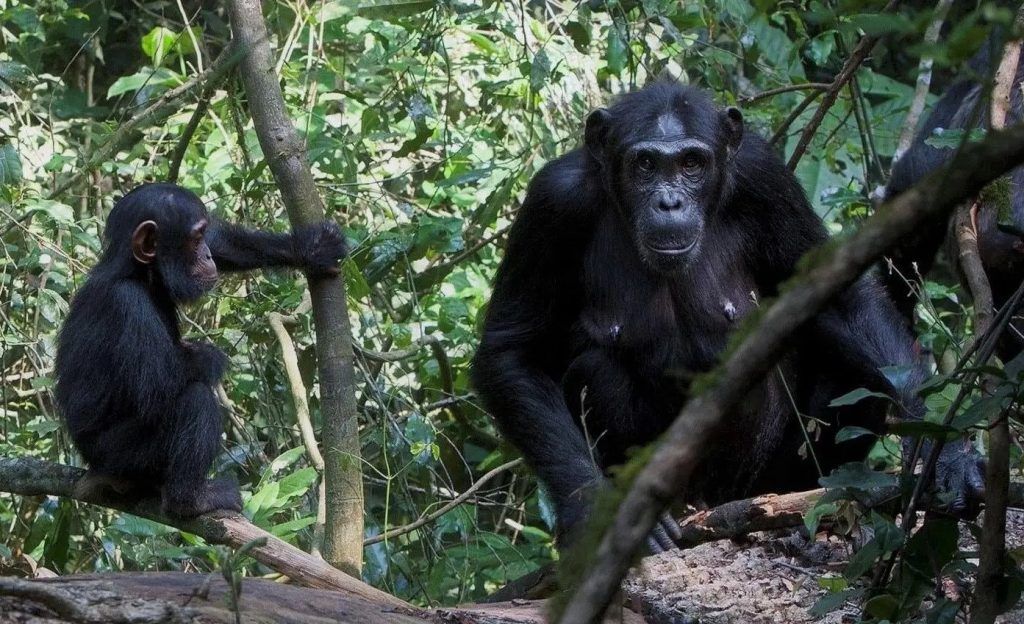
For generations, communities around Muhorro Town Council in Kagadi District coexisted with chimpanzees, separated by forests that provided sufficient food and habitat for wildlife while shielding nearby villages from frequent encounters.
That fragile balance is now rapidly eroding. Widespread deforestation has driven chimpanzees out of their natural habitat and into villages, gardens and trading centres, fuelling a surge in human-wildlife conflict that has left residents living in fear and conservationists warning of a deepening crisis.
Muhorro, in Buyaga County, has emerged as one of Uganda’s worst-affected areas for human-chimpanzee conflict. Local leaders estimate that at least 80 children have been attacked by chimpanzees over the years, with six confirmed fatalities, making the area one of the country’s most affected hotspots.


Conservationists say the growing conflict is not simply a wildlife issue but the result of extensive environmental degradation. As forests continue to disappear, chimpanzees are losing the food sources and shelter that once kept them within their natural habitat.
The destruction of ecosystems, including parts of Kagombe Central Forest Reserve and the wider Tooro-Semuliki landscape, has forced the primates to venture into nearby communities in search of food, leading to increasingly dangerous encounters.
Children have borne the brunt of the attacks. Those walking alone to gardens, fetching water or playing near forest edges are particularly vulnerable. In response, many parents in Muhorro now escort their children to gardens, restrict their movements and discourage them from visiting water sources alone.
A trail of deaths and injuries
The fear gripping the community is rooted in a series of tragic incidents.
In June 2022, five-year-old Mugabe Bikahwa sustained serious injuries after being attacked by a chimpanzee while fetching water with other children in Muhorro.
Less than a year later, tragedy struck again when a two-month-old baby, Aroho Ahumuza, was snatched from her mother as she walked to the family garden in March 2023. Although the infant was rushed to Kagadi General Hospital, she later died from injuries sustained in the attack.
These incidents have heightened anxiety among residents, many of whom now say they live in constant fear as chimpanzees increasingly stray into human settlements in search of food.
The most recent fatal attack occurred in October 2025 in Kahyooro B Cell, Karuswiga Ward, when a five-month-old baby boy was killed by chimpanzees.
The child’s mother, Janet Kobusinge, said she was tending her bean garden with the infant strapped to her back when a group of chimpanzees suddenly emerged from the nearby Katyoboona Forest.
“They came so fast. Before I could react, they had grabbed my baby and disappeared into the forest,” she recalled.
Residents mounted a search, but the child was later found dead with severe injuries to the head, mouth and chest.
The incident sparked outrage in the community, with the child’s father, Rodgers Ahaisibwe, accusing government agencies responsible for wildlife conservation of failing to protect people living near forested areas.
“We are living in fear every day. Our children are not safe, yet no lasting solution has been provided,” he said.
Communities Call for Action
The increasing number of attacks has fuelled calls for stronger government intervention, with some residents proposing that chimpanzees be relocated to protected conservation areas such as Kibale National Park.


Ben Wabyona, a resident of Kahyooro, said although chimpanzees contribute significantly to Uganda’s tourism industry, neighbouring communities should not bear the cost through the loss of human lives.
“We cannot continue losing our children. The government should consider relocating these animals to places like Kibale National Park,” he said.
Others have suggested that some forest reserves be degazetted to create more land for settlement and agriculture. However, conservationists caution that reducing protected forest cover would likely worsen the problem by destroying even more wildlife habitat and forcing additional animals into human settlements.
Deforestation Driving the Conflict
Kuteesa Swaleh Kadoma, Executive Director of Friends of Chimpanzees, said the attacks are a symptom of a broader environmental crisis rather than evidence of naturally aggressive behaviour.
“Chimpanzees were not aggressive in the past because they had enough food and space. But with deforestation, they are now being forced into communities,” Kadoma said.
He explained that chimpanzees can travel up to eight kilometres a day in search of food and are increasingly drawn to gardens growing bananas, maize and cassava after losing access to natural food sources.
Kadoma added that people’s reactions during encounters can also influence the animals’ behaviour.
“When people throw stones at chimpanzees or try to chase them away, the animals perceive it as a threat. They may retreat, but they can later return and react aggressively,” he said.
He noted that poverty, cultural beliefs and illegal hunting have further complicated conservation efforts, with some people killing chimpanzees for bushmeat or traditional practices.
To address the underlying causes of the conflict, conservation organisations are promoting alternative livelihood programmes aimed at reducing pressure on forests. With support from the Cross-Cultural Foundation of Uganda (CCFU), communities are being encouraged to adopt income-generating activities such as beekeeping, fish farming and livestock rearing.
“We are encouraging communities to protect chimpanzees because harming them can lead to legal consequences. At the same time, we are providing practical livelihood alternatives that reduce dependence on forest resources,” Kadoma said.
One of the most unlikely champions of conservation in Kagadi is John Mugasa, a former poacher who now advocates for peaceful coexistence between wildlife and local communities.
Drawing on his past experiences, Mugasa says killing wildlife is not the answer, arguing that wild animals are vital to Uganda’s tourism industry and the country’s ecological health.
“Killing wildlife is the worst thing a Ugandan can do. These animals are a source of foreign exchange through tourism, and conserving them and their habitats is the only sustainable option we have,” he said.
As part of his conservation efforts, Mugasa has planted indigenous tree species that provide food for chimpanzees, including Cordia millenii, whose fruits are among the primates’ preferred food sources. He believes restoring natural habitats will reduce the need for chimpanzees to venture into human settlements in search of food.
Calls for Buffer Zones and Better Planning
Environmentalists say Uganda must adopt stronger land-use planning measures to minimise future human-wildlife conflicts.
They are urging the National Environment Management Authority (NEMA) to establish clearly defined buffer zones between human settlements and wildlife habitats.
Muhorro Town Council Mayor Godfrey Nangonza said demarcating such zones would help communities understand where human activities should be restricted.
“They need to establish clear boundaries so that people know where to stop. This will help reduce conflicts,” he said.
Nangonza also called for incentives to encourage private forest owners to preserve indigenous trees instead of clearing them for agriculture. He further recommended promoting crops that are less attractive to chimpanzees to reduce raids on gardens.
Water access remains another concern.
Many attacks have occurred while residents, particularly children, fetch water from natural sources shared with wildlife. Nangonza said investing in piped water systems and community water tanks would reduce the need for people to use streams and water points frequented by chimpanzees.
A Shared Future
Conservationists warn that unless urgent measures are taken to restore degraded forests and protect wildlife habitats, human-chimpanzee conflict will continue to intensify.
“Protecting chimpanzees is not just about conserving wildlife; it is about securing a safe and sustainable future for both people and the environment,” Kadoma said.
For the people of Muhorro, the challenge is to strike a balance between safeguarding one of Uganda’s most iconic wildlife species and ensuring that communities—especially children—are no longer victims of a conflict driven by the steady loss of forests.
-Observer
Invest or Donate towards HICGI New Agency Global Media Establishment – Watch video here
Email: editorial@hicginewsagency.com TalkBusiness@hicginewsagency.com WhatsApp +256713137566
Follow us on all social media, type “HICGI News Agency” .

