
Updated by Faith Barbara N Ruhinda at 1136 EAT on Tuesday 21 July 2026
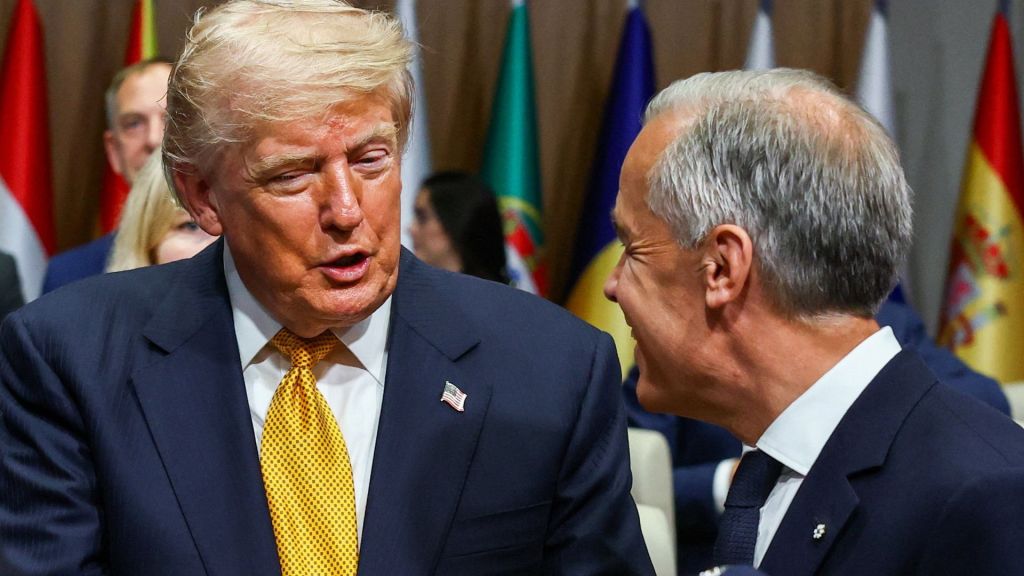
US President Donald Trump has imposed a 50% tariff on a broad range of goods imported from Canada, citing what he described as “unequal treatment” of US exports, including cars, dairy products and alcohol.
Everyday consumer goods, including wine and hockey sticks, as well as industrial products such as cement, are among the items targeted by the new tariffs. However, several key Canadian exports, including energy, potash, critical minerals and fish, have been exempted.
Prime Minister Mark Carney responded by saying Canada was prepared to “intensify” trade negotiations with the United States in the coming weeks.
The White House said the tariffs would come into effect within 30 days, marking a significant escalation in trade tensions between the two North American neighbours.
Canada was among the few countries to retaliate against Trump’s tariffs in 2025, imposing a 25% levy on about C$30bn (£16bn; $21.7bn) worth of US goods. Carney later removed some of those measures but maintained tariffs on US cars, steel and aluminium.


The US Supreme Court ruled earlier this year that many of Trump’s global tariffs imposed under emergency powers had been unlawfully enacted. However, the latest measures announced on Monday night rely on a different and little-used law that has not yet been tested in court.
The new tariffs apply to all covered goods, regardless of whether they are protected under the existing free trade agreement between Canada, the United States and Mexico, known as the USMCA.
“This is the latest in a series of unilateral US trade actions that began with the US imposing a series of tariffs in direct violation of the Canada-United States-Mexico Agreement,” Carney said in a statement on X.
He also referred to “threats to Canadian sovereignty”, apparently a reference to Trump’s repeated suggestions that Canada could become the 51st US state.
The new import duties add to existing trade barriers between the two countries.
The US currently maintains tariffs ranging from 15% to 50% on Canadian steel, aluminium and copper imports. Washington also imposes a 35% tariff on Canadian softwood lumber, as well as a 25% levy on non-US components used in automobiles.
However, the executive orders signed by Trump on Monday make no mention of wildfires.
Instead, the three proclamations identify long-standing US trade concerns involving Canadian cars, dairy products and alcohol, highlighting the apparent breakdown of negotiations between the two countries.
On the automotive sector, Trump has accused Canada of imposing tariffs on US vehicles and parts that do not qualify for protection under the US-Mexico-Canada Agreement (USMCA).
Trump has argued that the measure is “unreasonable”, claiming Canada has unfairly discriminated against the US by not imposing similar taxes on other countries.
Automotive manufacturing across North America is deeply interconnected, with supply chains spanning Canada, the United States and Mexico.
However, US Commerce Secretary Howard Lutnick has previously said he believes Canada should “come second” to the US in trade matters.
Trump has also repeatedly identified automobiles as an area where the two countries have conflicting interests.
The dairy sector has been another long-running source of tension. The US has criticised Canada’s supply management system, which limits foreign dairy imports. Products exceeding those limits face tariffs that can rise above 300%.


The ongoing boycott of US alcoholic beverages by several Canadian provinces has also emerged as a significant point of dispute for Washington since it was introduced last year.
Canada and Mexico had sought to renew the existing trade agreement, but the US has pushed for changes to the deal, which was negotiated during Trump’s first term in office.
Under the current arrangement, the agreement will continue to govern trade across North America for the next decade through a rolling process that includes annual reviews.
In February, the US Supreme Court struck down sweeping global tariffs imposed by Trump under the International Emergency Economic Powers Act of 1977. The justices ruled that the president had exceeded his authority by using a law intended for national emergencies to impose the duties.
The White House said at the time that it would rely on other legal avenues to introduce tariffs.
The measures announced on Monday were imposed under Section 338 of the 1930 Tariff Act, which addresses trade discrimination rather than national emergencies.
Candace Laing, president and chief executive of the Canadian Chamber of Commerce, described the latest tariffs as a “regrettable decision” and urged negotiators to make “meaningful progress” before the duties take effect in 30 days.
Chris Swonger, president and chief executive of the Distilled Spirits Council of the United States, also called for both countries to reach an agreement, warning that the move “raises the risk of further retaliation”.
-BBC
Invest or Donate towards HICGI New Agency Global Media Establishment – Watch video here
Email: editorial@hicginewsagency.com TalkBusiness@hicginewsagency.com WhatsApp +256713137566
Follow us on all social media, type “HICGI News Agency” .

