
Updated by Faith Barbara N Ruhinda at 1313 EAT on Thursday 2026
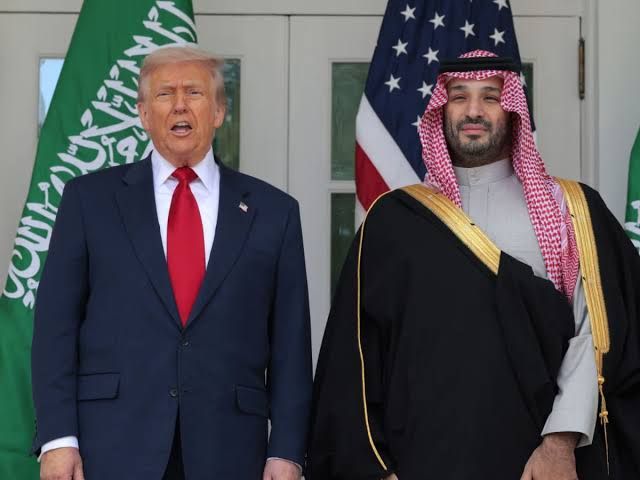
The agreement has been described by the US Department of Energy as a “peaceful nuclear cooperation agreement” aimed at expanding opportunities for American companies to participate in Saudi Arabia’s nuclear energy programme.
The full text of the deal has not been made public, but US media reports suggest it could eventually allow Saudi Arabia to enrich uranium — a process used to produce fuel for nuclear power plants but also a technology that can be used in developing nuclear weapons.
Experts have warned that granting Riyadh such capabilities would be a significant shift in US nuclear policy and could raise concerns over potential nuclear proliferation in an already volatile region.
The US Department of Energy said a “bilateral safeguards agreement” had also been signed alongside the cooperation deal.
“Together, these two agreements lay the legal foundation for a decades-long, multi-billion-dollar partnership that advances several priority economic and strategic objectives, including nuclear nonproliferation,” the department said in a statement.


Saudi Arabia’s de facto ruler, Crown Prince Mohammed bin Salman, said in a 2018 interview with CBS News that the kingdom was not seeking to develop nuclear weapons, but warned that Riyadh would pursue a similar path if Iran acquired a nuclear bomb.
“Without a doubt, if Iran developed a nuclear bomb, we will follow suit as soon as possible,” he said at the time.
Wednesday’s announcement comes as tensions between the United States and Iran continue to escalate. Saudi Arabia, a longstanding US ally, hosts several American military bases that have been targeted in Iranian attacks. The deal also follows a warning from Iran-backed Houthi rebels in Yemen, who two days earlier announced a “maritime blockade” targeting Saudi Arabia.
While specific details of the nuclear agreement have not been released, earlier reports suggested that Saudi Arabia could be allowed to enrich uranium domestically after conducting a joint study with the US. The plan could involve the construction of a US-built enrichment facility in Saudi Arabia, reducing the kingdom’s reliance on imported nuclear fuel.
The potential project could be worth billions of dollars to American companies involved in developing nuclear infrastructure and enrichment technology. Uranium enrichment can be used to produce fuel for nuclear power plants, but the same technology can also be used in the production of nuclear weapons.
US Energy Secretary Chris Wright said the agreement would meet strict safety and nonproliferation standards.
“Rest assured, these agreements uphold the highest standards of nuclear safety and nonproliferation, while relying on the world’s best nuclear technology and scientists, designed right here in the United States,” Wright said.
The US Department of Energy said the deal would support “US and regional security” while strengthening America’s position in the global civil nuclear energy sector.
Nuclear experts and former officials in Israel, the United States’ closest ally in the Middle East, have raised concerns that the agreement could eventually give Saudi Arabia the capability to develop nuclear weapons.
However, other experts argue that such a move would likely take decades and would face significant opposition from the international community.
Israeli Economy Minister Nir Barkat said Israel could manage a scenario in which Saudi Arabia develops nuclear energy for peaceful purposes.
Israel itself is widely believed to possess nuclear weapons, although it has maintained a policy of neither confirming nor denying their existence.
Rosemary Kelanic, director of the Middle East programme at the US-based Defense Priorities think tank, said it would be “quite shocking” if Washington allowed Saudi Arabia to establish uranium enrichment facilities.
“The US has never done that before. We have never helped another country enrich on their own soil,” she said, warning that the ability to produce nuclear fuel domestically could increase the risk of a country developing nuclear weapons.
The agreement will now be submitted to the US Congress for review.
While opposition is expected from lawmakers across the political spectrum, US President Donald Trump’s Republican Party controls both chambers of Congress, making it unlikely that opponents have enough votes to block the deal.
US Secretary of State Marco Rubio rejected concerns that the agreement could increase Saudi Arabia’s ability to develop nuclear weapons.


“The US is not going to reach any agreement with any country in the world that leads to the risk of proliferation,” Rubio told reporters.
However, several Democratic lawmakers criticised the deal, pointing out that Rubio, during his time as a senator, supported the “No Nuclear Weapons for Saudi Arabia Act”, which sought to require congressional approval for any nuclear agreement involving Riyadh.
Massachusetts Democratic Senator Edward Markey accused Rubio and Trump of enabling Saudi Arabia to gain access to nuclear technology while escalating tensions with Iran.
He described the move as allowing “a belligerent and authoritarian nation” to develop nuclear weapons capabilities “under the guise of preventing an Iranian nuclear bomb,” adding that their actions reflected both “hypocrisy” and “recklessness.”
-BBC
Invest or Donate towards HICGI New Agency Global Media Establishment – Watch video here
Email: editorial@hicginewsagency.com TalkBusiness@hicginewsagency.com WhatsApp +256713137566
Follow us on all social media, type “HICGI News Agency” .

