
Updated by Faith Barbara N Ruhinda at 1126 EAT on Monday 27 July 2026
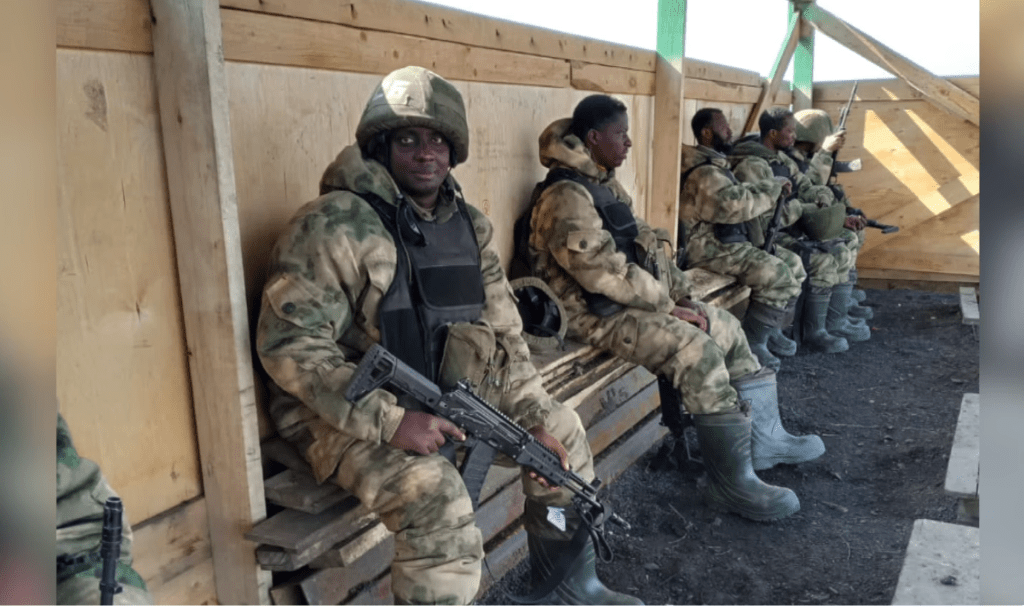
When Kenneth Kakuru left his home in Kawuku, Entebbe, on November 23, 2025, he believed he was travelling to Russia for a driving job that promised a monthly salary of $6,000 (about Shs21 million).
Like dozens of other former security guards and drivers who had worked in Iraq, Afghanistan and Somalia between 2007 and 2013, Kakuru hoped the opportunity would provide a better future for his family and lift them out of poverty. Instead, according to his relatives, he disappeared after being deployed to the frontline of the Russia-Ukraine war.
His wife, Anthens Ankunda, and his twin brother struggle to hold back tears as they recount the circumstances surrounding his departure, saying the promise of a well-paying job ultimately led him into a conflict from which he has never returned.
“He had been unemployed for a long time, and life had become increasingly difficult for our family. We were constantly being harassed by local moneylenders because he often borrowed from them to meet our basic needs,” Ankunda recalls.
“On November 23, he came home out of breath and immediately began packing his clothes. He told me he had secured a job that would pay $6,000 a month. He said, ‘My wife, I have to go. This opportunity will make poverty history in our home.’ Those were the last words he said before he left,” she says.


Ankunda says Kakuru travelled from Uganda by bus to Juba, South Sudan, where he boarded a flight to Istanbul before continuing to Moscow alongside 15 other Ugandans, most of whom had previously worked as security guards in Iraq and Afghanistan.
Shortly after arriving in Moscow, Kakuru sent a series of WhatsApp voice messages to his wife, telling her that the group had been taken to a military camp and that the work they were being asked to do was different from the job they had been promised.
“He told me they were given contracts written in Russian to sign, after which they underwent military training. He would come online for about 30 minutes every morning before disappearing again,” Ankunda, a mother of three, told The Observer.
Three weeks later, Kakuru asked his wife to open an account with Centenary Bank, saying his first salary would be deposited there.
“I told him the children had been sent home from school because we hadn’t paid their school fees. He assured me that his first salary would be deposited into the account within a week. But he also said they had been taken to a faraway place and asked me to pray for him,” Ankunda said.
Before ending the call, Kakuru gave her the contact of a woman identified only as Anna, saying she would facilitate the transfer of his salary.
“He told me that if anything happened to him, Anna would also help me process any compensation. I later spoke to her, and she assured me that the money would be sent within a week,” Ankunda told The Observer.
A week later, Ankunda checked the bank account, hoping her husband’s salary had been deposited. It was empty. With no money coming in, she says the family continued to struggle to provide food, pay school fees and meet other basic needs.
“I was devastated when I found the account empty. But what worried me even more was that my husband suddenly went silent. The messages stopped completely, and I feared something terrible had happened to him. He could have been captured, killed or injured because I have never heard from him again,” said Ankunda, who last communicated with her husband in February.
Now left to care for their three children, aged between three months and 10 years, Ankunda says she is living with uncertainty over her husband’s fate. She adds that two of their school-going children have dropped out because she can no longer afford to pay their school fees.


She is appealing to the governments of Uganda and Russia to help establish what happened to her husband.
Caroline Mukiza, a resident of Nansana in Wakiso district, is another woman whose husband travelled to Russia in search of better-paying work and has since disappeared.
Mukiza says she has been battling depression after receiving graphic images on social media that allegedly showed her husband’s dismembered body.
“I learned through Facebook that my husband had been killed in Ukraine. Images of what was said to be his severed body were sent to me. I was devastated,” she said.
“I sought help from the government, but I was told nothing could be done because my husband had left the country through illegal channels. He was the sole breadwinner for our family. I do not know how I will provide for our children without him.”
The claims made by the two women regarding the circumstances of their husbands’ disappearance and deaths could not be independently verified.
For Miriam Musisi, a resident of Migadde near Kigogwa in Wakiso District, the uncertainty surrounding her husband’s disappearance has been overshadowed by fear.
Her husband, Charles Musisi, had previously worked as a driver in Iraq during the US-led occupation before returning to Uganda, where he invested his savings in a tipper truck and four rental units.
“The tipper truck and our four rental properties were our main source of income until one of my husband’s former colleagues told him about a driving job in Russia that promised a monthly salary of $6,000,” Miriam said.
To finance the journey, Musisi sold his truck before leaving Uganda on December 23, 2025, alongside about 20 other Ugandans.
Weeks after arriving in Russia, he contacted his wife through WhatsApp with troubling news.
“He told me they had been forced to sign contracts written in Russian and wear military uniforms. He said he and other Africans were undergoing military training in preparation for deployment to the frontline in Ukraine,” she said.
Before his deployment, Musisi shared the contact of a man identified only as Dimitri, saying he would facilitate the transfer of his salary and assist the family should anything happen to him.
Initially, Miriam says, Dimitri assured her that her husband was alive and promised to connect them.
“After about two weeks, I started demanding that he let me speak to my husband. Instead, he threatened me. He claimed he had powerful connections within the Ugandan government and said it would take him less than a day to have me eliminated. He even showed me photographs of himself posing with ministers and security officials,” she alleged.
Soon afterwards, she says, all her WhatsApp and Instagram conversations with Dimitri mysteriously disappeared from her phone.
“When I checked my phone, every chat we had exchanged was gone. I don’t know how the messages were deleted, but it frightened me. I believed he could carry out the threats he had made. I switched off my phones, left my home and stayed with my parents for two months. Even now, I live in fear,” she said.
Miriam is now raising their six children on her own, including a baby who was born two months after her husband’s departure.
“This baby has never seen her father. I pray that one day he returns home and reunites with us because he was our family’s breadwinner. My school-going children are suffering. This term I only managed to buy the school requirements, but I have not been able to pay their school fees,” she said.
-Observer
Invest or Donate towards HICGI New Agency Global Media Establishment – Watch video here
Email: editorial@hicginewsagency.com TalkBusiness@hicginewsagency.com WhatsApp +256713137566
Follow us on all social media, type “HICGI News Agency” .

