
Updated by Faith Barbara N Ruhinda at 1126 EAT on Thursday 3 September 2026
The World Meteorological Organization (WMO) has warned that the developing El Niño could become the strongest in more than seven decades, with the weather pattern expected to persist until at least February 2027.
The phenomenon can disrupt weather patterns worldwide, triggering droughts in some regions while bringing heavier rainfall, flooding and stronger tropical storms to others.
Scientists also expect El Niño to push temperatures higher in some parts of the world, compounding the warming already driven by human-induced climate change.
“El Niño is being supersized before our eyes. The science leaves no room for doubt: the planet is in uncharted waters, and those waters are heating up,” UN Secretary-General António Guterres said.
The BBC spoke to governments and scientists about measures being taken around the world to reduce the risk of deaths, displacement and environmental damage. Early-warning systems have been strengthened, while pre-emptive medical assistance is being deployed. However, the projected strength of this El Niño has raised serious concerns, particularly for vulnerable communities.

The World Meteorological Organization (WMO), a UN agency, said it had undertaken a “major mobilisation” to ensure its forecasts of potentially extreme weather linked to El Niño reach as many communities as possible.
WMO Secretary-General Celeste Saulo warned: “El Niño has the potential to deliver a massive blow to communities and economies across the world.”
El Niño is a natural climate phenomenon that develops in the Pacific Ocean and is associated with changes in wind patterns. It causes warm water to move eastwards across the Pacific, releasing heat into the atmosphere and influencing weather patterns around the world.
Sea surface temperatures in the central and eastern tropical Pacific have risen sharply in recent months, providing a clear indication that El Niño is strengthening.
In the Pacific’s key monitoring region, surface temperatures have been more than 2°C above average in recent weeks, putting the phenomenon on course to be classified as a “very strong” El Niño.
However, forecasters expect it to intensify further, with monthly sea surface temperatures potentially approaching 4°C above average.
If that occurs, it would make this the strongest El Niño since at least 1950, potentially by a significant margin.
With its rich marine ecosystems, Australia is particularly vulnerable to changes in ocean temperatures.
The country has been hit by marine heatwaves in recent years, with climate change contributing to their increasing frequency and intensity.
El Niño is a natural climate phenomenon, but it can bring the extreme heat that contributes to marine disasters, Dr Alistair Hobday, a chief researcher at Australia’s national science agency, told the BBC.
This year, marine heatwave forecasts suggest the Great Barrier Reef could avoid the worst of the conditions, giving its coral ecosystems more time to recover.
“[But] Southern Australia is getting slammed,” Hobday said.
During the last major marine heatwave to hit South Australia and Tasmania, starving penguins, mass fish deaths, suffocating algal blooms and jellyfish invasions were reported.
Australia has recently introduced early-warning systems for marine crises, giving authorities more time to provide financial assistance to fisheries, relocate vulnerable species and step up coral monitoring.
While El Niño’s effects on global weather are likely to be felt well into 2027, the WMO expects significant shifts in rainfall patterns over the coming months.
Drier-than-average conditions are forecast across large parts of Southeast Asia, Central America and northern South America, increasing the risk of drought and wildfires.


From Thursday, the number of vessels transiting the Panama Canal will be reduced by more than 10% in anticipation of lower rainfall.
About 14,000 ships use the artificial waterway each year. In addition to serving as a vital route for global trade, the canal is a major source of revenue for Panama, generating about $3 billion (£2.2 billion) annually.
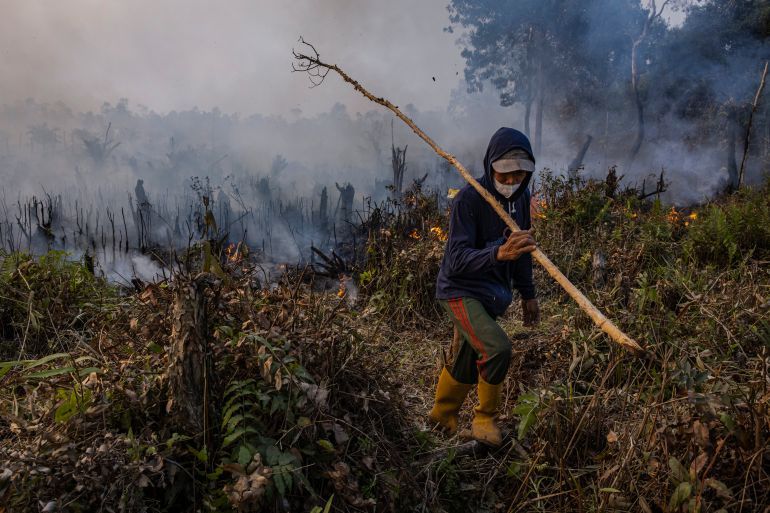
Indonesia is racing to contain wildfires that have burned more than 107,000 hectares of land nationwide during this dry season. Like other parts of Southeast Asia, the country is experiencing a longer-than-usual dry season this year.
A resident of Central Kalimantan told BBC News Indonesia that his area had been affected by wildfires “for more than a month”.
“The smoke has become quite thick. When we step outside, our eyes start to sting. The smell of the smoke is also quite strong,” Darwin Romy said.
Authorities have deployed cloud-seeding aircraft to induce rainfall and help extinguish the fires, while the government has pledged additional resources to contain them.
Dozens of people have also been arrested over allegations of using fires to clear land.
Parts of the country, as well as Ecuador and parts of Brazil, have previously experienced increased rainfall, resulting in flash floods and landslides. The impacts have been particularly severe in urban areas, where heavy rainfall can overwhelm drainage systems.
Miguel Aréstegui, climate resilience lead at Practical Action, an organisation that helps countries prepare for extreme weather, said there was “significant concern” about the situation, but stressed that it should prompt preparedness rather than alarm.
He said Practical Action had been working with partners in recent years to improve public access to early-warning systems, including information on river levels, flood risks and weather forecasts.
At the end of last month, the US announced that it was deploying the USNS Comfort to the Peruvian coast to provide additional medical assistance and technical equipment ahead of El Niño’s expected peak.
As governments prepare for the potentially severe impacts of El Niño, scientists say early action could help reduce the damage to lives, livelihoods and ecosystems.
With extreme weather already becoming more frequent and intense because of climate change, the coming months will test how effectively countries can turn forecasts into timely action.
The WMO says continued monitoring and early warnings will be critical as the phenomenon develops and its effects are felt across the world.
-BBC
Invest or Donate towards HICGI New Agency Global Media Establishment – Watch video here
Email: editorial@hicginewsagency.com TalkBusiness@hicginewsagency.com WhatsApp +256713137566
Follow us on all social media, type “HICGI News Agency” .

