
Updated by Faith Barbara N Ruhinda at 1357 EAT on Thursday 5 November 2026
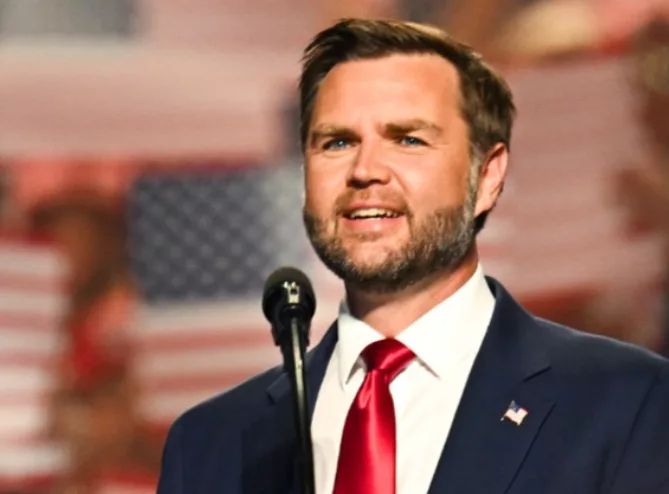
US Vice-President JD Vance sent shockwaves through Washington on Wednesday by blaming the Iran war for his party’s midterm election defeat, in what was widely interpreted as an attempt to distance himself from President Donald Trump ahead of a possible 2028 presidential bid.
In a carefully worded, 600-word statement posted on X, Vance acknowledged that voters who supported Trump in the 2024 presidential election had deserted Republicans in the midterms.
“The reason we lost is the war,” he wrote. “The president himself said so last night.”
In interviews late on Tuesday and on Wednesday, Trump defended the war but acknowledged that it had contributed to Democrats taking control of both chambers of Congress, the House of Representatives and the Senate.
Vance’s reservations about the war in Iran have been an open secret in Washington. Although he has repeatedly backed the conflict since the United States and Israel launched attacks on Tehran in February, he has reportedly expressed opposition during private meetings with administration officials.
Hours after Trump and the Republican Party suffered a bruising defeat in the midterm elections, Vance made clear that he viewed the decision to go to war as a major political miscalculation.
“If you’d like to argue it was worth it, that losing the Senate for the next six years was worth it, then do so. Argue it was a worthwhile cost to pay. Agree or disagree, that’s at least honest,” Vance said.


The remarks were striking and largely unprecedented in recent US political history, with few comparable instances of a sitting vice-president publicly breaking with the president over a major foreign policy decision.
In an arguably bigger surprise, Trump, who typically demands unwavering loyalty from his senior advisers, agreed with Vance that the war had “largely” determined the midterm election outcome.
However, he maintained that the military action was justified, saying he would “do it again” if faced with the same choices.
The exchange offered an early indication that Trump, who has consistently valued loyalty among his advisers, may be willing to give Vance room to chart his own political path should he decide to launch a presidential bid.
“I know how he feels about it. I think it was — I think it was fine,” Trump told reporters when asked about Vance’s post blaming the war for the election defeat.
“I knew that when I went in, and we stopped them from having a nuclear weapon, and they will never have a nuclear weapon,” he added.
Daniel Byman, a foreign policy expert at the Center for Strategic and International Studies, said Vance’s statement appeared to be “a way of separating himself from Trump”.
Drawing a clear distinction from Trump would be a delicate balancing act for Vance if he decides to seek the presidency, Byman added.
That balancing act was evident in Vance’s statement. The vice-president did not mention Trump by name and attributed much of his analysis of the election results to unnamed pollsters.
Vance had “put his toe in the water to see what he’s going to do”, Republican strategist Ashley Davis told the BBC.


Beyond his criticism of the Iran war, Vance also outlined a political roadmap that could offer a glimpse into a possible presidential campaign. He distilled the party’s strategy for winning back voters into a four-point plan:
“1) End the war 2) Focus on cost of living/inflation 3) Put America First 4) Change our relationship to Israel.”
The list reflected many of the positions Vance has championed since emerging on the national political stage and read like the central themes of a potential future campaign speech.
Vance is widely expected to run for president but has yet to make an official decision, with his aides insisting that he is still considering his options.
However, the extent to which Vance broke with Trump remains open to question. According to The New York Times, Vance showed the president his statement before posting it online.
Trump, for his part, could still change his position and make clear that he will not tolerate dissent from Vance or anyone else within his administration.
The president has been cautious about revealing whom he would support to succeed him as the Republican Party’s 2028 presidential nominee. Although he has praised Vance and Secretary of State Marco Rubio on several occasions, he has yet to indicate when, or whether, he will endorse either of them.
Trump appears to enjoy the speculation surrounding his preferred successor and who will carry forward his political movement. He has even floated the possibility of seeking a third term, despite the US Constitution prohibiting presidents from being elected to more than two terms.
Vance’s statement following the midterm elections may ultimately prove insignificant. Alternatively, it could mark the beginning of the 2028 presidential race and the struggle for control of the Republican Party in the post-Trump era.
-BBC
Invest or Donate towards HICGI New Agency Global Media Establishment – Watch video here
Email: editorial@hicginewsagency.com TalkBusiness@hicginewsagency.com WhatsApp +256713137566
Follow us on all social media, type “HICGI News Agency” .

