
By Dr. Kivumbi Earnest Benjamin, L.H.D (Hon) Updated 1920 EAT on Tuesday 11th November 2026
ANTALYA, TÜRKİYE – World leaders and climate negotiators have been urged to move beyond promises and accelerate practical climate action as the 31st Conference of the Parties to the United Nations Framework Convention on Climate Change (COP31) gets underway in Antalya, Türkiye.
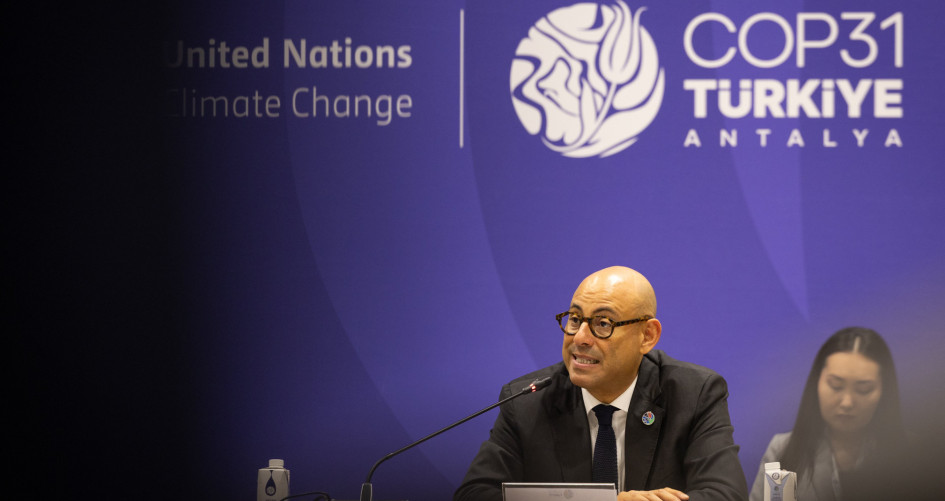
UN Climate Change Executive Secretary Simon Stiell during the Health Day Ministerial Roundtable Meeting at COP31 in Antalya, Türkiye
Opening the conference, UN Climate Change Executive Secretary Simon Stiell called for a new era of implementation, emphasizing that COP31 must focus on turning existing global climate commitments into tangible results that benefit communities, economies and vulnerable populations.
Stiell acknowledged the progress made since the adoption of the Paris Agreement, noting that renewable energy has become increasingly competitive, with 90 per cent of large renewable energy projects now cheaper than fossil fuel alternatives.
However, he warned that global climate progress remains insufficient and urged countries to intensify efforts in renewable energy expansion, climate adaptation, methane reduction and access to climate finance.
” COP31 must supercharge solutions,” Stiell emphasized, calling for practical measures to translate global targets and national climate plans into concrete action.
He highlighted the importance of delivering on commitments to triple adaptation finance, addressing barriers that prevent developing countries from accessing available funding, and tripling global renewable energy capacity by 2030.
Stiell also stressed that reducing methane emissions, particularly in the oil and gas and waste sectors, alongside accelerating electrification, could significantly reduce projected global warming.
Türkiye Calls for an Implementation-Focused COP31
COP31 President Murat Kurum welcomed delegates to Antalya, describing climate change as a global challenge that is increasingly interconnected with food security, energy, economic stability, migration, public health and international security.
Kurum argued that climate policy must no longer be viewed as an isolated environmental issue but as a central component of development and economic planning.
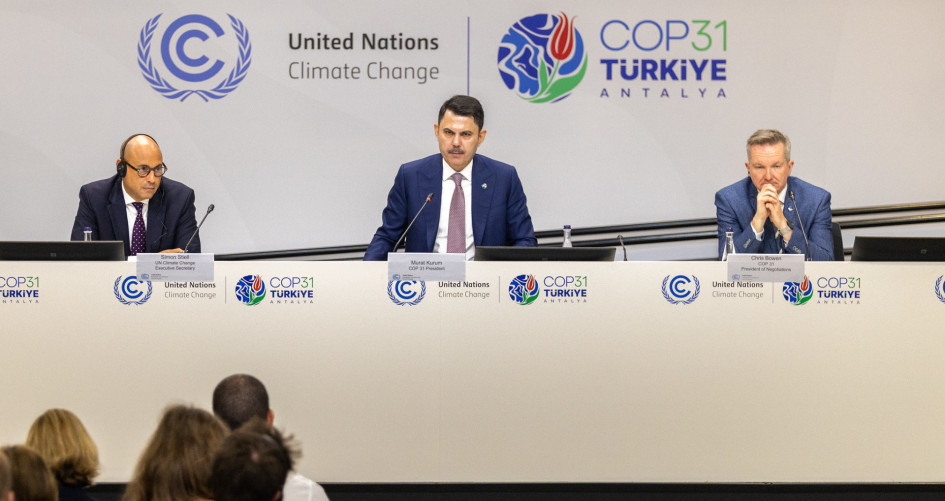
Credit: Kubilay Ciftci | UN Climate Change
He called for COP31 to become an Implementation COP, where commitments translate into investments, infrastructure improvements, stronger communities and measurable benefits for ordinary people.
According to Kurum, the conference must bridge the gaps between countries that have access to finance and technology and those that urgently need these resources to address climate challenges.
He outlined three guiding principles for Türkiye’s COP31 Presidency: Dialogue, Consensus and Action.
The Turkish presidency also highlighted its partnership with Australia and the importance of ensuring that vulnerable countries, particularly small island developing states and developing economies, have their voices represented in global climate discussions.
Kurum further emphasized the importance of the Climate Implementation Bridge, an initiative designed to connect countries and projects seeking climate finance with investors, technological expertise and available resources.

He also reaffirmed Türkiye’s commitment to the 35-by-35 Global Electrification Pledge, which aims to increase electricity’s share of final energy consumption to 35 per cent by 2035.
The initiative is expected to support renewable energy, modern electricity grids, energy storage, clean transportation, energy efficiency and green industrial development.
Australia Emphasizes Climate Finance and Stronger International Cooperation
COP31 President of Negotiations Chris Bowen reaffirmed Australia’s commitment to working closely with Türkiye to deliver an ambitious and practical climate conference.
Bowen said the partnership between the two countries was built on cooperation, solidarity and a shared determination to accelerate climate action.
He warned that the world is already experiencing the devastating consequences of climate change, including glacial collapse, extreme heat, rising climate risks and increasingly severe weather events.
While acknowledging that global warming is projected to exceed the 1.5°C threshold, Bowen maintained that coordinated international action could still help bring temperatures back down.
He pointed to significant progress in renewable energy investment, noting that approximately US$2.2 trillion was invested in clean energy in the previous year, nearly twice the amount invested in fossil fuels.
Bowen also stressed the need to accelerate electrification, strengthen energy systems and expand renewable energy infrastructure to reduce emissions and protect households from volatile energy prices.
A major priority, he said, must be making climate finance more accessible, particularly for developing countries that face difficulties securing funding for adaptation and clean energy projects.
He called for stronger project pipelines, increased public and private investment and faster disbursement of climate finance.
Developing Countries and Vulnerable Communities at the Centre
A major theme emerging from the opening statements was the need to ensure that developing countries and vulnerable communities are not left behind in the global transition to a low-carbon and climate-resilient future.
The speakers stressed that countries most exposed to climate risks often have the least access to the financial resources and technological support required to respond effectively.
The climate finance commitments agreed in Baku, including at least US$300 billion annually for developing countries by 2035 and efforts to scale up public and private finance to US$1.3 trillion annually, were highlighted as important priorities for implementation.
The leaders also underscored the need to strengthen adaptation measures, early-warning systems, resilient infrastructure and institutional capacity to help countries prepare for and recover from climate-related disasters.

Focus on Delivering Tangible Results
COP31 is expected to address a wide range of climate priorities, including operationalizing the Just Transition Mechanism, strengthening mitigation efforts, advancing the Global Goal on Adaptation, improving climate finance delivery and supporting international cooperation.
Bowen disclosed that the conference agenda includes more than 160 items and 60 substantive negotiation mandates, providing opportunities for countries to make progress across different areas of climate action.
He also announced plans for a Presidency-initiated, Party-driven decision intended to provide a focused and practical response to the climate challenges and opportunities facing the international community.
The decision, he explained, would be developed through consultation with participating countries and would not duplicate existing negotiations.
A Shared Responsibility for the Future
The opening messages from the three climate leaders reflected a common position: the world must move faster from climate commitments to implementation.
Stiell called for countries to work together to accelerate solutions, Kurum challenged the international community to make Antalya a starting point for meaningful partnerships, while Bowen urged delegates to demonstrate that multilateral cooperation can deliver results.
Their statements placed particular emphasis on the need for trust, fairness, accessible finance, technological cooperation and stronger partnerships between governments, businesses, financial institutions, scientists and communities.
As COP31 progresses, the international community faces the challenge of ensuring that decisions made in conference halls translate into real improvements in people’s lives.
The central message from Antalya is clear: climate commitments must become practical action, and the responsibility for protecting the planet’s future must be shared by all nations.