
Upated by Faith Barbara N Ruhinda at 1315 EAT on Tuesday 17 November 2026
An entire day can pass without Denise Kainomugisha eating a meal. She attends lectures at Makerere University on an empty stomach before returning to her hostel in the evening, hoping to find something to cook.
Even then, preparing a meal depends on whether she has food supplies and enough cooking gas.
Kainomugisha, the Guild Representative for the School of Languages, Literature and Communication, says hunger has become a common struggle among students who lack regular financial support from home or alternative sources of income to sustain their daily needs.
“I have been here for three years, but if you don’t have a side hustle, you can actually go hungry. If you don’t have a side hustle and your parents are not sending you money, you’re actually cooked,” she said.
Kainomugisha prepares her own meals at the hostel, relying partly on food supplies sent from her home village. However, when the supplies run out and her mother is unable to send more immediately, she sometimes struggles to secure meals for several days.
“You eventually get used to going the entire day without eating, then return to the hostel in the evening to prepare a meal,” she said.
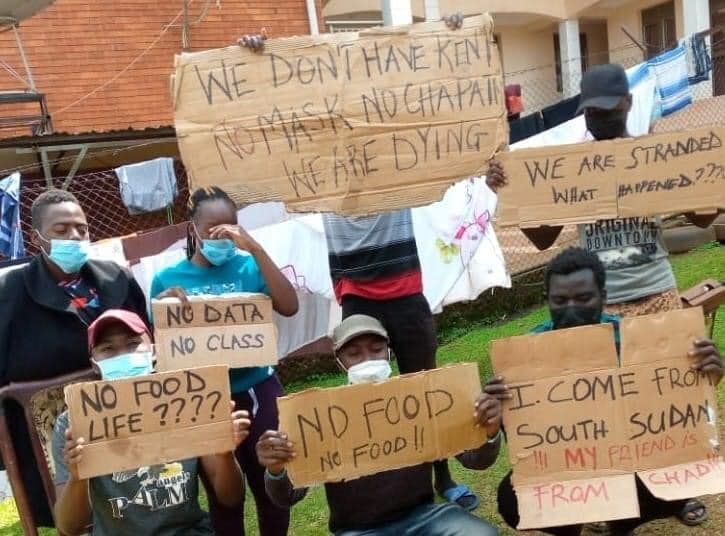
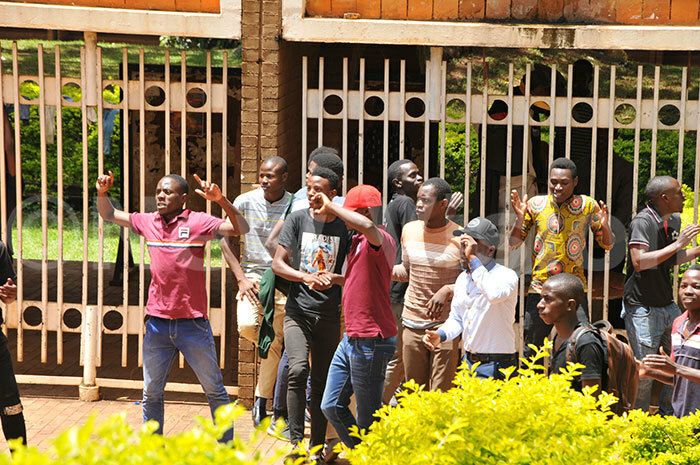
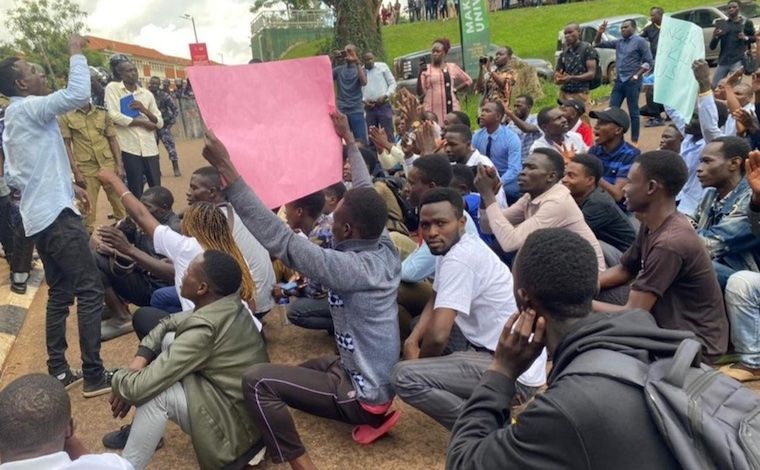
Her experience reflects a wider concern that has drawn public attention over the past month, following reports of Makerere University students collapsing or missing examinations due to hunger.
The growing concern prompted Makerere University, in partnership with Rotary, to launch the Food for Peace programme, aimed at providing free meals to students struggling to meet their basic food needs.


However, while the initiative offers immediate relief, it has also raised a broader question: why are students at Uganda’s leading public university struggling to afford something as basic as a meal?
Innocent Kisembo, Chairperson of the College of Humanities and Social Sciences, said hunger affects both government-sponsored and privately sponsored students, although their financial circumstances vary.
He noted that government-sponsored students receive a living allowance of Shs 530,000 to cater for meals, but argued that the amount is insufficient to sustain them throughout the semester.
“The allowance of Shs 530,000 is too little to sustain someone throughout the entire semester,” he said.
Spread across a four-month semester of approximately 120 days, the allowance translates to about Shs 4,400 per day.
Kisembo said that, given the prevailing food prices, a student could spend nearly the entire daily allocation on a single meal, leaving little or nothing for additional meals and other basic necessities.
Kisembo is now calling on government to increase the allowance to reflect the rising cost of living and the increasing prices of food commodities.
Makerere University previously provided meals directly to government-sponsored students. However, the arrangement was discontinued in 2018 after service providers demanded higher payments to cope with rising commodity prices.
Following a survey among students, the university replaced the meal provision system with cash allowances.
Privately sponsored students face a different set of financial challenges, with many relying on parents and guardians who must already meet the costs of tuition, accommodation, transport and other university expenses.


One student, who requested anonymity, said some families make significant sacrifices to finance their children’s education, in some cases selling land or livestock to raise tuition fees.
However, little money is often left to cover students’ day-to-day living expenses.
The student noted that some parents, particularly those unfamiliar with the realities of university life, assume that a small amount of pocket money is sufficient, much as it would be for a learner in boarding school.
“Reality is different. Food, rent, transport and basics quickly exhaust that money, and hunger becomes a daily companion that kills concentration, health and hope,” the student said.
For affected students, hunger is therefore more than a financial inconvenience. It threatens their wellbeing, academic performance and ability to participate fully in university life.
While the Food for Peace initiative provides immediate relief, the underlying challenge remains how to ensure that students can afford basic meals as they pursue their education.
Without more reliable financial support, some students may continue facing a difficult choice that no university student should have to make: balancing the demands of higher education against the basic need to secure their next meal.
-Observer
Invest or Donate towards HICGI New Agency Global Media Establishment – Watch video here
Email: editorial@hicginewsagency.com TalkBusiness@hicginewsagency.com WhatsApp +256713137566
Follow us on all social media, type “HICGI News Agency” .

