
Updated by Faith Barbara N Ruhinda at 1522 EAT on Thursday 26 November 2026
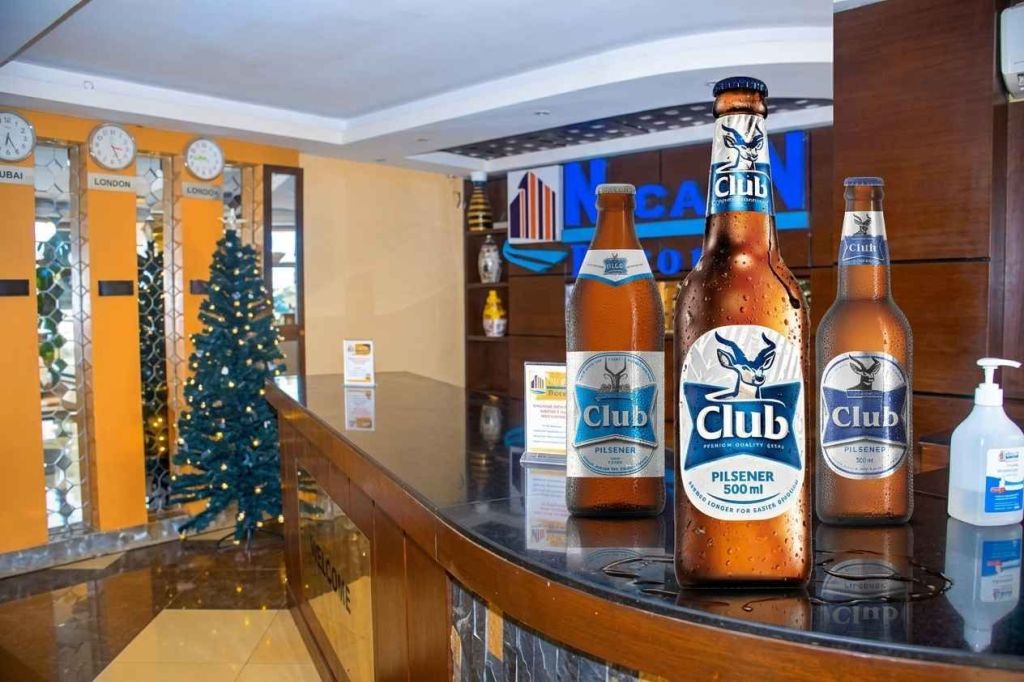
Nican Resort Hotel has been ordered by the High Court to pay a customer Shs 10 million in general damages after serving her a bottle of beer that was about three months past its best-before date.
In a judgment delivered on November 16, Justice Bonny Isaac Teko found the Seguku-Katale-based hotel negligent for serving Ruth Nazziwa a bottle of Club Pilsner Lager without checking its best-before date.
The judge awarded Nazziwa Shs 10 million in general damages and Shs 240,000 in special damages, with interest at eight per cent per annum, as well as costs of the suit.
The dispute arose from an incident on February 28, 2018, when Nazziwa was at Nican Resort Hotel with friends. She told court that she took a sip of the beer, noticed a foul smell and raised the matter with the hotel staff.


The court established that the beer had been manufactured on August 7, 2017, and had a best-before date in early December 2017. It was therefore served about 12 weeks after its best-before date.
The hotel’s food and beverage supervisor, Collins Nakabale, testified that he was called to attend to the complaint. Upon examining the bottle, he noticed particles in the beer. He also acknowledged that an apology was written following the incident.
Justice Teko considered Nakabale’s testimony particularly significant, noting that he was a witness called by the hotel itself.
Although the judge cautioned that a best-before date does not automatically mean a product is unsafe for consumption, he said the hotel had a duty to check the date before serving the beer to its customer.
“A customer served by a hotel is entitled to expect that the hotel has checked what it serves, particularly where the hotel has a policy of doing so,” he ruled.
Manufacturer cleared
While the court found the hotel negligent, it dismissed the case against Nile Breweries, ruling that Nazziwa had failed to prove that the beer was defective when it left the manufacturer’s factory or that the company had been negligent.
Nile Breweries’ quality assurance manager, Nicholas Lubwama, testified that a control sample from the same production batch was found to be normal.
The court also raised concerns about the handling and testing of the bottle presented as evidence by Nazziwa.
The bottle was opened on the day of the incident, left at the hotel counter and later taken into police custody. It was reportedly kept without refrigeration for more than a month before being submitted for laboratory analysis. The sample was examined in November 2018, according to the report.


Justice Teko noted that the police diary contained an incorrect date of submission and that neither the bottle nor the beer sample was produced in court.
Although the judge declined to expunge the Government Analyst’s report, he ruled that it could not independently establish the condition of the beer at the time it was served.
The report was therefore of limited value in establishing what was in the bottle when the beer was served, and the court did not rely on it for that purpose, he ruled.
He added that the differences between the complained-of sample and the control sample could have resulted from deterioration after the bottle was opened, rather than a manufacturing defect.
The judge said Nazziwa had not presented expert evidence explaining how the particles could have formed inside a sealed bottle or proving that the defect existed when the beer left the manufacturer’s control.
The court also rejected her claim that Nican Resort Hotel was an agent of Nile Breweries.
Evidence showed that the hotel obtained its beer through Nakuya Enterprises Limited, an authorised distributor, under arrangements in which ownership and risk passed to independent distributors.
Justice Teko found no agency, partnership or employer-employee relationship that could make Nile Breweries vicariously liable for the hotel’s actions.
Court rejects claim over subsequent illness
The court also limited the compensation after finding that Nazziwa had not proved that her subsequent illness and treatment in South Africa were caused by the beer.
She had claimed that she suffered food poisoning, received treatment in Uganda and later travelled to South Africa for further medical attention.
However, the judge noted that she admitted during cross-examination that tests conducted at Kampala International Medical Centre had not confirmed food poisoning.
Her medical records instead referred to peptic ulcers, while the treatment was mainly aimed at gastric protection.
The court further observed that, according to her police statement, she had consumed other beers that evening. No medical witness linked her subsequent illness to the incident.
“The court does not find that the later illness was caused by the beer,” Justice Teko ruled.
He accepted only the evidence relating to her immediate symptoms and the treatment she received shortly after the incident.
On damages, the judge rejected Nazziwa’s claim for Shs 100 million in general damages, finding that the injury established was limited to a brief gastric upset, distress and the inconvenience of seeking medical attention.
He also rejected her claim for punitive and exemplary damages, finding no evidence that the hotel’s conduct was deliberate, oppressive or high-handed.
-Observer
Invest or Donate towards HICGI New Agency Global Media Establishment – Watch video here
Email: editorial@hicginewsagency.com TalkBusiness@hicginewsagency.com WhatsApp +256713137566
Follow us on all social media, type “HICGI News Agency” .

