
Updated by Faith Barbara N Ruhinda at 1603 EAT on Thursday 26 November 2026
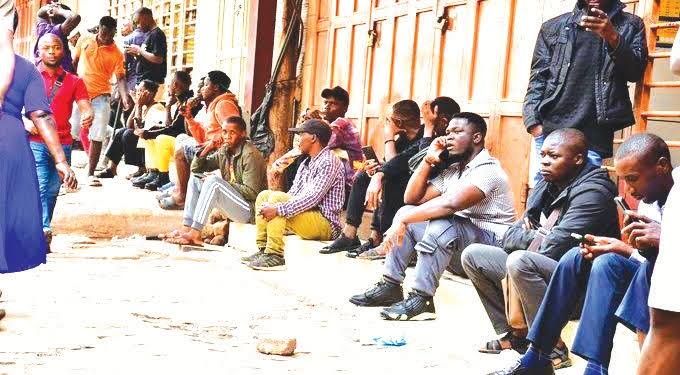
When traders in downtown Kampala closed their shops on November 17, they were protesting more than the taxes they pay.
They were challenging a system they say is making it increasingly difficult to import goods, keep businesses running and earn a living.
The closure spread across Kampala and surrounding trading areas, bringing another confrontation between business owners and the Uganda Revenue Authority (URA) into the public spotlight.
Six days later, President Yoweri Museveni intervened, and the strike was called off. But the dispute that triggered it remains unresolved.
At its centre is a question that affects everyone, from a clothes importer to a customer buying a shirt: how should Uganda tax imported textiles and garments, and can traders understand and comply with the rules without putting their businesses at risk?
Traders organised under the Kampala City Traders Association (KACITA) and the Federation of Uganda Traders Associations (FUTA) oppose taxes assessed on textiles by weight. They also complain about the Electronic Fiscal Receipting and Invoicing Solution (EFRIS), delays in customs clearance, enforcement raids and the seizure of goods, particularly imports from Kenya.
A consignment held in a warehouse means merchandise cannot reach customers. A sealed shop means rent and other expenses continue even when sales stop. The costs of uncertainty eventually affect employees, suppliers and customers across the city.


The latest closure follows similar protests in April and July 2024 and August 2025.
One of the sharpest criticisms centres on the practice of assessing taxes on imported textiles by weight rather than according to the price at which individual garments are sold.
Kalungu East MP Yusuf Kiruluuta Nkeretanyi questioned the rationale behind the method during discussions on the dispute.
“There is an issue of taxing textiles based on kilogrammes. I want to ask the Commissioner General: do you know how many kilogrammes you are wearing to charge people on textiles based on kilogrammes? Did you go to the shop to buy your suit and tell them to weigh it before selling it to you? We need a review on that,” Nkeretanyi said.
His argument is that the basis for assessing import taxes can appear disconnected from how goods are priced in shops. This raises questions about whether the method is appropriate and fair to businesses importing different types of clothing.
Nkeretanyi also questioned URA’s approach to assessing income tax for some informal-sector businesses. He said traders complain that officials use the amount of rent they pay as a basis for determining their tax obligations.
“When did rent become a yardstick for determining the income tax a trader must pay? If we address all these issues, people will comply and pay taxes,” he said.
Rent is an operating expense, not necessarily an indicator of profit. Nkeretanyi argued that tax assessments should better reflect the actual circumstances of businesses, warning that aggressive tax collection could discourage compliance rather than improve it.
“People want to pay taxes, but why do they keep evading them? URA’s main goal appears to be similar to that of a business — maximising revenue without considering the people being squeezed,” he said.
He urged the government to widen the tax base by keeping more businesses operational, rather than pursuing revenue collection in ways he believes could force them to close.
URA Commissioner General John Musinguzi Rujoki offered a different explanation, saying the weight-based tax assessment is prescribed by law.
He said URA could not simply abandon the method because of traders’ objections, adding that changing it would require political leaders to amend the legal framework.
Prime Minister Robinah Nabbanja told Parliament last Thursday that President Yoweri Museveni had asked traders to suspend their strike as the government considered their grievances.
Meetings involving traders, URA and relevant ministries were held on November 17 and 18, 2026.
Nabbanja said the taxation of textiles and garments had been identified as the main source of disagreement between traders and URA.
“The meeting established that the impasse between URA and the traders largely concerns the tax policy on textiles and garments. This was identified as the central issue from which others emanate,” she told MPs.
According to Nabbanja, the President’s position was that the matter should be handled through the institutions responsible for making policy.
“It is the guidance of the President that, since this is a policy matter that needs to be addressed through Cabinet, then Parliament, he requested the traders to suspend the strike until we give them a clear answer after the Cabinet meeting,” she said.


She added that the policy would be reviewed to harmonise Uganda’s treatment of textiles and garments with that of other East African Community countries.
Harmonisation would bring the rules closer together across the regional bloc, potentially reducing differences that complicate cross-border trade.
For now, however, a review does not amount to a reduction, repeal or replacement of the disputed tax. Traders are waiting to learn what Cabinet proposes and whether Parliament will need to amend the law.
GOODS HELD UP, SHOPS SEALED
Some problems do not require a new tax law, according to KACITA chairperson Issa Sekitto, who said URA could immediately address consignments awaiting clearance and premises sealed during enforcement operations.
“Traders who cleared with URA should go, and we want to hear that traders have received their goods. We want URA to open sealed shops, stores and traders’ offices. If there are any exhibits in there, URA should get them and allow people to work,” Sekitto said.
He said talks with URA had resulted in an agreement to address administrative obstacles. He also urged traders to follow resolutions reached through KACITA, warning that the association would not intervene on behalf of members who ignored agreed procedures and later encountered difficulties.
URA says goods are already being released, although traders must establish ownership and pay the taxes assessed on their consignments.
“We are saying that as long as you, the owner of the goods, can come with evidence of ownership of the container, we assess you, pay your taxes, and go. As I speak, traders have started coming,” said Robert Kalumba, URA’s assistant commissioner for public and corporate affairs.
URA alleges that some container dealers, intermediaries who handle shared shipments, submit false invoices and under-declare the value of imports. The authority says some abandon their goods when asked to pay the correct amount.
Those allegations highlight the need to distinguish between traders who have complied with customs requirements and intermediaries accused of misrepresentation.
To reduce dependence on middlemen, URA is advising importers to obtain individual house bills of lading, documents identifying the goods carried for each importer, and deal directly with customs officials.
“Traders should obtain individual house bills of lading and deal directly with URA instead of relying on container leaders to clear their taxes. We assess you, pay your taxes, and you go. No middleman, no lying to each other,” Kalumba said.
The next test is whether the government turns the promised review into a clear decision and whether URA resolves outstanding clearance and sealing complaints fairly.
For Kampala traders, reopening a shop may bring an end to a protest. But it does not necessarily end the uncertainty that forced them to close it.
-Observer
Invest or Donate towards HICGI New Agency Global Media Establishment – Watch video here
Email: editorial@hicginewsagency.com TalkBusiness@hicginewsagency.com WhatsApp +256713137566
Follow us on all social media, type “HICGI News Agency” .

