
Updated by Faith Barbara N Ruhinda at 1131 EAT on Wednesday 22 April 2026
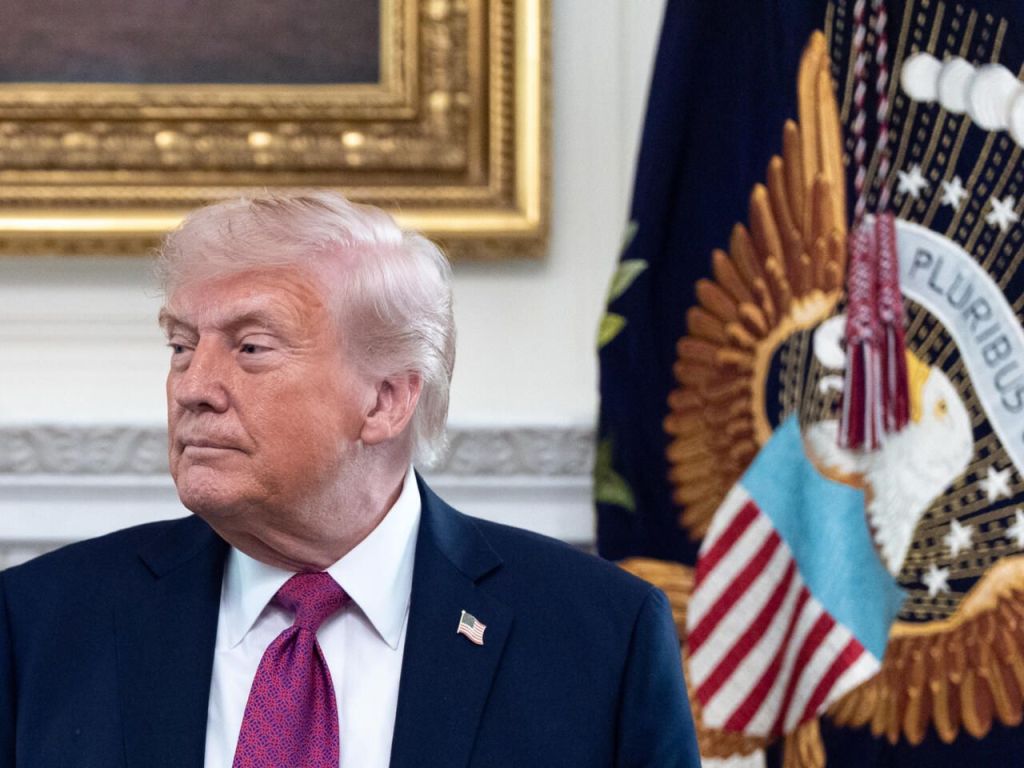
A senior Iranian adviser has dismissed US President Donald Trump’s announcement of a ceasefire extension, describing it as “meaningless” and alleging it is “a ploy to buy time for a surprise strike”.
Mahdi Mohammadi, an adviser to Iranian parliament speaker Mohammad Bagher Ghalibaf, made the remarks in a post on X in Persian.
He said the continuation of what he described as Trump’s “siege” was “no different from bombardment” and should be “met with a military response”, adding: “The time for Iran to take the initiative has come.”
The comments come amid heightened tensions in the region, with the US Navy maintaining operations in the Strait of Hormuz and reports that American forces boarded an Iranian-flagged cargo vessel on Sunday, following weeks of disruption to shipping through the strategic waterway.
China has reduced retail prices of petrol and diesel for the first time since the outbreak of the Iran war, reflecting recent shifts in global oil markets, according to the National Development and Reform Commission (NDRC).

The NDRC, China’s top economic planning agency, adjusts fuel prices every 10 working days based on movements in international crude oil prices.
The latest adjustment is expected to cut fuel costs by about $3 (£2.22) for drivers filling a 50-litre tank of 92-octane petrol.
Beijing has raised maximum retail prices for petrol and diesel several times since the start of the conflict, which has driven global oil prices higher amid supply concerns and market volatility.
The Islamic Revolutionary Guard Corps (IRGC) has reportedly opened fire on a container ship in the Strait of Hormuz, according to the UK Maritime Trade Operations Centre (UKMTO).
The UKMTO, operated under the British Royal Navy, said the incident occurred about 15 nautical miles north-east of Oman.
It said an IRGC “gunboat” approached the vessel and made no VHF radio challenge or warning before opening fire. The attack, it added, caused “heavy damage to the bridge” of the ship.
One person has been killed and two others injured in an Israeli strike in western Bekaa, around 25 miles (40km) south-east of Beirut and near the Litani River, according to Lebanon’s state-run National News Agency (NNA).
The agency said the strike occurred at dawn. In a separate report, the NNA said Israeli forces were clearing roads in Wadi al-Salouqi and demolishing houses and shops in Aita al-Shaab, both in southern Lebanon.
On Monday, the Israel Defense Forces (IDF) warned residents to stay away from the Litani River, Wadi al-Salouqi and Wadi al-Salhani, citing what it described as “ongoing terrorist activities of Hezbollah”.
Lebanon and Israel agreed to a 10-day ceasefire last week, with Washington due to host ambassador-level talks on Thursday. Under the terms of the agreement, Israel retains what it describes as the “right to take all necessary measures in self-defence, at any time, against planned, imminent, or ongoing attacks”, while Lebanon is expected to take “meaningful steps” to prevent Hezbollah and other “rogue non-state armed groups” from carrying out attacks against Israeli targets.
Overnight, Hezbollah said it had fired rockets into northern Israel in response to what it described as Israeli ceasefire violations. Israel’s ambassador to the United States, Yechiel Leiter, accused Hezbollah of breaching the ceasefire agreement.
Donald Trump has spoken of “regime change” in Tehran but is now facing what he has described as a “regime fracture”, amid growing uncertainty over Iran’s leadership structure following recent high-level losses.
With several senior Iranian officials reportedly killed, questions over who is in effective control in Tehran are increasingly complicating diplomatic efforts. While it is still early to assess the full impact of Washington’s latest move, initial signals from Iran suggest rising tensions rather than de-escalation.
A senior adviser to Iranian parliament speaker and chief negotiator Mohammad Bagher Ghalibaf said Trump’s actions were aimed at “buying time” for another surprise attack.
A military spokesperson separately reiterated warnings that Iran would respond if such an attack materialised.
In Islamabad, preparations had been underway for another round of talks, with security restrictions still in place across parts of the city. However, prospects of a meeting this week now appear to have significantly diminished.


Before US President Donald Trump announced an extension of the ceasefire, Iran’s Foreign Ministry said Tehran had not yet decided whether it would attend a new round of peace talks with the United States scheduled for later this week.
In an interview with the BBC’s chief international correspondent Lyse Doucet, Foreign Ministry spokesman Esmail Baghaei said Iran had entered the first round of talks in Islamabad “with good faith and a sense of seriousness”, but accused the US negotiating side of lacking “seriousness” and “good faith”.
He also cited what he described as “flip-flops” and “threats of war crimes” from Washington, referring to recent social media posts and interviews in which Trump warned he could “knock out every single power plant, and every single bridge” if Iran rejected what he called a “very fair and reasonable deal”.
The White House confirmed on Tuesday night that Vice-President JD Vance’s planned trip to Pakistan for a second round of talks has been cancelled.
In a post on his Truth Social platform on Monday night, US President Donald Trump said Iranian authorities had “forced hundreds of ships” towards oil-rich US states including Texas, Louisiana and Alaska.
It was not immediately clear what type of vessels he was referring to. However, shipping and trade analysts told BBC Verify that the closure of the Strait of Hormuz by Iran has contributed to a sharp rise in demand for US crude oil.
The strait is a vital transit chokepoint for Gulf energy exports, but shipping through the waterway has been heavily disrupted since the outbreak of the US–Israel war with Iran on 28 February.
With access to Middle Eastern crude constrained, importers have increasingly turned to alternative suppliers, particularly in the Atlantic basin.
Data from marine analytics firm Kpler indicates that 71 oil tankers known as Very Large Crude Carriers (VLCCs) are currently en route to the United States to load cargo — compared with an average of 27 per day last year.
“Buyers from Europe and Asia saw oil loading out of the Atlantic basin — including from the US Gulf Coast — as an accessible, plentiful solution to fill the supply gap,” said David Haydon, head of US crude tanker freight pricing at Argus Media, a market intelligence firm.
The shift appears to be driving a rise in US crude exports. Maritime research consultancy Drewry reports that shipments reached 5.2 million barrels per day in the week ending 10 April — the highest level in seven months.
The developments underline how rapidly shifting geopolitical tensions around the Strait of Hormuz are reshaping global energy flows, with disruption in the Gulf pushing buyers to pivot towards alternative suppliers, including the United States.
While officials in Washington and Tehran continue to trade accusations over responsibility for the escalating maritime tensions, analysts warn that prolonged instability in one of the world’s most critical shipping corridors could keep markets volatile and sustain elevated demand for non-Middle Eastern crude in the weeks ahead.
-BBC
Invest or Donate towards HICGI New Agency Global Media Establishment – Watch video here
Email: editorial@hicginewsagency.com TalkBusiness@hicginewsagency.com WhatsApp +256713137566
Follow us on all social media, type “HICGI News Agency” .

