
Updated by Faith Barbara N Ruhinda at 1422 EAT on Wednesday 13 May 2026
Once heralded as a “silver bullet” in the battle against illegal immigration, and now downgraded to just “one way” for employers to check the credentials of new hires.
It is not compulsory, and could help people who have no other official form of identification like a passport or driving license, we hear today.
Last year Keir Starmer told me he hoped the scheme would lead to people saving money on ID checks when taking on big financial commitments like a mortgage – needless to say this did not go down very well with the ID verification industry.
Despite a distinctly lukewarm reception from the public so far, support from the top for digital ID has never fallen off the agenda.

Let’s not forget it started life in the form of a national ID card under mooted former prime minister Tony Blair in the early 2000s.
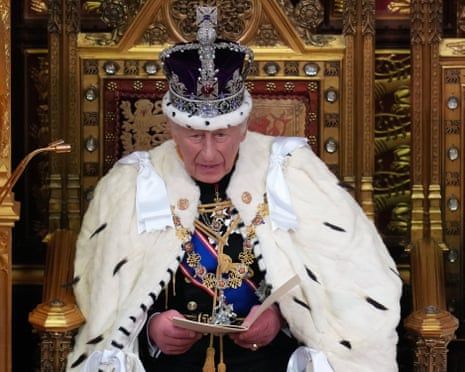
We’ve just heard the King’s Speech, which is the centrepiece of the State Opening of Parliament.
Next, once the King leaves the House of Lords, the new parliamentary session begins.
About two hours after the speech, MPs reassemble in the Commons to begin debating what’s been announced.
According to the House of Commons schedule, MPs are due to begin debating the address at 14:30.
After introductory speeches by two backbench MPs, Conservative leader Kemi Badenoch will make a speech, followed by a response from Prime Minister Keir Starmer, which will set out more details about the government’s plans.

The debate normally lasts about six days. At the end of the debate, MPs vote on the speech but governments very rarely lose.
The King then turned to a range of social justice issues, reaffirming the government’s commitment to remaining “a leading advocate” in tackling climate change, poverty and conflict.
He added that ministers would continue to “champion the rights of women and girls” to live free from violence and participate fully in society.
Shifting to international relations, the King said the UK would assume the G20 presidency next year, with the aim of driving global economic growth and reinforcing international stability ahead of hosting the 2027 summit.
He also stressed that the government would work closely with devolved administrations to deliver for citizens across the United Kingdom.
King Charles III said ministers believe the issue is linked to national security and requires “long-term investment and reform”.
He said increasing clean energy production would help protect the UK’s economic security by reducing the ability of “enemies” to “attack” it.

He added that clean energy would be expanded through an Energy Independence Bill, while separate legislation would support a “new era of British nuclear energy generation”.
King Charles III said that, on foreign policy, the government’s approach will be guided by a “calm assessment of the national interest”.
He said the UK would maintain its “unflinching support” for Ukraine and work to “promote long-term peace in the Middle East”, including backing a two-state solution for Israel and Palestine.
He added that the government would seek to “improve relations with European partners” and reaffirm its “unbreakable commitment” to NATO, including through higher defence spending.

The King outlined a foreign policy focused on national interest, steady diplomacy, and stronger alliances. He reaffirmed continued UK support for Ukraine, backing for efforts toward long-term peace in the Middle East through a two-state solution, and a commitment to improving relations with European partners. He also stressed the UK’s firm commitment to NATO, alongside plans to increase defence spending.
-BBC
Invest or Donate towards HICGI New Agency Global Media Establishment – Watch video here
Email: editorial@hicginewsagency.com TalkBusiness@hicginewsagency.com WhatsApp +256713137566
Follow us on all social media, type “HICGI News Agency” .

