
By Faith Barbara Ruhinda & Dr. Kivumbi Earnest Benjamin, L.H.D (Hon.) at 2241 EAT on Friday 22 May 2026
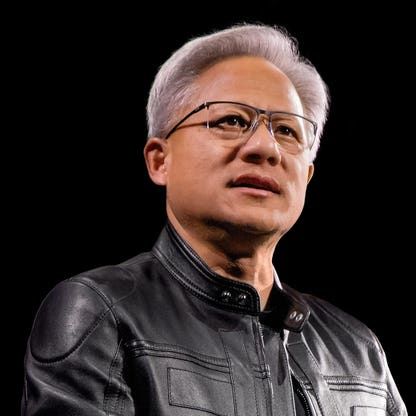
From a teenage immigrant washing dishes in the United States to becoming one of the world’s most influential technology billionaires, Jensen Huang’s rise mirrors the explosive growth of artificial intelligence and the global demand for advanced computing power.
As co-founder and chief executive of Nvidia, Huang has transformed a once niche graphics-chip manufacturer into the company powering much of the modern AI revolution.
Today, Nvidia’s processors sit at the heart of artificial intelligence systems used by major technology firms including Microsoft, Meta, Amazon and OpenAI, placing Huang at the centre of the rapidly evolving AI economy.


Born in Taiwan in 1963, Huang moved to the United States as a child and later studied electrical engineering at Oregon State University before earning a master’s degree from Stanford University.
In 1993, Huang co-founded Nvidia with Chris Malachowsky and Curtis Priem at a time when the video gaming industry was still in its infancy. The company initially focused on graphics processing units (GPUs), chips designed to improve computer graphics and gaming performance.
However, what began as a gaming-focused business would later become the backbone of artificial intelligence infrastructure worldwide.
Under Huang’s leadership, Nvidia recognised early that GPUs could perform complex calculations far faster than traditional computer processors, making them ideal for AI training, machine learning, robotics, autonomous vehicles and scientific computing.
That strategic shift has since propelled Nvidia into one of the most valuable companies globally, while turning Huang into a billionaire technology icon often recognised for his trademark black leather jackets and charismatic keynote presentations.


In recent years, the global AI boom has dramatically accelerated Nvidia’s growth. The company reported first-quarter revenue of more than $81 billion in 2026, representing an 85 percent year-on-year increase driven largely by surging demand for AI infrastructure.
Huang has also made increasingly ambitious predictions about the future of artificial intelligence. During Nvidia’s 2026 GTC conference, he projected that the company could generate at least $1 trillion in AI hardware revenue through 2027 as governments, corporations and cloud providers race to build AI systems.
Invest or Donate towards HICGI New Agency Global Media Establishment – Watch video here
Email: editorial@hicginewsagency.com TalkBusiness@hicginewsagency.com WhatsApp +256713137566
Follow us on all social media, type “HICGI News Agency” .

