
Updated by Faith Barbara N Ruhinda at 1612 EAT on Monday 1 June 2026
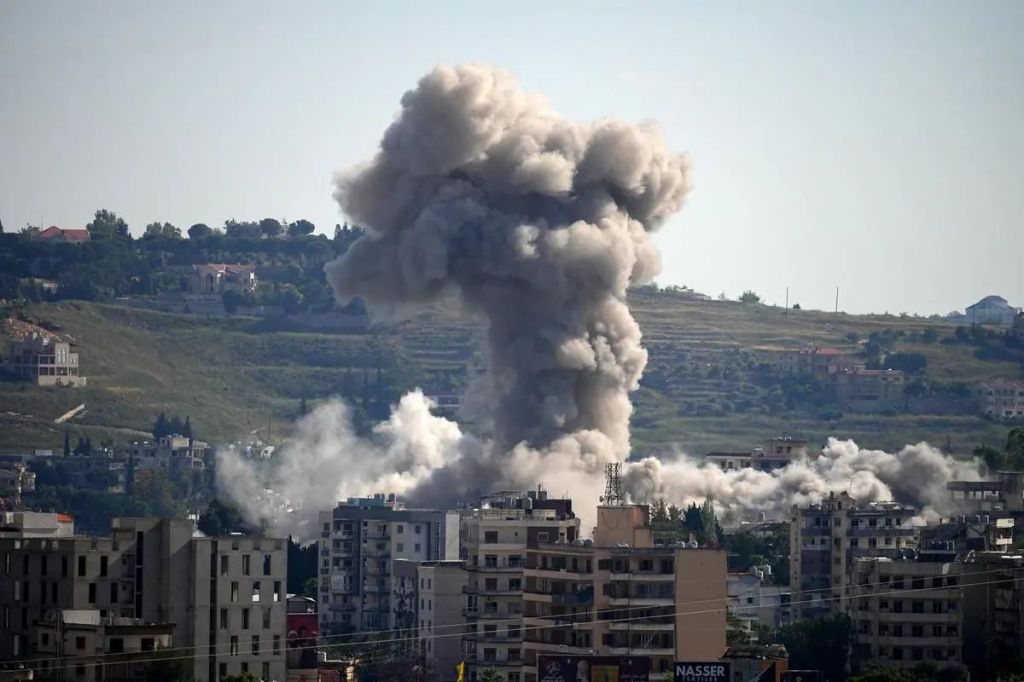
US Central Command (Centcom) said it carried out “self-defence strikes” in response to what it described as “aggressive Iranian actions,” including the downing of a US drone over international waters.
In response, Iran’s Islamic Revolutionary Guard Corps (IRGC) said it had targeted an air base used by US forces, framing the attack as retaliation for earlier strikes on southern Iran.
Meanwhile, Kuwait said its air defence systems intercepted “hostile” missiles and drones, while its foreign ministry later condemned what it described as “heinous and repeated Iranian attacks.”
US President Donald Trump, writing on Truth Social early Monday, urged critics to “sit back and relax,” insisting that “it will all work out well in the end.” He also said Iran “really wants to make a deal, and it will be a good one for the USA.”
The latest exchange comes after negotiations aimed at ending months of hostilities failed to make progress over the weekend. US media reported that Trump had sought changes to the terms of the proposed agreement, further complicating diplomatic efforts.


According to CBS News, the proposed changes under discussion relate to the Strait of Hormuz shipping route and the removal of highly enriched uranium from Iran. The White House has not responded to a request for comment on the matter.
On Monday, Iran’s foreign ministry spokesman accused the United States of “constantly changing its views and putting forward new or contradictory demands,” warning that such positions would “naturally prolong negotiations.”
On Sunday, Iran’s chief nuclear negotiator reiterated that Tehran would not accept any agreement unless what he described as Iran’s rights were fully guaranteed.
In a post on X, US Central Command (Centcom) said American fighter jets struck Iranian air defences, a ground control station, and two drones it claimed were “posing a clear threat to ships transiting through regional waters.” Centcom added that no US personnel were injured in the operation.
Iran’s foreign ministry spokesman said the strikes amounted to a violation of the ceasefire agreement.
The Islamic Revolutionary Guard Corps (IRGC) said it had targeted a base it claims was used by US forces to strike a communications tower on Sirik Island in the Gulf, located around 40 miles (65km) from Iran’s southern coast.
Iran’s military further warned that its response would be “completely different” if US actions were “repeated,” according to remarks reported by Iran’s semi-official Fars news agency.
Meanwhile, Kuwait’s military said early Monday that it was “confronting hostile missile and drone attacks,” with state news agency KUNA reporting that air raid sirens sounded across the country.
While a ceasefire came into effect on 8 April, US President Donald Trump has repeatedly suggested that Washington and Tehran are close to a permanent agreement, insisting that negotiations are progressing. However, no formal deal has yet been reached.


Trump and senior aides met on Friday to make what was described as a “final determination” on a framework to extend the ceasefire. The meeting ended without clarity on next steps, before reports later emerged that the president had requested changes to the proposed text.
According to CBS News, the latest terms under discussion include a 60-day halt in hostilities and a proposal to reopen the Strait of Hormuz, a key shipping route through which around one-fifth of global oil and liquefied natural gas (LNG) shipments pass. Any disruption to the waterway has previously triggered sharp increases in global oil prices.
The reported framework also includes provisions to restart negotiations over Iran’s nuclear programme, which Tehran insists is solely peaceful. However, Iran’s foreign ministry spokesman Esmail Baghaei denied on Monday that such terms were on the table.
Iranian officials have said no negotiations have taken place on the details of the nuclear file, insisting that ending the conflict remains the immediate priority.
“There have been no negotiations on the nuclear file. At this stage, our priority is ending the war,” foreign ministry spokesman Esmail Baghaei said during a press briefing.
He added that a cessation of hostilities in Lebanon was an “essential condition” for any agreement, stressing that Washington and Tehran had not yet reached a “final conclusion.”
Iran’s Foreign Minister Abbas Araghchi echoed the position in a post on X on Monday, writing: “The ceasefire between Iran and the US is unequivocally a ceasefire on all fronts, including in Lebanon.” He added that “the US and Israel are responsible for the consequences of any violation.”
Lebanon has been drawn into the wider regional conflict involving the United States, Israel and Iran. On 2 March, the Iran-backed Hezbollah movement launched rockets into Israel in response to an Israeli strike that killed Iran’s Supreme Leader Ali Khamenei, prompting Israeli airstrikes across Lebanon and a subsequent ground invasion.
-BBC
Invest or Donate towards HICGI New Agency Global Media Establishment – Watch video here
Email: editorial@hicginewsagency.com TalkBusiness@hicginewsagency.com WhatsApp +256713137566
Follow us on all social media, type “HICGI News Agency” .

