
Updated by Faith Barbara N Ruhinda at 1243 EAT on Friday 12 June 2026
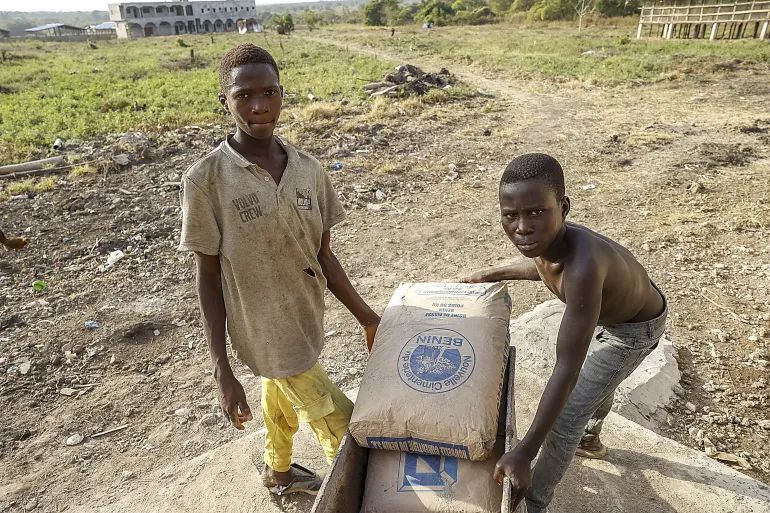
An estimated 2.4 billion children worldwide are under the age of 18, yet millions remain trapped in labour despite global efforts to eradicate the practice.
According to the latest estimates by the International Labour Organization (ILO) and UNICEF, nearly 138 million children—roughly one in every 17 minors globally—are engaged in child labour. Of these, about 54 million are involved in hazardous work that poses serious risks to their health, safety and development.
On World Day Against Child Labour, Al Jazeera analyses the latest data on child labour worldwide, revealing where children are most likely to be working, the sectors driving the practice, and the regions most affected by the crisis.
In 2015, the United Nations set an ambitious target to eliminate child labour in all its forms by 2025. With that deadline now passed, the goal remains unmet despite notable progress in reducing the overall number of children engaged in labour.

While child labour has declined globally over the past decade, millions of children continue to work under dangerous conditions. Nearly two in every five children involved in child labour are engaged in hazardous work that threatens their health, safety and development. Such work often involves heavy physical labour, exposure to toxic substances, dangerous machinery, long working hours and unsafe environments.
Of the estimated 54 million children engaged in hazardous work worldwide:
10.3 million, or about one in five, are aged between 5 and 11 years;
12.8 million, roughly one in four, are aged 12 to 14 years; and
30.8 million, equivalent to about four in seven, are aged 15 to 17 years.
The figures underscore the scale of the challenge facing governments and international organisations as they seek to eradicate child labour and protect vulnerable children from exploitation.
UNICEF and the International Labour Organization (ILO) warn that hazardous child labour can lead to serious injuries, illness and long-term harm to a child’s physical, emotional and cognitive development. Many children engaged in such work are also deprived of education, limiting their future opportunities and perpetuating cycles of poverty that can persist across generations.
From cocoa fields in West Africa to rice farms in South Asia, agriculture remains the sector with the highest prevalence of child labour worldwide. The sector’s reliance on informal, often family-based work makes it difficult to regulate and monitor effectively.
Lucia Soleti, Acting Deputy Representative for Programmes at UNICEF Ghana, told Al Jazeera that child labour remains widespread across West Africa, driven by poverty, limited access to essential social services, and recurring climate and economic shocks.
She noted that in Ghana alone, more than 1.1 million children aged between five and 17 are engaged in child labour, primarily in agriculture, but also in mining, fishing and domestic work.


“It deprives children of education, exposes them to hazardous conditions and perpetuates intergenerational poverty,” Soleti said.
Sub-Saharan Africa remains the epicentre of the child labour crisis, with an estimated 87 million children engaged in child labour—more than in all other regions combined. Population growth, armed conflict and economic instability have continued to undermine progress, offsetting gains made in recent years.
While the Asia and Pacific region has recorded the sharpest declines in child labour, the practice remains deeply embedded in global supply chains that produce food, clothing, minerals and a wide range of consumer goods consumed worldwide.
Mona Aika, Acting Chief of Child Protection at UNICEF Nigeria, says child labour in the country cannot be addressed through training or law enforcement alone.
She attributed the slow reduction of child labour in sub-Saharan Africa to a combination of structural factors, including poverty, limited access to quality education, weak social protection systems, rural livelihoods dependent on family labour, conflict and displacement, climate shocks, population growth, the informality of work, and limited enforcement capacity.
“The slow reduction in sub-Saharan Africa is linked to multiple structural factors such as poverty, limited access to quality education, weak social protection, rural livelihoods dependent on family labour, conflict, displacement, climate shocks, population growth, informality of work and limited enforcement capacity,” Aika told Al Jazeera.
She said tackling the crisis requires stronger child protection systems, expanded social protection, improved access to education, livelihood support for families, community-based prevention mechanisms, clear referral pathways and sustained government-led action.
-Aljazeera
Invest or Donate towards HICGI New Agency Global Media Establishment – Watch video here
Email: editorial@hicginewsagency.com TalkBusiness@hicginewsagency.com WhatsApp +256713137566
Follow us on all social media, type “HICGI News Agency” .
 HICGI News Agency