
Updated by Faith Barbara N Ruhinda at 1130 EAT on Friday 2 July 2026
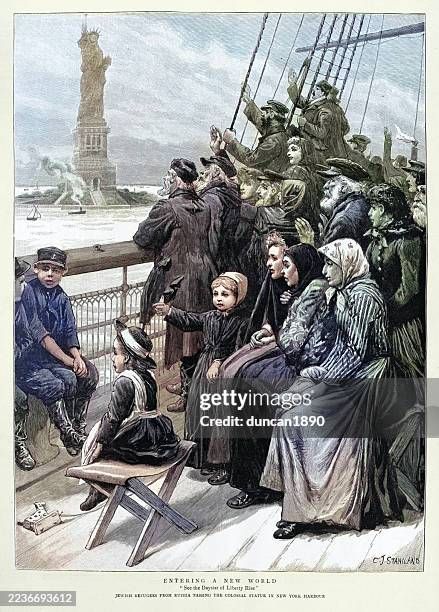
Sixteen years ago, Abdi Nor Iftin was a Somali refugee living in one of the toughest slums in Kenya when he received news that would change the course of his life. Out of nearly eight million applicants in 2013, he was among just 50,000 people selected to receive a U.S. visa through the Diversity Visa Programme, a lottery-based immigration scheme introduced by the United States government in the 1990s.
Abdi had long dreamed of moving to the United States. His fascination was so strong that childhood friends nicknamed him “Abdi America” after he learned English by watching Hollywood films. “My whole life I have been in love with America — the best country in the world, the dreamland, the land of opportunity,” he told the BBC in 2014.
That same year, Abdi, now 41, arrived in the United States, settling in a small town in Maine. He found work installing insulation and eventually became a U.S. citizen. However, his hopes have since collided with reality. This year, he lost his job at a refugee resettlement agency and, as a result, his health insurance.
On the eve of the United States’ 250th anniversary, Abdi, like many Americans, says he feels uncertain about the future of the country he once idealised.
“I feel like the American Dream is alive, but not well,” he told me.
Meanwhile, Luke Mullen, a 24-year-old actor from California, says he is considering moving to Canada due to a lack of film opportunities in Hollywood itself.

“Wealth is getting consolidated in this country and as that happens, the opportunities are dwindling,” he said.
Survey after survey released ahead of the United States’ 250th anniversary suggests that many Americans believe the “American Dream”—the idea that anyone in the country can achieve a better life through hard work—is fading.
A recent poll by the Associated Press-NORC Center for Public Affairs Research found that only about a third of Americans believe the American Dream still holds true. Similar findings have been reported in other surveys, including one by the Pew Research Center, which shows that most Americans feel the country’s best days may be behind it.
The milestone anniversary also comes at a time of deep political polarisation and widening partisan divisions across the United States.
So what does it mean when the Dream—an idea exported globally through film, music and popular culture—begins to feel increasingly out of reach at home?
In the years following the Revolutionary War and extending into the 21st century, what came to be known as the American Dream drew millions of immigrants to a young nation they saw as a place of hope, opportunity, and self-determination. Factory workers, farmers, gold seekers and frontier settlers all arrived in the United States believing they could reinvent themselves as “Americans,” free from the entrenched class systems of Europe.
Yet historians caution that this promise was never universal. Native Americans, enslaved people, and often women were excluded from its benefits. Even so, the idea of the Dream endured, taking on new meanings across generations.
Although its roots trace back to the founding of the United States, the term “American Dream” was popularised much later, particularly following the publication of The Epic of America in 1931, during the depths of the Great Depression.
In that work, historian James Truslow Adams defined it as: “It is not a dream of motor cars and high wages merely, but a dream of social order in which each man and each woman shall be able to attain to the fullest stature of which they are innately capable.”
Over time, the concept has evolved and broadened. In modern usage, it is often linked to entrepreneurship, upward mobility, and above all, the promise of economic opportunity.
“It has always been about doing better in life than before,” says Cyril Ghosh, author of The Politics of the American Dream: Democratic Inclusion in Contemporary American Political Culture. “For some people, the better in life is simply not being persecuted by the Church of England.
“It’s not only about materialism. It’s about security. It’s about doing better than a previous station. That’s what it’s always been about.”
Abdi grew up in Somalia, where he says he spent parts of his childhood hiding in dugouts to avoid being shot by the militant group al-Shabab.
“Freedom was a huge priority. Living the next day, breathing the next day, was a big, big issue, and I really wanted that,” he said, explaining his decision to move to the United States.
Researchers say first-generation immigrants like Abdi are often more positive about the promise of America.
“Many are coming from less wealthy nations, and so they are likely to end up doing better than if they had not emigrated,” says Elizabeth Suhay, author of Debating the American Dream: How Explanations for Inequality Polarize Politics.
“Immigrants, for the most part, are more likely to say that they are achieving the Dream, or have achieved it,” said Mark Hugo Lopez, director of race and ethnicity research at the Pew Research Center, who has studied attitudes among Latino immigrants. He adds that immigrants also tend to be more optimistic about the prospects for their children.


A Dream under strain
The American Dream has long been a powerful draw for immigrants, but fewer are arriving in the United States in recent years.
President Donald Trump has made restricting immigration a central pillar of his presidency, following a campaign promise to carry out what he described as the largest mass deportation programme in history.
During his second term, President Donald Trump has not only tightened restrictions on migrants entering illegally via the southern border, but also moved to curb certain legal immigration pathways, including the Diversity Visa Programme through which Abdi entered the United States.
At the same time, it is not only that the United States is admitting fewer immigrants. There are also indications that a record number of people may be leaving the country.
One explanation is that many Americans who grew up in the United States feel the country has failed to deliver on its promise—that if you work hard and follow the rules, you should be able to secure a stable, comfortable life.
Last year, in a historic reversal, more Americans moved to Ireland than Irish citizens moved to the United States. The U.S. government does not track the number of Americans who voluntarily leave the country, meaning there are no official figures, but reporting suggests the trend is not limited to Ireland.
A record number of Americans are also applying for British citizenship, while The Wall Street Journal has reported that American migration to nearly all 27 European Union member states is increasing.
The reasons vary. Some cite current U.S. political conditions, others point to healthcare costs and broader concerns about living standards. In most cases, however, migration decisions appear to be driven by a combination of economic, personal, and lifestyle factors rather than a single cause.
The actor, who starred as a teenager in the Disney series Andi Mack and has since shifted more toward writing and production work, says he now finds more film opportunities in Vancouver, Canada, than in Southern California.
He notes that Vancouver has benefited from new government tax incentives designed to boost its competitiveness with Hollywood and position the city as a major global film production hub.
The American Dream has long been exported around the world through American cinema, with Hollywood often portrayed as the ultimate symbol of “making it” in the United States. But for Luke, the reality is more complicated. He says opportunities in the industry appear to have diminished compared to the past.
In recent years, spending by major studios on Hollywood films and television production has stagnated or declined, raising concerns among some industry workers about the availability of steady work and the future of opportunities in the sector.
-BBC
Invest or Donate towards HICGI New Agency Global Media Establishment – Watch video here
Email: editorial@hicginewsagency.com TalkBusiness@hicginewsagency.com WhatsApp +256713137566
Follow us on all social media, type “HICGI News Agency” .

