
Updated by Faith Barbara N Ruhinda at 1146 EAT on Monday 10 August 2026
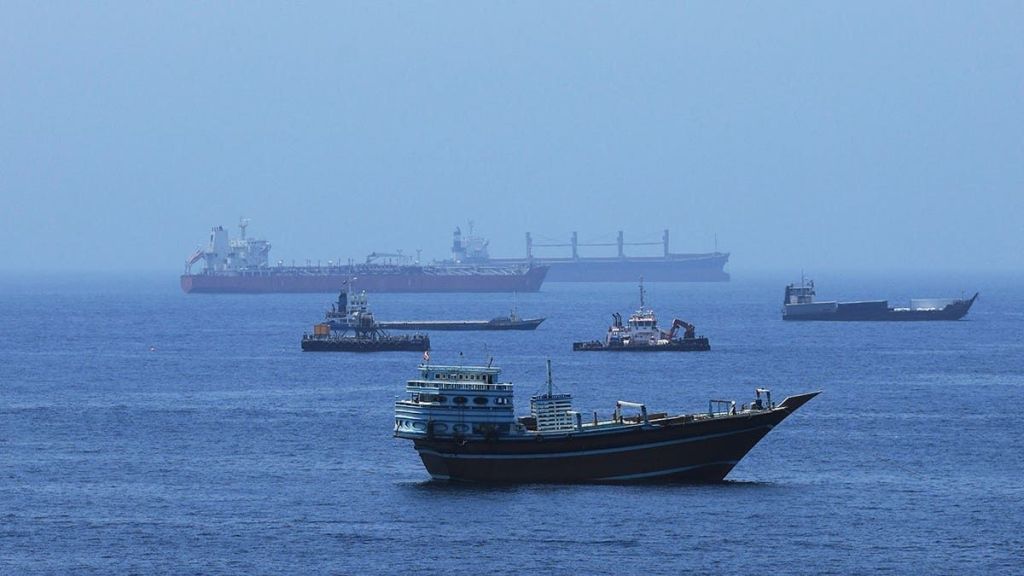
Oil prices are rising as Iran’s latest demands for reopening the Strait of Hormuz dim hopes for a return to stability in global energy markets.
Brent crude, the international benchmark, rose by more than 1 per cent on Monday after Tehran insisted that the critical waterway would not reopen without major concessions from the United States, heightening concerns over potential disruptions to global oil supplies.
Brent futures for October delivery stood at $84.11 a barrel at 7:30 GMT, up 0.7 per cent.
Following the latest gains, the global benchmark was trading about 16 per cent higher than its level before the start of the US-Israel war on Iran.
“The lack of concrete movement, together with lingering questions about the practical details of any agreement, is keeping a risk premium in the price,” Tim Waterer, chief market analyst at Sydney-based KCM Trade, told Al Jazeera.


“Each day that passes without a breakthrough is making traders a little more cautious,” he added.
Iranian Foreign Minister Abbas Araghchi said on Sunday that Iran and Oman were close to reaching an agreement on the Strait of Hormuz, but warned that the waterway would not reopen until Washington met certain conditions, including easing sanctions on Tehran and paying war reparations.
Shipping through the strait, which handled about one-fifth of global oil supplies before the war, has effectively collapsed since the conflict began in late February, triggering what has been described as the largest disruption to global energy supplies in recorded history.
According to ship-tracking platform MarineTraffic, between eight and 15 vessels crossed the strait on August 4, 5 and 6—a fraction of the roughly 130 daily transits recorded before the conflict.
Iran has repeatedly asserted its right to control shipping through the Strait of Hormuz, despite freedom of navigation being a cornerstone of international maritime law. Tehran has also threatened to attack commercial vessels attempting to pass through routes it has not approved.
On Saturday, the United Arab Emirates condemned Tehran over what it described as an Iranian missile attack on a vessel owned by the Abu Dhabi National Oil Company.
According to the International Maritime Organization, at least 64 violent incidents involving commercial vessels have been recorded in the region since the war began, resulting in 17 deaths. Most of the incidents have been attributed to Iran.


Despite renewed volatility in energy markets, Asian stocks rose on Monday, with benchmark indices in Japan, South Korea and Hong Kong posting substantial gains.
Japan’s Nikkei 225 gained 2.1 per cent, while South Korea’s Kospi and Hong Kong’s Hang Seng Index rose 0.65 per cent and 1.1 per cent, respectively.
The gains across Asian markets followed a record close on Wall Street on Friday, after weaker-than-expected US jobs data reduced expectations of interest rate hikes by the Federal Reserve.
Waterer, the KCM Trade analyst, said the latest rise in oil prices reflected market scepticism over how quickly negotiators could reach a workable agreement to reopen the Strait of Hormuz.
“Even if an agreement is eventually announced, history suggests these understandings can prove fragile,” Waterer said.
“That residual risk of reversal would likely limit how far oil prices could fall in the event of a diplomatic breakthrough.”
-Aljazeera
Invest or Donate towards HICGI New Agency Global Media Establishment – Watch video here
Email: editorial@hicginewsagency.com TalkBusiness@hicginewsagency.com WhatsApp +256713137566
Follow us on all social media, type “HICGI News Agency” .

