
NEW DELHI, INDIA – By Dr.Kivumbi Earnest Benjamin L. H. D (Hon.)- HICGI News Agency updated at 1613 EAT on Monday 14 September 2026
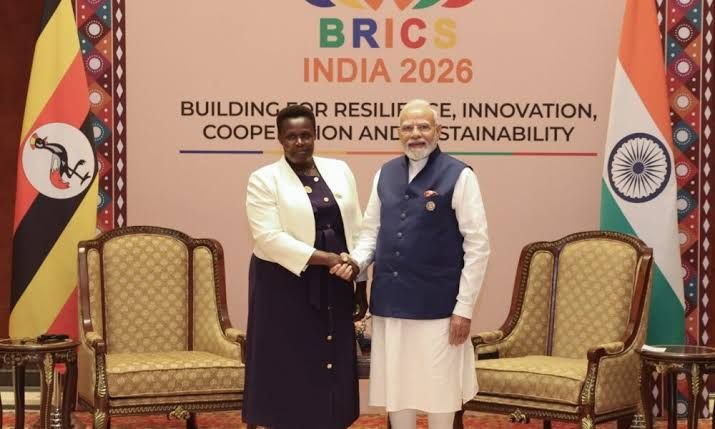
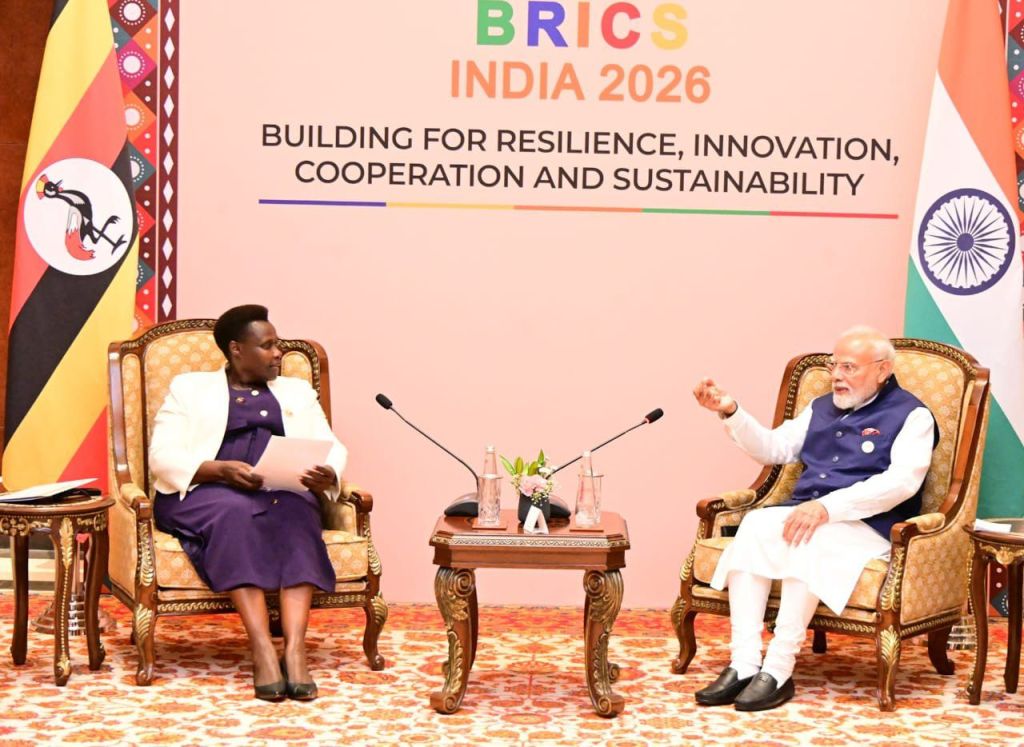
Vice President Jessica Alupo represented President Yoweri Museveni at the 18th BRICS Summit in New Delhi, India, where she held talks with Indian Prime Minister Narendra Modi on strengthening cooperation between Uganda and India.
Alupo met Modi on the sidelines of the summit, which brought together leaders and representatives from BRICS member and partner countries to discuss economic cooperation, development and global issues.
Her participation at the high-level summit provided Uganda with an opportunity to engage with other countries on matters of trade, investment, technology, development and cooperation.
The meeting between Alupo and Modi comes as Uganda and India continue to strengthen their bilateral relations, with cooperation spanning several areas, including trade, investment, technology, education and capacity building.
The 18th BRICS Summit was hosted by India in New Delhi, with discussions focusing on resilience, innovation, cooperation and sustainability, as well as strengthening the role and voice of developing countries in global affairs.
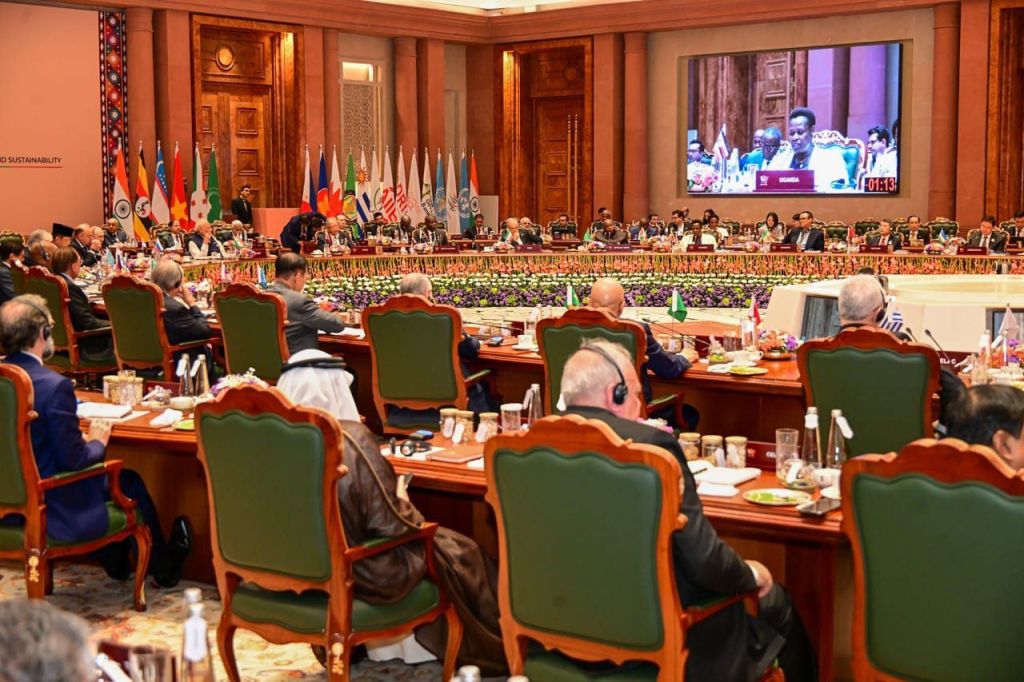
Leaders adopt New Delhi Declaration as Global South seeks greater influence in world affairs
Leaders of the BRICS group of emerging economies have concluded their 18th Summit in New Delhi with a renewed call for stronger multilateral cooperation, greater representation of developing countries in global institutions and deeper economic cooperation among nations of the Global South.
The two-day summit, held on 12–13 September 2026 under India’s chairmanship, brought together leaders of the expanded 11-member BRICS grouping, including China, Russia, India, Brazil, South Africa, Egypt, Ethiopia, Indonesia, Iran and the United Arab Emirates.
The summit adopted the New Delhi Declaration, covering issues ranging from international peace and security to trade, technology, artificial intelligence, health, agriculture and sustainable development.
Indian Prime Minister Narendra Modi, who hosted the summit, presented BRICS as an important platform through which the Global South can play a greater role in shaping the international system.
Modi argued that developing nations should move from being largely “rule-takers” to “rule-shapers”, while stressing that BRICS is not intended to be an organisation directed against any particular country.
Middle East conflict dominates diplomatic discussions
The summit took place against the backdrop of heightened tensions in the Middle East, including the ongoing conflict involving Iran.
BRICS leaders expressed deep concern about the escalation of violence and called for maximum restraint, dialogue and diplomatic solutions. However, the declaration stopped short of directly condemning either the United States and Israel or Iran, reflecting the differing positions of BRICS members.
The presence of both Iran and the United Arab Emirates—which have conflicting interests in the regional crisis—made consensus particularly difficult. Nevertheless, leaders succeeded in adopting a joint declaration.
Push for alternative economic cooperation
Economic cooperation remained another major theme.
The BRICS countries expressed opposition to unilateral trade restrictions and sanctions that they believe can disrupt international commerce. The summit also discussed strengthening trade in local currencies and improving financial connectivity among member states.
The joint communiqué included proposals concerning central-bank digital currencies, financial interoperability and deeper economic integration, although questions remain about how quickly some of these proposals can be implemented.
China and India seek closer engagement
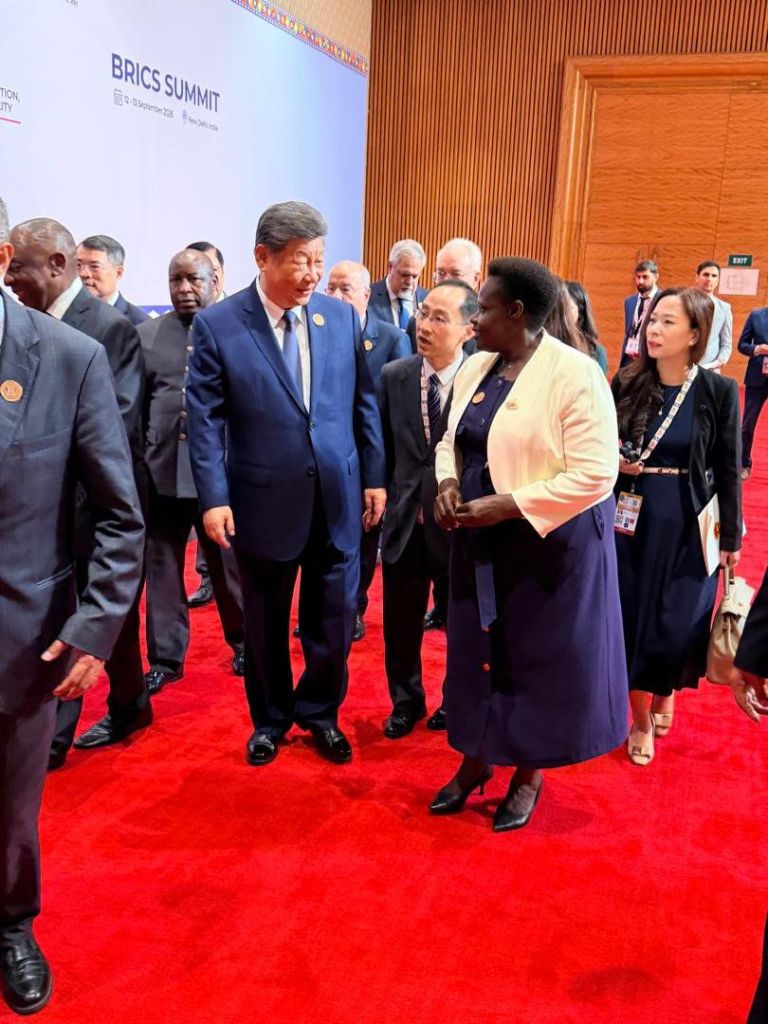
Chinese President Xi Jinping’s attendance was another significant feature of the summit.
It was Xi’s first visit to India in seven years and came amid efforts by Beijing and New Delhi to improve relations following years of border tensions.
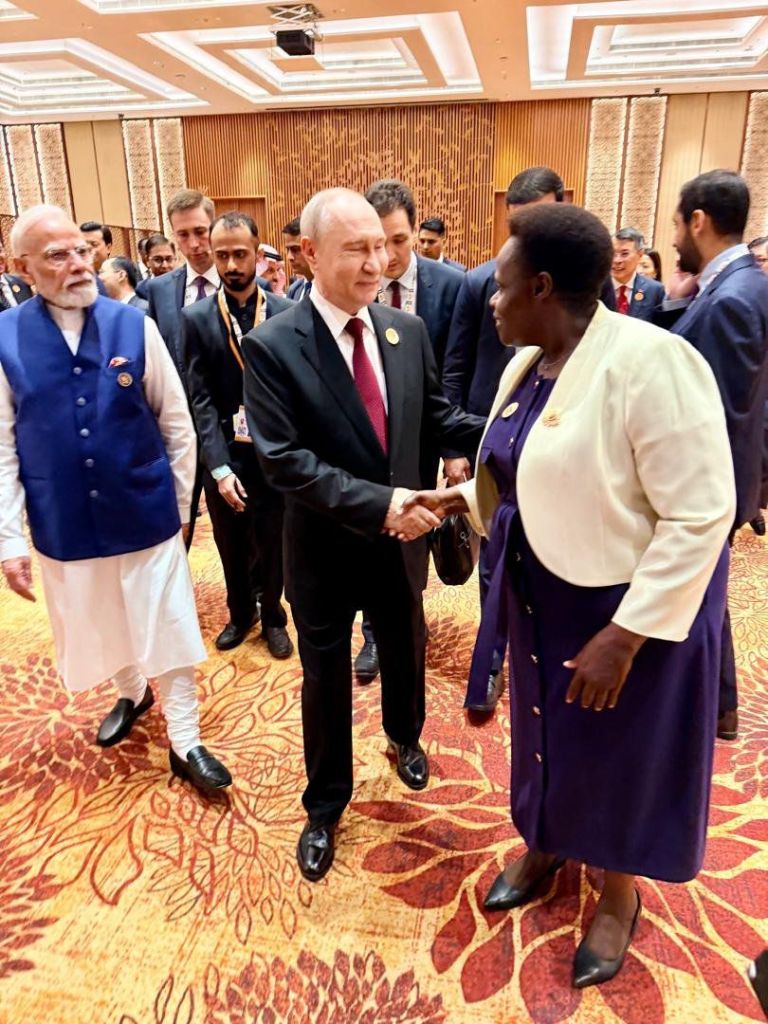
Russia’s President Vladimir Putin also attended, while Iranian President Masoud Pezeshkian participated as BRICS continued to expand its diplomatic reach.
China also promoted greater cooperation in artificial intelligence, including a proposed BRICS AI Open Source Zone, highlighting the growing importance of technology in the group’s economic agenda.
A growing force in the Global South
BRICS has grown substantially from its original formation by Brazil, Russia, India and China, later joined by South Africa. Its expansion has brought in Egypt, Ethiopia, Indonesia, Iran and the UAE, significantly increasing its demographic and economic weight.
The expanded grouping now represents roughly half of the world’s population and about 40 percent of global GDP, giving it considerable potential influence in debates over global governance, international finance and development.
The New Delhi Summit therefore comes at a time when the international system is experiencing growing geopolitical competition, trade tensions and debates over whether global institutions adequately represent the interests of developing countries.
For BRICS, the challenge will now be to translate its declarations into concrete programmes and practical cooperation.
Looking ahead
The New Delhi Summit demonstrated both the growing influence and the internal complexity of BRICS.
Despite significant differences among its members on issues including Iran, the Middle East, Ukraine and relations with the United States, the group managed to maintain dialogue and produce a common declaration.
The summit has consequently strengthened BRICS’ image as an important platform for the Global South, while also highlighting the difficult task of building consensus among an increasingly diverse membership.
For developing countries, particularly in Africa, the expansion of BRICS could create additional opportunities for trade, investment, technology transfer and diplomatic cooperation as the international community moves towards what many leaders describe as a more multipolar world order.
Invest or Donate towards HICGI New Agency Global Media Establishment – Watch video here
Email: editorial@hicginewsagency.com TalkBusiness@hicginewsagency.com WhatsApp +256713137566
Follow us on all social media, type “HICGI News Agency” .

