
Updated by Faith Babara N Ruhinda at 1644 EAT on Friday 18 September 2026
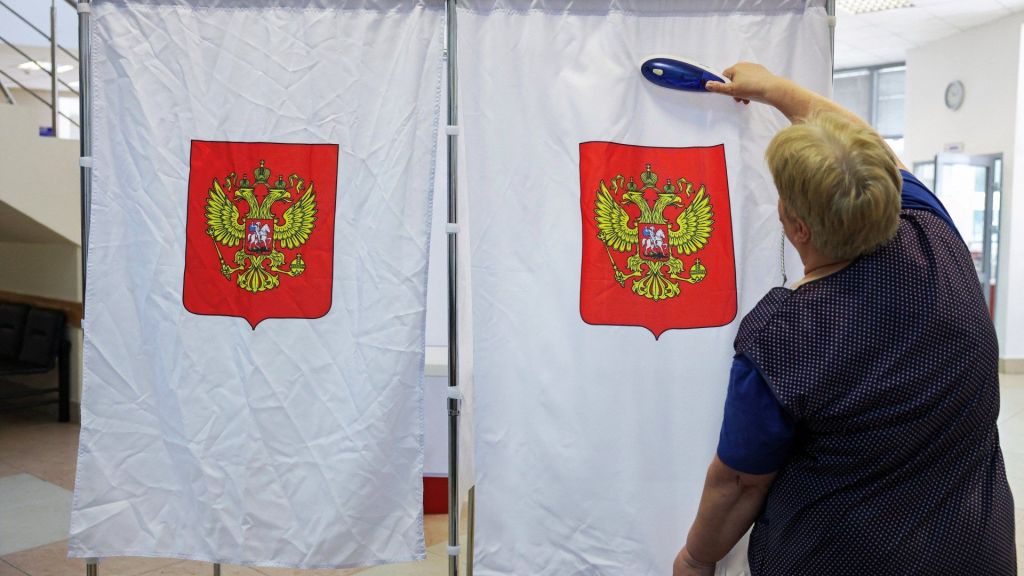
Russians will head to the polls from Friday to Sunday to elect members of the State Duma, the lower house of parliament, in the first parliamentary election since Russia launched its full-scale invasion of Ukraine in 2022.
The election comes as Russia faces a slowing economy and continued Ukrainian drone attacks targeting refineries, warehouses and other infrastructure far from the front line.
The governing United Russia party, which supports President Vladimir Putin, is expected to retain its dominant position in the State Duma.
Russian authorities have presented the election as an opportunity for voters to choose their representatives. Critics, however, argue that the limited presence of opposition candidates means the outcome is largely predetermined.
So why are the elections worth watching? Here is what you need to know:
How do Russia’s elections work?
Russians will vote from Friday through Sunday to elect members of the State Duma, the lower house of parliament.
Voters will also take part in local elections across the country.
Governors will be elected in 11 regions, while voters in 39 regions will elect members of regional legislatures.
Voting is being held over three days, with electronic voting also available in some areas. The elections include territories occupied by Russia in Ukraine, where Moscow has organised voting despite Ukraine and much of the international community rejecting Russia’s claims over those territories.
The State Duma has 450 seats. Half are allocated through party-list voting, while the other half are contested in single-member constituencies.


Russia’s governing party, United Russia, was formed in 2001 through the merger of several pro-Kremlin political groups. It has backed President Vladimir Putin and maintained a dominant position in parliament ever since.
United Russia won more than two-thirds of the State Duma’s seats in the 2021 election and is again expected to maintain its dominant position in parliament.
The party’s candidate list is headed by prominent figures, including Foreign Minister Sergey Lavrov, who has served as Russia’s top diplomat for more than two decades, and Moscow Mayor Sergei Sobyanin.
In a move that brings a prominent war correspondent into its ranks, the party has also included Yevgeny Poddubny, who was seriously wounded in a Ukrainian drone attack.
United Russia members have pledged to support the war effort and President Vladimir Putin’s stated objectives in Ukraine, in what the Kremlin refers to as the “special military operation.”
Alongside United Russia, other “systemic opposition” parties that generally support the government on key issues are also expected to retain their presence in parliament.
The liberal Yabloko Party, which has opposed Russia’s war in Ukraine, was initially included on the ballot. However, Russia’s Supreme Court ordered the party removed from the party-list vote in August.
The court cited several reasons, including its argument that Yabloko’s anti-war position amounted to advocating the violation of Russia’s territorial integrity. Yabloko is now contesting only single-member constituency races.
The Communist Party has been a major force in Russia’s Federal Assembly since the 1990s. It has been led for more than three decades by 82-year-old Gennady Zyuganov, a former Soviet official.
During President Vladimir Putin’s more than 25 years in power, the Communists have criticised some government policies while largely avoiding direct criticism of Putin. The party has also supported Russia’s war in Ukraine.
Political analyst and independent journalist Alexander Bratersky told Al Jazeera that the contest for second place would be worth watching.
He said a second-place finish for the Communist Party could “suggest voters are angry about economic hardship and falling living standards.”
The Liberal Democratic Party, an ultranationalist political force that has been a significant presence in Russia’s legislature since the early 1990s, is also expected to retain representation in the State Duma.
Like the Communist Party, it strongly supports Russia’s war in Ukraine and has several military veterans among its members.
Several smaller parties also feature on the ballot.
A Just Russia has been part of Russia’s political landscape for about two decades. The social-democratic party competes with the Communists for support among older and middle-aged voters who have nostalgia for the Soviet era. It also supports Russia’s war in Ukraine.
The New People Party was founded shortly before the 2021 parliamentary election, seeking to position itself as a liberal voice for younger voters and technocrats. It won just over 5 percent of the vote, allowing it to form a small parliamentary faction.


Political analyst and independent journalist Alexander Bratersky described the party as “a liberal-leaning party backed by some Kremlin people who are more technocratic and more pro-peace.”
He said the party appeals to a “middle-class audience” and has increasingly been viewed as a substitute for Yabloko since authorities removed the liberal party from the party-list ballot.
“If they come third with a good number of votes, this is a sign that those who are antiwar used them as their legal avatar,” Bratersky said.
Other parties seeking seats in the State Duma include Communists of Russia, a smaller rival to the main Communist Party; the Party of Pensioners; the Green Party; the Party of Direct Democracy; and the Motherland Party.
While the elections may appear routine, their significance lies in the fact that they are the first parliamentary vote since Russia launched its full-scale invasion of Ukraine, Bratersky told Al Jazeera.
He said President Vladimir Putin has linked the election to support for the war. At United Russia’s party congress in August, Putin endorsed the party and said its duty was “to do everything for victory” in the war in Ukraine.
Bratersky said the Kremlin may be concerned about voter sentiment because elections provide one of the few legal avenues for Russians to express dissatisfaction with the government.
“This shows that the Kremlin is a bit worried since the elections are the only legal way to show disrespect for the Kremlin,” he said. “Even Putin’s core fans hate United Russia as a corrupt force.”
Since Vladimir Putin first became president in 2000, United Russia has won every State Duma election, often by a wide margin.
However, the results of several elections have been disputed.
In 2011, allegations of widespread vote-rigging triggered some of the largest anti-government protests during Putin’s rule.
Following the 2021 election, independent election monitors and statisticians argued that United Russia’s actual level of support was significantly lower than the official results indicated.
Russian authorities have rejected allegations of widespread electoral fraud. Meanwhile, opposition parties and critics of the war in Ukraine have increasingly faced restrictions on their ability to contest elections.
-Aljazeera
Invest or Donate towards HICGI New Agency Global Media Establishment – Watch video here
Email: editorial@hicginewsagency.com TalkBusiness@hicginewsagency.com WhatsApp +256713137566
Follow us on all social media, type “HICGI News Agency” .

