
By HICGI News Agency at 1526 EAT on Tuesday 22 September 2026
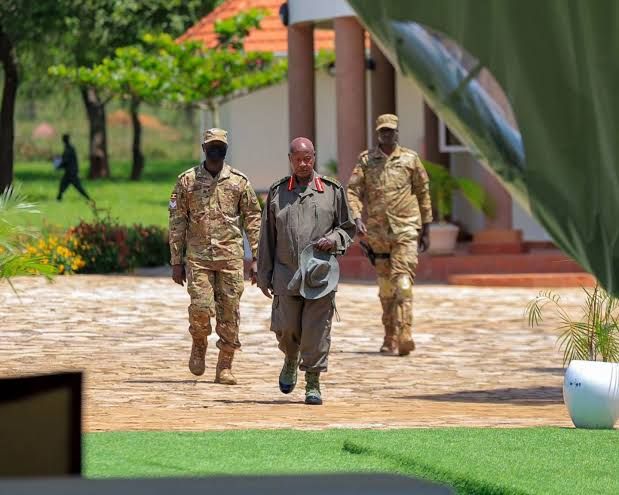
In February 2014, a resolution adopted by the National Resistance Movement (NRM) Parliamentary Caucus at the National Leadership Institute in Kyankwanzi placed President Yoweri Museveni at the centre of a contentious debate over the party’s presidential succession.
The resolution, moved by then Northern Uganda Youth Member of Parliament Evelyn Anite, called for Museveni to be presented as the NRM’s sole presidential candidate for the 2016 general elections and beyond. More than 200 members of Parliament reportedly signed the resolution.
The move immediately generated controversy within the ruling party. Critics argued that the parliamentary caucus did not have the authority under the NRM constitution to determine the party’s presidential flag bearer, saying the responsibility belonged to the party’s established electoral structures and National Conference.
The Central Executive Committee also became involved in the dispute. In March 2014, Uganda Radio Network reported that the CEC had rejected the caucus resolution, although officials within the party disputed that account and said the matter was still under consideration.
President Museveni later clarified his own position on the matter. In August 2014, he said the Kyankwanzi resolution was a response to circumstances within the party at the time and was not binding, stressing that the NRM National Delegates’ Conference would determine the party’s presidential flag bearer.


The resolution nevertheless continued to influence political mobilisation within the NRM. Party leaders and supporters travelled to different parts of the country to popularise the proposal, while some members and youth leaders challenged it and supported the possibility of alternative candidates, including then Prime Minister Amama Mbabazi.
The controversy also attracted the attention of security authorities. Contemporary reports documented the arrest and charging of some NRM youth activists amid disputes over mobilisation and attempts to challenge the sole-candidacy campaign. Later analysis also linked the dispute to investigations by security officials into mobilisation activities within the party.
Despite the controversy surrounding its legal and organisational status, the Kyankwanzi resolution became an important episode in the history of the NRM’s internal politics. It reflected tensions between calls for party cohesion and demands for competitive internal elections.
The NRM has continued to present Museveni’s leadership within the broader ideological framework of the movement, including its emphasis on patriotism, Pan-Africanism, socio-economic transformation and democracy. The party also traces its political programme to the Ten-Point Programme developed during the liberation struggle, which emphasised national unity, democracy, security, economic self-reliance, social services, anti-corruption efforts and regional cooperation.


The Kyankwanzi episode therefore remains significant in understanding the evolution of the NRM and the debates surrounding leadership succession within Uganda’s ruling party.
Authored by Public Opinions
Public Opinions hosts profiles of job seekers, university students and graduates seeking access to opportunities globally. Interested individuals can submit their profile and photograph.
Management fee: UGX 20,000
Email: admin@publicopinions.net
–
Invest or Donate towards HICGI New Agency Global Media Establishment – Watch video here
Email: editorial@hicginewsagency.com TalkBusiness@hicginewsagency.com WhatsApp +256713137566
Follow us on all social media, type “HICGI News Agency” .

