
By Dr. Kivumbi Earnest Benjamin, L. H. D (Hon)
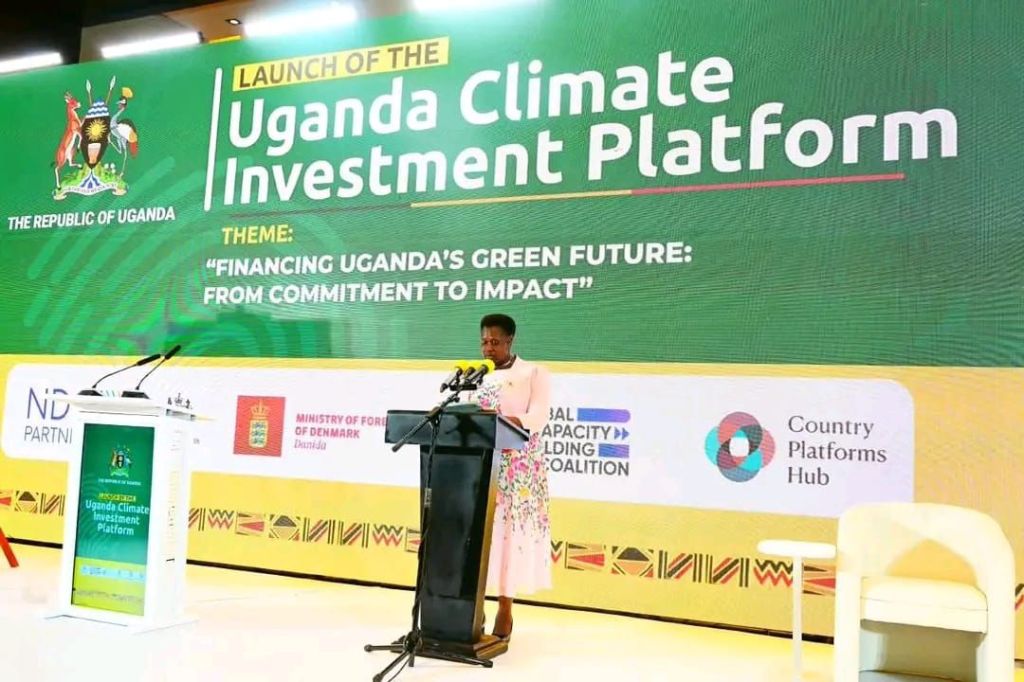
KAMPALA: Vice President H.E. Jessica Alupo has officially launched the Uganda Climate Investment Platform (UCIP), a government-led initiative aimed at mobilising resources and coordinating financing for climate change mitigation and adaptation projects across the country’s key economic sectors.
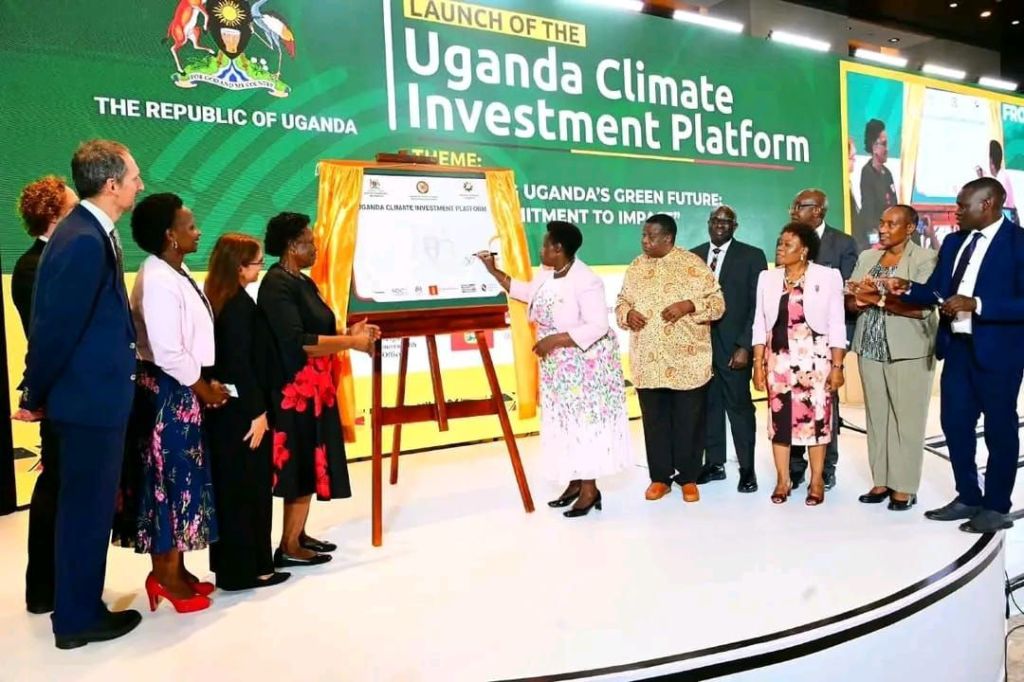



The launch comes at a critical time when Uganda, like many other countries, continues to experience the devastating effects of climate change, including prolonged droughts, destructive floods, unpredictable rainfall patterns, and growing threats to agriculture, wetlands, and other natural resources.
Speaking at the launch, held under the theme “Financing Uganda’s Green Future: From Commitment to Impact,” Vice President Alupo reaffirmed the government’s commitment, under the leadership of President Yoweri Kaguta Museveni, to implementing the Paris Agreement and Uganda’s Nationally Determined Contributions (NDCs).
She noted that the government had prioritised green growth under the Fourth National Development Plan (NDP IV), with emphasis on climate-smart agriculture, renewable energy, sustainable wetlands and forestry management, and green industrialisation.
“We have prioritised green growth in our National Development Plan IV, with a focus on climate-smart agriculture, renewable energy, sustainable wetlands and forestry management, and green industrialisation,” Alupo said.
However, the Vice President emphasised that government resources alone would not be sufficient to finance Uganda’s climate transition, revealing that the country requires an estimated US$28 billion to implement its climate commitments.
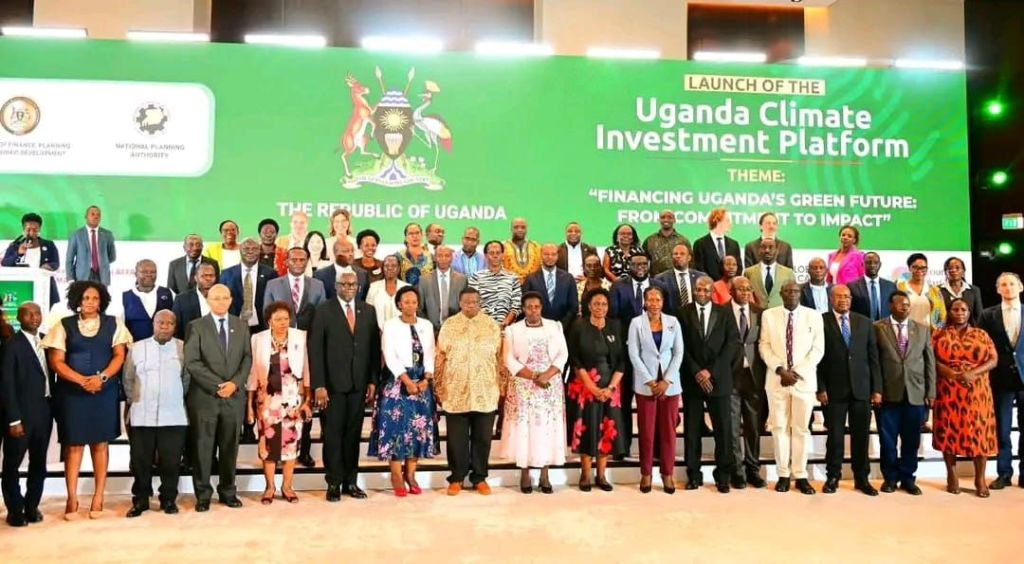
“This is why this Platform is so important. The Uganda Climate Investment Platform will help bridge this gap. Working with and through our existing financial institutions and partners, it will support the preparation of bankable climate projects, help connect them with investors, and enable de-risking, so that climate action is profitable and sustainable for our people,” she said.
Alupo observed that Uganda was increasingly experiencing floods, prolonged droughts, and unpredictable rainfall, with the poorest and most vulnerable communities bearing the greatest burden.
She explained that Uganda’s heavy dependence on agriculture and natural resources makes the country particularly vulnerable to climate-related shocks, which continue to undermine economic development and progress towards Vision 2040.
“Government considers this to be a serious problem and has developed plans to fight climate change while still developing the country and ending poverty,” she noted.

Among the key national frameworks she highlighted were Uganda’s Nationally Determined Contributions, the Climate Finance Strategy, the Fourth National Development Plan, and the Tenfold Growth Strategy. She said these frameworks share a common objective of strengthening the country’s resilience to climate change while promoting sustainable economic transformation.
Platform to Bridge Climate Financing Gap
The Vice President described the Uganda Climate Investment Platform as an important enabling mechanism for coordinating resource mobilisation at the national level.

The Government-led, multi-stakeholder initiative is designed to bridge the gap between climate policy commitments and actual investment opportunities by supporting collaboration among government institutions, development partners, financial institutions, and the private sector.
Rather than replacing existing institutions and financial structures, the platform will build on Uganda’s existing financial architecture to strengthen coordination, improve project preparation, and attract investment.
It will also support the development of a pipeline of bankable and climate-resilient projects in strategic sectors, including agro-industrial development, tourism, science, technology, information and communications technology (ICT), and innovation.
In addition, the platform is expected to facilitate the mobilisation of both public and private capital through innovative financing mechanisms, including blended finance, green bonds, carbon markets, and other climate financing instruments.
Call for Stronger Partnerships and Accountability
Alupo called upon all stakeholders to strengthen partnerships through clearly defined responsibilities and shared accountability.
She urged stakeholders to prioritise projects that deliver both climate resilience and inclusive economic growth, particularly for women, young people, and rural communities.
She further emphasised the importance of transparency, good governance, and measurable results to ensure that resources mobilised through the platform translate into tangible benefits for Ugandans.

The Vice President also encouraged stakeholders to take advantage of opportunities in the green and blue economies, expressing the ambition for Uganda to emerge as a regional hub for climate investment and innovation.
Alupo thanked President Museveni for his steadfast leadership on climate and national development matters. She also conveyed the government’s appreciation to development partners for their continued financial and technical support towards Uganda’s climate action programmes.
Government Reaffirms Commitment to Climate Investment
The Minister of Water and Environment, Gen. Kahinda Otafiire, reiterated the government’s commitment to creating a favourable policy and regulatory environment capable of attracting climate investments.
He noted that government would continue strengthening institutional and regulatory frameworks, improving project preparation capacity, and deepening collaboration with development partners and the private sector.
“We will continue to strengthen our policy and regulatory frameworks, improve project preparation capacity, and deepen collaboration with our development partners and the private sector,” Otafiire said.

The launch of the Uganda Climate Investment Platform marks an important step towards translating the country’s climate commitments into practical investment opportunities, while positioning climate resilience as a central pillar of Uganda’s sustainable development and economic transformation agenda.

