
Updated by Faith Barbara N Ruhinda at 1555 EAT on Wednesday 18 November 2026
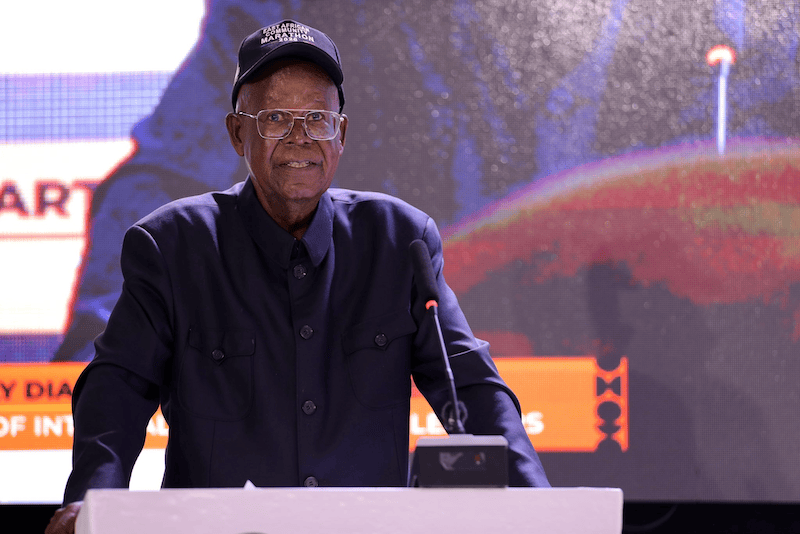
The meeting between Uganda’s Minister of Internal Affairs and civil society organisations ended last week on an unexpectedly hopeful note, with the government signalling a possible easing of restrictions on the sector.
Prof. Ephraim Kamuntu, who was recently appointed to head the ministry responsible for regulating civil society organisations under the 2024 law, announced that the suspensions affecting several organisations could be lifted.
The ministry’s secretary, Charles Okello, later issued a statement confirming the decision, offering long-awaited relief to organisations that have spent much of 2026 suspended, restricted and under official scrutiny.
However, Kamuntu’s warning was equally significant.
He cautioned civil society organisations against engaging in partisan politics or falling under foreign influence, urging them to prioritise national security and sovereignty.
The warning raises a fundamental question: Is the government genuinely restoring civic space, or merely allowing organisations to operate under conditions that could justify another round of suspensions?
The answer lies partly in the events of the past decade.
Since 2016, Uganda has increasingly tightened its regulation of civil society through registration requirements, monitoring and sanctions. The suspension of seven organisations just nine days before the January 2026 elections was perhaps the clearest illustration of this approach.
The underlying problem is that the government continues to pursue institutional solutions to fundamentally political disagreements. Laws can establish registration procedures, reporting obligations and inspection mechanisms.


They cannot, by themselves, rebuild trust between the state and organisations whose mandate includes scrutinising its conduct. Viewed against this history, last week’s announcement appears less like a lasting settlement than a temporary reprieve.
A REPUBLIC OF PAPERWORK
Uganda’s regulation of civil society has evolved through successive laws, each adding another layer of state oversight.
The Non-Governmental Organisations Act, 2016, now Cap. 109, replaced the 1989 legislation with a mandatory permit system administered by the National Bureau for NGOs.
The law introduced special obligations prohibiting activities considered prejudicial to Uganda’s security and laws, while extending state oversight through district committees. The 2019 amendment further introduced criminal liability for operating with an expired permit, carrying a penalty of Shs 2 million.
Other legislation reinforced this regulatory environment. The Public Order Management Act, 2013, placed restrictions on public assemblies. Amendments to anti-money laundering legislation expanded the Financial Intelligence Authority’s powers to freeze accounts during investigations, while the Computer Misuse (Amendment) Act, 2022, introduced further controls over online expression.
In July 2024, the Non-Governmental Organisations Act, 2024, dissolved the NGO Bureau and transferred its regulatory responsibilities to the Ministry of Internal Affairs. The change brought the regulation of civil society organisations more directly under the executive branch of government.
The scale of the regulatory challenge was already evident in the bureau’s 2019 register. Of the 14,207 NGOs listed, only 3,810 held valid permits.
Such figures raise legitimate questions about compliance. However, they also expose the limitations of a system in which administrative requirements risk becoming more important than the work organisations were established to perform.
Paperwork should not become the primary measure of legitimacy at the expense of accountability, effectiveness and public benefit.
The consequences of this approach are evident in successive confrontations between the government and civil society organisations.
In October 2017, during the debate over the removal of the presidential age limit, authorities froze the accounts of ActionAid Uganda and the Great Lakes Institute over suspected money laundering.
In December 2020, the accounts of the Uganda Women’s Network and Chapter Four Uganda were also frozen. Human rights lawyer Nicholas Opiyo was arrested shortly before Christmas. The following year, the government suspended the Democratic Governance Facility and closed 54 organisations over alleged non-compliance, putting more than 5,000 jobs at risk.
Amnesty International and the International Commission of Jurists called for the suspensions to be reversed. Authorities subsequently lifted restrictions on 22 of the affected organisations.
In 2022, Sexual Minorities Uganda was barred from operating on grounds that it was not registered, bringing two decades of its work to a halt through an administrative decision.
The confrontation escalated ahead of the January 2026 elections. Nine days before polling, the NGO Bureau suspended the permits of at least seven organisations, including Chapter Four Uganda, ACFIM and the Centre for Constitutional Governance. Citing “intelligence information” and Section 42(d), authorities also directed banks to freeze transactions involving the affected organisations.
Dr Sarah Bireete was arrested, while an internet shutdown followed. By June, the dispute had reached the High Court. Meanwhile, the CIVICUS Monitor rated Uganda’s civic space at 28 out of 100, placing it in the “repressed” category.
Each intervention was justified through legal or administrative procedures. Taken together, however, the incidents point to a recurring pattern: restrictions have intensified during periods when civil society scrutiny of political power has become particularly consequential.
THE WRONG DIAGNOSIS
Why have successive regulatory reforms failed to produce a more stable relationship between the government and civil society? The problem may lie in how the disagreement itself is understood.
The government frequently frames tensions with NGOs as failures of compliance, arguing that organisations have failed to register, submit reports, renew permits or meet financial requirements.
Its response has therefore been to impose additional registration, reporting, monitoring and enforcement measures. Yet much of the underlying conflict is political. Organisations that monitor elections, defend suspects, investigate human rights violations or document torture inevitably scrutinise how power is exercised.
Their activities may have political implications without necessarily making them partisan organisations. No registration procedure can eliminate this tension.
The 2024 transfer of regulatory powers to the Ministry of Internal Affairs illustrates the challenge. The institution responsible for overseeing civil society now operates directly within the executive branch whose conduct some of these organisations are mandated to scrutinise.
This creates the risk of a regulatory environment in which organisations are encouraged to demonstrate compliance while avoiding activities that might attract official displeasure.
The consequences could include self-censorship, administrative compliance without meaningful engagement and renewed suspensions whenever political tensions escalate.
Academic research offers a useful explanation for this dynamic.
Institutional economist Douglass North demonstrated how formal institutions reflect the distribution of power within societies. Changing rules alone, therefore, cannot resolve disagreements rooted in deeper political relationships.


Comparative research by Dupuy, Ron and Prakash similarly identifies a tendency for restrictions on NGOs to intensify when they move beyond service delivery into advocacy. Ugandan scholarship has reached related conclusions.
Susan Dicklitch argued that the potential of NGOs remained constrained by structural inequalities of power. Barr, Fafchamps and Owens examined weaknesses in coordination between the state and NGOs, while the work of Mahmood Mamdani helps explain the administrative instincts of the postcolonial state.
Taken together, these perspectives suggest that regulatory reform cannot replace political accommodation. The gap between the 14,207 organisations listed in the 2019 register and the 3,810 holding valid permits illustrates the limitations of relying primarily on administrative control.
A law can prescribe how an organisation registers. It cannot, on its own, resolve the deeper reasons for government distrust of independent scrutiny.
READING THE FINE PRINT
Last week’s announcement should therefore be welcomed, but also examined carefully. The proposed lifting of suspensions offers genuine relief. Affected organisations could resume activities, reopen offices, restore programmes and meet their financial obligations, including paying employees.
However, Kamuntu’s warning leaves unresolved the boundaries between legitimate civic advocacy, partisan politics and activities deemed threats to national security. These distinctions are important.
An organisation investigating electoral irregularities, challenging unlawful detention or questioning public expenditure may be accused of engaging in politics, even when its activities fall within the legitimate exercise of civic oversight.
Without clear and consistently applied standards, the same discretion used to restore operations could be invoked to suspend them again. Uganda has witnessed variations of this cycle in 2017, 2020–2021, 2022 and 2026.
The pattern is familiar: restrictions are imposed, pressure builds, some relief follows, but the underlying disagreements remain unresolved. Lifting a suspension without addressing the conditions that led to it may provide temporary relief without restoring lasting confidence.
Uganda does not necessarily need another law to improve relations between the government and civil society. What it needs is a different approach to implementing the laws and using the institutions already in place.
The first priority should be an agreed framework governing relations between the state and civil society during politically sensitive periods, particularly elections. This could include a moratorium on suspensions during election periods, subject to clearly defined legal safeguards.
Second, organisations facing suspension or account freezes should be informed of the specific allegations against them, given an opportunity to respond and provided with written reasons for the decisions. They should also have access to an effective appeals process.
Restrictions should have clearly defined time limits rather than remain in force indefinitely.
Third, financial regulation should be separated from political supervision. The Financial Intelligence Authority should provide the legal grounds for account freezes, subject to legitimate investigative safeguards. Such restrictions should not remain in force indefinitely without appropriate legal proceedings.
-Observer
Invest or Donate towards HICGI New Agency Global Media Establishment – Watch video here
Email: editorial@hicginewsagency.com TalkBusiness@hicginewsagency.com WhatsApp +256713137566
Follow us on all social media, type “HICGI News Agency” .

