
By Briton Tigah Kiwanuka- Research Assistant – Special Duties
Office of the President.

Office of the President.
When the National Resistance Movement (NRM) assumed leadership of Uganda on January 26, 1986, the nation was emerging from one of the most turbulent periods in its history. Years of political instability, civil conflict, economic collapse, and institutional breakdown had left the country deeply divided and struggling to recover.
Public services had deteriorated, infrastructure was in disrepair, and many citizens had lost confidence in the state’s ability to provide security and opportunity.
Four decades later, Uganda presents a markedly different picture. Roads and highways now connect regions that were once isolated, millions of children have gained access to education, healthcare services have expanded significantly, electricity has reached rural communities, and technology has transformed communication and commerce. Above all, Uganda has experienced one of the longest periods of relative peace and stability in its post-independence history.
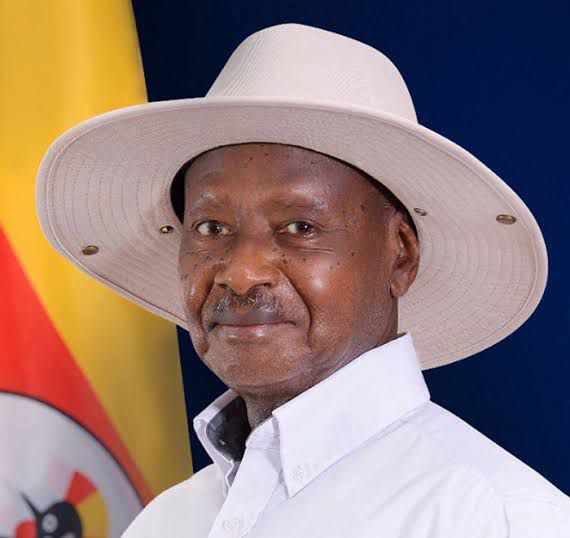
As the country approaches the 40th anniversary of NRM leadership in 2026, many observers point to the transformation achieved under President Yoweri Kaguta Museveni as one of the most significant national development journeys on the African continent.
Restoring Peace and National Security
Among the most notable achievements of President Museveni’s administration has been the restoration and maintenance of peace and security across much of the country.
In 1986, several regions were affected by armed conflict, insecurity, and political unrest. Today, Uganda enjoys a level of stability that has enabled citizens to travel freely, conduct business, pursue education, and invest with confidence.
The professionalization and modernization of the Uganda People’s Defence Forces (UPDF), strengthened intelligence capabilities, and reforms within security institutions have contributed significantly to national stability. Uganda has also become a respected contributor to regional peacekeeping efforts, participating in missions that have promoted security beyond its borders.

This stable environment has provided a foundation upon which economic growth and social development have flourished.
Economic Recovery and Sustained Growth
When the NRM government came to power, Uganda’s economy was in a state of severe decline. Inflation was rampant, industries had collapsed, and investor confidence was virtually nonexistent.
Through a combination of economic reforms, market liberalization, fiscal discipline, and strategic planning, the country embarked on a gradual but sustained recovery.
Today, Uganda’s economy is supported by diverse sectors including agriculture, manufacturing, tourism, telecommunications, financial services, construction, and emerging oil and gas investments.
Major urban centres such as Kampala, Jinja, Mbarara, Gulu, Mbale, Arua, and Fort Portal have expanded significantly, creating new opportunities for trade, employment, and entrepreneurship.
The growth of the banking sector, increased foreign direct investment, and expanding regional trade have further strengthened Uganda’s position as an attractive destination for investment in East Africa.
The Education Revolution
Few sectors have undergone as dramatic a transformation as education.
The introduction of Universal Primary Education (UPE) in 1997 opened classroom doors to millions of children from disadvantaged backgrounds who would otherwise have been denied access to formal education.
The subsequent introduction of Universal Secondary Education (USE) further expanded educational opportunities and increased school enrollment across the country.
Today, Uganda is home to thousands of primary and secondary schools, vocational institutions, colleges, and universities that serve millions of learners annually.
As a result, generations of Ugandans have acquired skills and qualifications that have enabled them to become professionals, entrepreneurs, public servants, innovators, and leaders contributing to national development.
Advancements in Healthcare
Uganda’s healthcare sector has also witnessed substantial growth over the past four decades.
Government investments have expanded the network of health centres, district hospitals, regional referral hospitals, and specialized medical facilities throughout the country.
National immunization programmes have significantly improved child health outcomes, while public health campaigns have helped combat infectious diseases and improve community health awareness.
The construction and upgrading of healthcare facilities have brought essential medical services closer to communities, particularly in rural areas where access was previously limited.
Although challenges remain, continued investments in infrastructure, medical equipment, training, and healthcare personnel demonstrate an ongoing commitment to improving the health and well-being of Ugandans.
The Infrastructure Revolution
Perhaps no achievement is more visible than Uganda’s transformation in infrastructure development.
Over the past four decades, the country has witnessed extensive investments in roads, bridges, airports, energy generation, and telecommunications infrastructure.
Modern highways now link major regions of the country, facilitating trade, tourism, and mobility. Key transport corridors connecting Kampala to Entebbe, Jinja, Mbarara, Gulu, and other urban centres have significantly improved transportation efficiency.
Major projects such as the New Nile Bridge in Jinja stand as symbols of Uganda’s modernization and growing connectivity.
Meanwhile, rural electrification programmes have expanded access to electricity for homes, schools, healthcare facilities, and businesses, helping to stimulate local economic activity and improve living standards.
Agricultural Modernization and Rural Development
Agriculture remains the backbone of Uganda’s economy and the primary source of livelihood for millions of citizens.
Recognizing this reality, the government has consistently implemented programmes aimed at modernizing agriculture and transforming rural communities.
Investments in coffee production, dairy farming, fish farming, poultry, irrigation, and commercial agriculture have enabled many households to increase productivity and income.
Government initiatives have encouraged farmers to transition from subsistence farming toward market-oriented production and wealth creation.
Today, Ugandan agricultural products are exported to regional and international markets, generating foreign exchange and contributing significantly to national economic growth.
Industrialization and Investment
Industrialization has remained a central pillar of President Museveni’s long-term development strategy.
Across the country, industrial parks have attracted local and international investors, creating opportunities for manufacturing and value addition.
Uganda now produces a broad range of goods including steel products, cement, pharmaceuticals, processed foods, beverages, textiles, plastics, and household products.
These industries have contributed to job creation, expanded the tax base, reduced dependence on imports, and strengthened domestic production capacity.
Policies such as Buy Uganda Build Uganda (BUBU) have further promoted local enterprise development and economic self-reliance.
Technology and Digital Transformation
The technological landscape of Uganda has changed dramatically since 1986.
At that time, access to telecommunications services was limited and largely confined to urban areas. Today, millions of Ugandans own mobile phones and utilize internet services, digital banking platforms, mobile money systems, and online business solutions.
Government services are increasingly digitized, improving efficiency, transparency, and accessibility.
The growth of the information and communications technology sector has created new opportunities for innovation, entrepreneurship, and employment, particularly among young people.
Empowering Youth and Women
The NRM government has placed significant emphasis on promoting inclusion and expanding opportunities for youth and women.
Specialized funding programmes, skills development initiatives, and affirmative action policies have increased participation in education, business, leadership, and governance.
Women now occupy influential positions across government, Parliament, academia, civil society, and the private sector.
Similarly, youth-focused programmes continue to support entrepreneurship, vocational training, and wealth creation, recognizing the importance of Uganda’s youthful population in driving future economic growth.
Regional Influence and International Leadership
Over the past four decades, President Museveni has emerged as one of Africa’s most influential and longest-serving leaders.
His advocacy for regional integration, Pan-African cooperation, and peacebuilding has elevated Uganda’s profile on the continental and international stage.
Uganda remains an active participant in the East African Community, the African Union, the United Nations, and numerous regional and global initiatives.
Through diplomacy, trade partnerships, and international engagement, the country has strengthened its relationships with nations across Africa, Europe, Asia, the Americas, and the Middle East.
The Road Ahead
Despite significant achievements, Uganda continues to face important challenges, including unemployment, poverty reduction, service delivery improvements, urbanization pressures, and the need for accelerated industrialization and technological advancement.
Nevertheless, the progress recorded since 1986 has laid a strong foundation for future growth and transformation.
As Uganda commemorates forty years of NRM leadership in 2026, many citizens reflect on a journey that has seen the nation move from instability toward stability, from economic hardship toward growth, and from uncertainty toward greater confidence and opportunity.
The story of Uganda between 1986 and 2026 is ultimately one of resilience, reconstruction, and national transformation. Whether viewed through the lens of infrastructure, education, healthcare, economic development, or security, the country has undergone profound change.
History will judge the full legacy of these four decades, but few would dispute that they have significantly shaped Uganda’s modern trajectory and laid the groundwork upon which future generations will continue to build.