
Updated by Faith Barbara N Ruhinda at 1143 EAT on Wednesday 9 September 2026
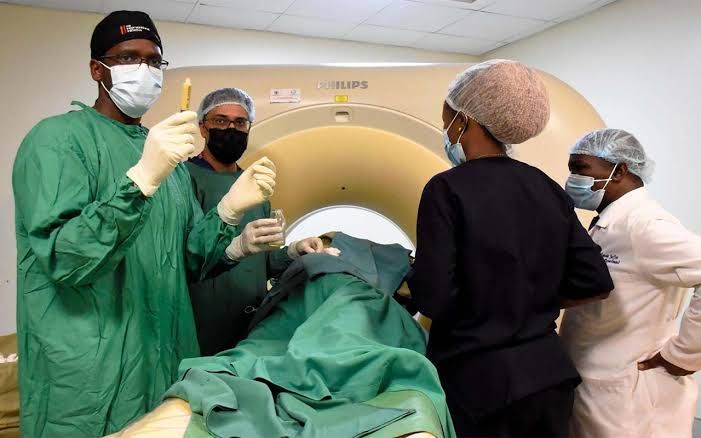
Some patients come seeking a diagnosis, while others return for chemotherapy, laboratory tests, blood transfusions or specialist care. Behind every visit is a patient and a family grappling with an illness that is increasingly putting Uganda’s health system to the test.
THE PRESSURE IS GROWING
The Uganda Cancer Institute registered 8,764 new cancer patients in the past year, representing a 10 per cent increase from 2024, according to figures presented during a visit to the institute by Ministry of Health Permanent Secretary Dr Diana Atwine last week.
The growing burden is also reflected in patient visits, which reached 67,000. Some cancers recorded steep increases, with breast cancer cases rising by 18 per cent and prostate cancer by 17 per cent. Among children, bone tumours surged by 46 per cent, while childhood lymphomas rose by 42 per cent.
The sharp increases are intensifying pressure on an already strained cancer-care system, where patients must compete for limited diagnostic services, specialists, treatment slots and essential supplies.
The human cost of cancer was recently felt in Uganda’s football community following the death of former Soltilo Bright Stars goalkeeper Sanon Mulabi after a battle with the disease.


His death came as the Uganda Cancer Institute (UCI) reported that rising patient numbers are placing additional pressure on a health system that is expanding access to sophisticated cancer treatment while still struggling to meet some basic healthcare needs.
More than two million tests were conducted over the past year, underscoring the scale of diagnostic and treatment-related work being handled as patient numbers continue to rise. Yet Uganda’s cancer story is not simply one of shortages.
The government is also investing in specialised services that were previously unavailable in the country. The Uganda Cancer Institute (UCI) has successfully performed two bone marrow transplants, with both patients reported to have recovered well following the procedures.
The institute is also preparing to introduce PET scanning, while longer-term plans include establishing a cyclotron facility and offering proton therapy—highly specialised technologies that could expand Uganda’s capacity to diagnose and treat cancer.
A PET scan helps doctors detect, assess and monitor disease by showing how tissues and organs are functioning. A cyclotron produces radioactive materials used in certain diagnostic imaging procedures and treatments, while proton therapy is an advanced form of radiation treatment that can target tumours more precisely while limiting exposure to surrounding healthy tissue.
The ambition is to reduce the number of Ugandans travelling abroad for specialised cancer care and eventually position Uganda as a regional treatment centre. But sophisticated machines bring another challenge: they require specialists to operate them, technicians to maintain them, medicines and other supplies to support treatment, reliable financing and an effective referral system.
A multimillion-shilling machine offers little benefit to patients if the health system cannot keep it running or provide the professionals needed to operate it. Atwine acknowledged this tension.
“We are in the process of coming up with serious reforms, and those reforms are really not just reforms, but we are focusing on the patient at the same time,” she said.
She said the government’s plans for “tenfold growth” in health services must go beyond constructing infrastructure. The Ministry of Health also wants to improve service delivery, attract resources, strengthen medical tourism and research, and address shortages of specialised skills.
That human-resource challenge could become one of the biggest tests of UCI’s expansion. The institute says it has specialists in cancer surgery, oncology, haematology and other fields, while also training professionals for Uganda and the wider region.
Fourteen fellows graduated from its specialist training programmes last year, while UCI has introduced a fellowship in neurological oncology. However, as patient numbers rise and more sophisticated services are introduced, the demand for skilled health workers will continue to grow.


“If in six months, one year, the infrastructure development that we are planning comes to pass, then it must be matched with the right human resource,” Atwine said.
THE GEOGRAPHY OF CANCER CARE
Another challenge affects patients long before they reach a specialist: geography. Much of Uganda’s specialised cancer treatment remains concentrated in Kampala.
For patients living hundreds of kilometres away, accessing treatment can mean repeated journeys to the capital, adding the costs of transport and accommodation as well as time away from work and family.
UCI says regional cancer centres are being developed to bring services closer to patients and ease pressure on the main institute. Management expects the centres to become fully functional over the next two to three years as the necessary health workers are trained.
Under the model, patients would receive some treatment closer to home, while those requiring more complex care would continue to be referred to Kampala.
The need is already evident. UCI recorded about 1,300 new patients in western Uganda, a 15 per cent increase from 2024, while its northern regional centre is also seeing a rise in patient numbers.
Decentralisation could therefore significantly reshape cancer care in Uganda. But a building labelled a regional cancer centre will not, by itself, solve the problem. It must be backed by specialists, medicines, diagnostic equipment, blood products and reliable operating budgets.
-Observer
Invest or Donate towards HICGI New Agency Global Media Establishment – Watch video here
Email: editorial@hicginewsagency.com TalkBusiness@hicginewsagency.com WhatsApp +256713137566
Follow us on all social media, type “HICGI News Agency” .

