
Updated by Faith Barbara N Ruhinda at 1223 EAT on Wednesday 9 September 2026
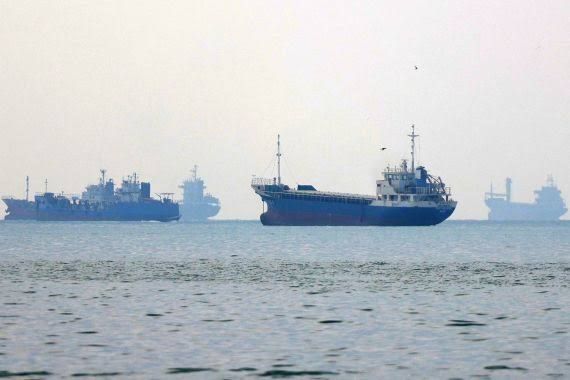
The United States-Iran war is increasingly playing out at sea, with both sides targeting vessels in and around the strategically vital Strait of Hormuz.
On September 8, U.S. forces destroyed five Iranian oil tankers in the Gulf of Oman and near Kharg Island, after the Islamic Revolutionary Guard Corps (IRGC) attempted to strike a U.S. warship with ballistic missiles. Iran retaliated by launching ballistic missiles towards U.S. forces at the Al Azraq air base in Jordan, with Jordanian forces saying they intercepted most of the missiles.
Just three days earlier, on September 5, U.S. forces had struck three Iranian oil tankers after Iran’s Islamic Revolutionary Guard Corps (IRGC) launched ballistic missiles towards two U.S. Navy warships, according to U.S. Central Command.
Iran later said it had retaliated by targeting three oil tankers travelling through what it described as an “unauthorised route” in the Strait of Hormuz, along with three U.S.-linked vessels elsewhere. The Iranian claims could not be independently verified.


The tit-for-tat attacks have turned the waters around Hormuz into a potential environmental tinderbox. With oil tankers carrying millions of barrels of crude and petroleum products passing through or waiting near the waterway, a successful strike could trigger a fire, sink a vessel or cause a major oil spill.
As of September 7, MarineTraffic data showed 42 tankers waiting to transit the Strait of Hormuz, while hundreds of other vessels were either waiting or moving slowly in the wider Gulf of Oman and Gulf region. Of those tankers, 18 were carrying oil.
The exact volume of crude or petroleum products aboard the vessels was not known. However, their combined estimated capacity was 1.76 million cubic metres of oil and petroleum products — cargo that could be at risk if attacks on commercial shipping continue.
The Gulf is home to resilient coral reefs and mangrove forests that have adapted to survive in one of the world’s hottest and most saline marine environments.
The shallow, semi-enclosed sea supports a range of fragile ecosystems, including coral reefs, seagrass beds, mangroves, mudflats and salt marshes.
These habitats provide vital feeding and nursery grounds for fish, turtles, dugongs and migratory birds, while also supporting fisheries and helping to protect coastlines.
But because the Gulf has limited water exchange with the wider Indian Ocean, pollutants can persist for longer, placing additional pressure on its already vulnerable marine ecosystems.
A study by the University of South Florida published in June found that, based on satellite imagery, oil spills in the Gulf and Strait of Hormuz were four times higher in March than during the same month a year earlier.
The researchers also recorded a high incidence of oil leaks from vessels trapped in and around the Strait.


Oil spills can have severe and lasting effects on marine ecosystems. Oil forms a layer on the water’s surface, contaminating the marine environment and harming or poisoning marine life. It can also smother coral reefs and mangroves, disrupting habitats that support a wide range of species.
Dr Hussein Samh al Masroori, an associate professor at Sultan Qaboos University, told Al Jazeera that oil and petroleum hydrocarbons can directly affect fish, corals, plankton and other marine organisms, with fish eggs and larvae particularly vulnerable.
“Sensitive habitats such as coral reefs, mangroves, seagrass beds and coastal sediments may retain pollutants for much longer,” he said. “There can also be indirect effects through changes in water quality, food-web productivity, fish distribution and potentially spawning or migration patterns. For fisheries, this can translate into reduced fishing opportunities, higher costs and loss of income for coastal communities.”
Oil can also become trapped in marine sediments, coating beaches, sand and mud and prolonging environmental damage. A similar pattern was observed following the 1991 Gulf oil spill, one of the largest marine oil spills in history.
-Aljazeera
Invest or Donate towards HICGI New Agency Global Media Establishment – Watch video here
Email: editorial@hicginewsagency.com TalkBusiness@hicginewsagency.com WhatsApp +256713137566
Follow us on all social media, type “HICGI News Agency” .

