
Updated by Faith Barbara N Ruhinda at 1659 EAT on Wednesday 16 September 2026
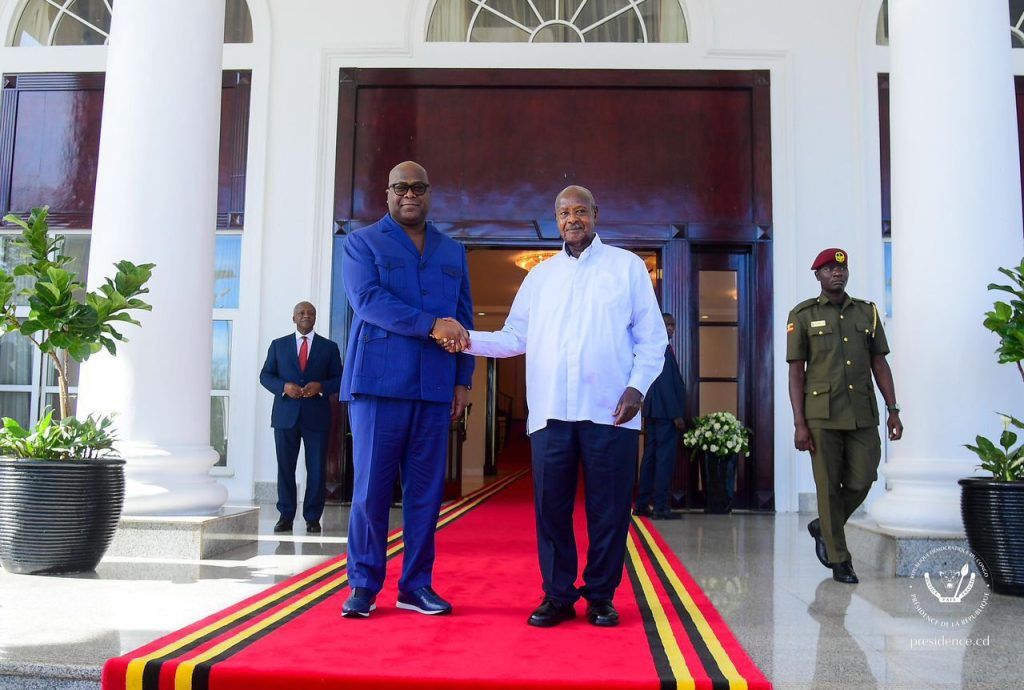
For more than three decades, the Democratic Republic of Congo (DRC) has been a giant of Africa that has endured repeated conflict but struggled to translate its diplomatic efforts into lasting security.
As rebels backed by Rwanda occupied parts of its mineral-rich eastern region, Kinshasa’s response largely centred on peace agreements, from Lusaka in 1999 and Pretoria in 2002 to Goma in 2008 and the Nairobi and Luanda peace processes in 2022.
When the DRC assumed the rotating presidency of the United Nations Security Council in July, a fundamental question emerged across the Great Lakes region: Is Kinshasa finally embarking on a “Wolf’s Journey”, shedding its image as a victim of conflict to become a more assertive and strategic actor on the global diplomatic stage?
And for its neighbours, particularly Uganda and Rwanda, what might this new Congolese assertiveness mean?
To understand the shift in Congolese foreign policy, attention must extend beyond the battlefields of North and South Kivu to the diplomatic corridors of New York, where DRC Foreign Minister Thérèse Kayikwamba Wagner recently outlined her country’s emerging approach.
“We have become so engrossed in our inner battles that getting to a consensus on a document has become the achievement,” Wagner told PassBlue, offering a pointed critique of the UN Security Council.
“The Council’s mission is not to pass resolutions. Its job is to preserve international peace and security… You don’t get to sit there just because you have beautiful eyes.”


The remarks signal a more assertive tone from a country that has spent decades grappling with conflict and challenges to its sovereignty.
However, this diplomatic shift also raises questions about its implications for the wider Great Lakes region, particularly given the complex relationships between the DRC, Uganda and Rwanda.
In his seminal work, From Zaire to Kabila: Africa’s Deep Crisis, Congolese academic and activist Georges Nzogola argued that, following the 1997 All-Zaire Political Conference, Western powers routinely recognised and supported foreign-backed strongmen while undermining genuinely democratic and sovereign Congolese institutions.
For years, this dynamic played out along the DRC’s eastern border. Critics have accused Western powers of turning a blind eye to regional incursions, treating the DRC as territory to be divided among warlords and foreign armies rather than as a sovereign nation-state.
Is the DRC’s current “Wolf’s Journey” at the UN an attempt to break with this historical pattern?
By taking Rwanda to the International Court of Justice (ICJ) in June 2026, accusing Kigali of genocide, torture and state-sponsored abuses, Kinshasa is seeking to move beyond the traditional diplomatic channels that Nzogola argued had failed the Congolese people.
Rather than relying solely on external powers to mediate, President Félix Tshisekedi’s government is turning to international law to challenge alleged abuses and pursue accountability.
“You don’t get away with claiming that you will create peace… and then get away with the worst crimes being perpetrated,” Wagner warned, linking the ICJ case to broader regional security concerns.
“Rwanda had its own justice process after the genocide… Why should this be denied to Congolese?” she asked.
Uganda’s Historical Ties and Regional Interests
For a Ugandan audience, Kinshasa’s diplomatic offensive evokes an uncomfortable sense of déjà vu. Uganda’s historical involvement in eastern Congo, from the conflicts of the late 1990s to allegations of resource pillaging documented by UN panels of experts, remains a sensitive chapter in bilateral relations.
Today, Uganda maintains a military presence in eastern DRC under Operation Shujaa, targeting the Allied Democratic Forces (ADF), while Rwanda faces growing international pressure. The regional geopolitical landscape has shifted significantly.
The 2025 Washington Accord, which called for the withdrawal of Rwandan troops and outlined US-backed regional economic partnerships, has faced serious setbacks. Shortly after the accord was signed, M23 fighters captured Uvira, prompting Washington to impose sanctions targeting senior Rwandan military commanders.
Kampala is watching these developments closely. Uganda has spent years balancing its complex relationship with Kigali against the economic and security benefits of a stable eastern Congo.



However, Kinshasa’s increasingly assertive foreign policy signals a possible shift in the region’s diplomatic landscape, with greater emphasis on accountability for alleged military incursions and violations of Congolese sovereignty.
For Uganda, the implications are significant. The longstanding framework of Great Lakes geopolitics, in which regional military interventions in the DRC often proceeded without lasting legal consequences, is facing growing challenges.
Kinshasa has not only adopted a more assertive diplomatic stance but has also increasingly turned to international law and lobbying to advance its interests.
As Kigali faces mounting diplomatic pressure, Kampala must ensure that its regional security operations strictly respect Congolese sovereignty. Failure to do so could expose Uganda to legal challenges and diplomatic tensions as Kinshasa pursues a more assertive foreign policy.
-Observer
Invest or Donate towards HICGI New Agency Global Media Establishment – Watch video here
Email: editorial@hicginewsagency.com TalkBusiness@hicginewsagency.com WhatsApp +256713137566
Follow us on all social media, type “HICGI News Agency” .

